By-Jason Steele
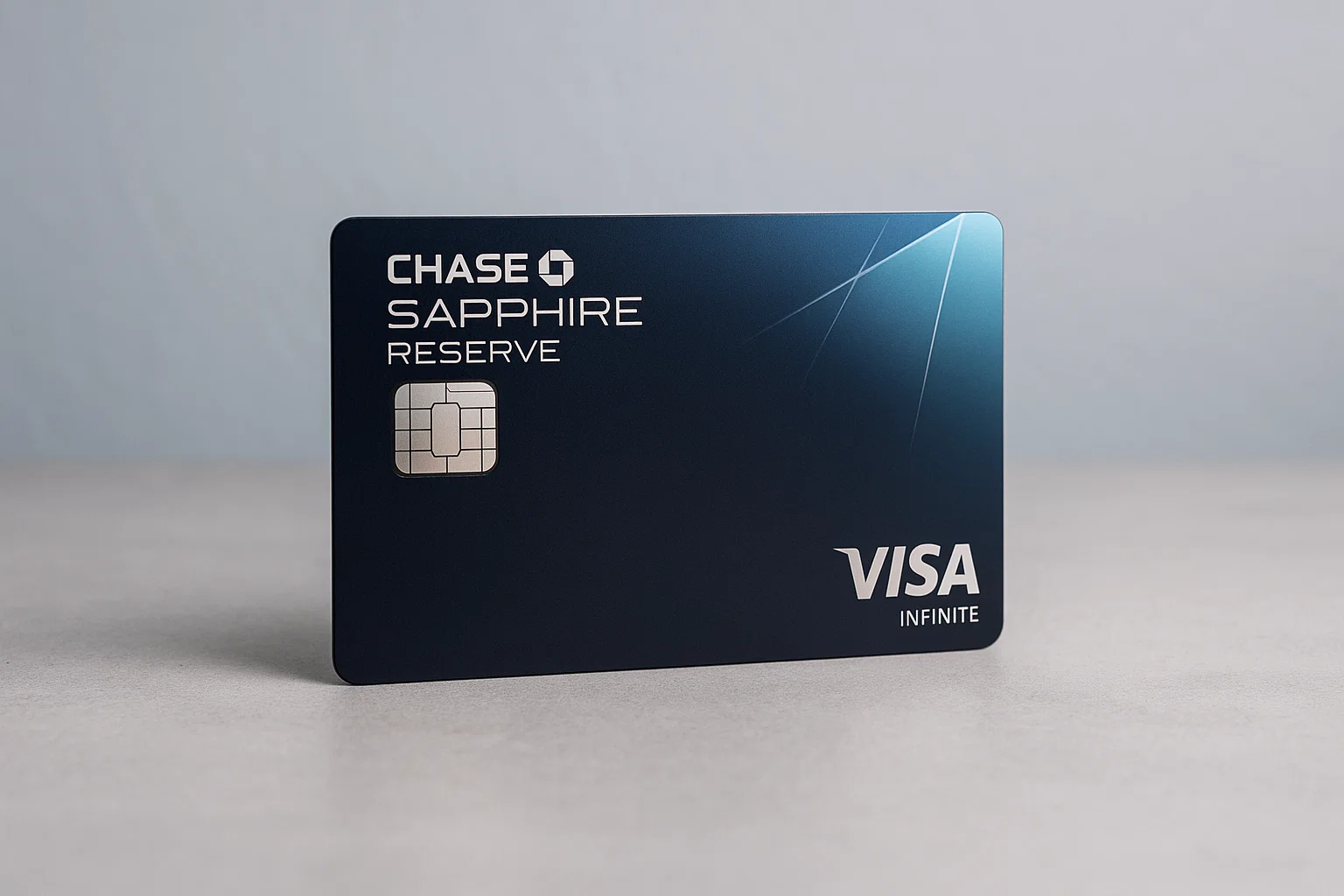
Recently, Chase announced that it was increasing the annual fee of its flagship Sapphire Reserve card from $550 to $795. Thankfully, the higher annual fee comes with increased benefits, but these new benefits may not be worth the additional fee for all users. Let’s take a look at what you now get for your money, and see if it’s right for you.
Chase Sapphire Reserve new account bonus
Currently, new applicants can earn 125,000 Ultimate Rewards points after spending $6,000 on new purchases within three months of account opening. These points are worth a minimum of one cent each, or $1,250 when redeemed for merchandise or gift cards, and two cents each, $2,500 total, when redeemed for travel booked through Chase using their new Points Boost option.
But these rewards are potentially worth much more when transferred to airline miles or hotel points, and redeemed for high-value reservations. When I’m able to transfer my Ultimate Rewards points to airline miles, and book international business class flights, I can often receive 2-4 cents in value per point redeemed, and fly in luxury in a way I could have never afforded otherwise.
Sapphire Reserve Rewards for Spending
While this card has great benefits, as I’ll show later, it offers enough rewards for spending to make you want to use it over your other cards. It features an astounding 8x points for all purchases made through Chase Travel, which includes not just airfare, hotel and rental cars, but tours, transfers and cruises too. You also earn 4x points for flights and hotels booked directly with the provider. As before, you still earn 3x points on dining, but just one point per dollar spent on all other purchases.
Statement credits, AKA “The Coupon Book”
The big trend in credit cards right now is to raise the annual fee, while offering a variety of merchant specific statement credits, which is often compared to having a “coupon book.” As with a variety of new credits, the Chase Sapphire Reserve Goes all-in on this trend, starting with a $500 annual credit towards bookings in its collection of high-end hotels that it calls The Edit.
Like many of these credits, you can’t use this $500 credit all at once – instead you get a credit of $250 every six months. You do get to use the $300 annual travel credit any time you want, Towards any travel purchase you make with your card. There’s also a $120 credit (every four years) towards a Global Entry, TSA PreCheck or NEXUS application fee.
Other credits include $250 a year towards subscriptions in AppleTV+ and Apple Music, $120 in annual statement credits towards Peloton, and $300 in credits towards StubHub purchases, doled out in $150 chunks, twice a year. Throw in 12 months of DoorDash DashPass membership, worth $120, and $10 a month if Lyft credits, and there you have it. Finally, there’s a $300 dining credit, issued as two, $150 credits twice a year towards restaurants in Sapphire Reserve Exclusive Tables.
I won’t insult your intelligence by adding up the “value” of all of these credits, and claiming it all as actual savings. You simply have to estimate their realistic value to you. For example, I can easily use the $300 travel credit, but it’s unlikely that I would have spent money on much, if any of the other products. I might get an AppleTV subscription or occasionally use the Lyft credits and the StubHub credit for a concert ticket. And I could try the dining credits, but my hunch is that these $150 credits will barely cover half my meal in a very high-end restaurant. So it’s hard for me to value these discounts much over $500, but your take may be different.
Looking for Other Premium Credit Cards?
Not sure if the Sapphire Reserve’s perks are worth it? Compare it with other Premium Benefits Credit Cards that offer luxury travel perks, airport lounge access, and more—sometimes with a lower annual fee.
Explore Premium Cards Now.
Airport lounge benefits
This perk is often what separates the premium cards for the rest of the pack, and the Sapphire Reserve does well here. It offers a Priority Pass Select membership, which is valid for access to over 1,300 lounges around the world, as well as a handful of Sapphire lounges in cities like, Boston, New York (JFK and LGA), Philadelphia, Phoenix, San Diego and Hong Kong, with new locations expected to open in Dallas, Las Vegas and Los Angeles. Plus, you also get access to Air Canada Maple Leaf Lounges and Air Canada Cafés in the U.S., Canada and Europe with an eligible boarding pass.
Travel protection and purchase coverage
Simply put, the Sapphire Reserve comes with the best cardholder benefits for travel insurance and purchase protection. I could write a whole article on how great this coverage is, but one highlight includes trip delay coverage of up to $500 that takes effect with a mere six hour delay or an overnight stay. I’ve used this before when my family had a flight out of Paris cancelled, and we were able to get all of our hotel rooms and meal costs reimbursed by Chase. Other highlights include auto rental, baggage delay, lost luggage and trip cancellation. But the really amazing things are $2,500 of emergency medical and dental insurance, $100,000 of emergency evacuation and transportation coverage and four paid roadside assistance services a year, which you can’t get in any other card. I’ve used this numerous times to tow my car when I got a flat or another mechanical issue.
Who should get the Sapphire Reserve?
This is a card for frequent travelers who love Chase Ultimate Rewards points. The chance to earn 8x points on travel booked through Chase is incredible, especially if you’re in a position to book travel that’s reimbursed by your company or clients. The $300 travel credit easily brings the net cost of the $795 annual fee down to under $500, and you will likely find value in at least some of the other credits. And if you happen to live in one of the cities that has, or soon will have, a Sapphire Lounge, then this card is a must for regular travelers who can count on a serene environment and a nice meal before every flight.
Want a Lower-Fee Alternative?
If the Sapphire Reserve doesn’t fit your travel style, the Best Travel Rewards Cards offer strong points, flexible redemptions, and valuable benefits—without a $795 annual fee. Find the Best Travel Card for You.
Who should skip the Sapphire Reserve?
If you really don’t fly that often, and your home airport doesn’t have a Sapphire Lounge or an attractive Priority Pass lounge, then it’s hard to make the case for a card with a $795 annual fee. These cardholders might be better suited to the Sapphire Preferred, which only costs $95 a year, but lacks the lounge access and most of the coupon book credits, but retains excellent travel insurance and purchase protection policies, and still allows you to earn valuable Ultimate Rewards points that can be transferred to airline miles and hotel points.
The best option
Consider that it’s still worth signing up for the Sapphire Reserve card, if just to earn the 125,000 point new account bonus. Combined with its benefits, that’s worth at least twice as much as the first year’s annual fee. Then, take a year to try out its benefits and see if it’s right for you. You can always downgrade the card to the $95 Sapphire Preferred.
Bottom line
The Chase Sapphire Reserve is a strong card, with a very high annual fee. For many, the benefits will be worth the cost, but for others, the $95 Sapphire Preferred can be a better choice. But by taking the time to try out the Sapphire Reserve, with its very valuable new account bonus, you can decide if this card will meet your needs.
FAQS;
What is the best way to redeem Chase Ultimate Rewards points?
The best way is usually to transfer points to Chase’s airline or hotel partners, like World of Hyatt or Air Canada Aeroplan. This can yield 2–4 cents per point, far more than cash back or Amazon redemptions.
Is it better to redeem Chase points for cash or travel?
Cash back is simple but only gives 1 cent per point. Redeeming for travel—either through the Chase Travel portal or by transferring to partners—can provide much higher value.
How much are Chase points worth?
Chase Ultimate Rewards points are generally worth 1 cent each, but can be worth 2–4 cents when transferred to partners for premium travel.
Do Chase Ultimate Rewards points expire?
No, Chase points never expire as long as your account is open and in good standing.
What is the best thing to do with Chase Freedom Unlimited points?
Freedom Unlimited technically earns Ultimate Rewards points. If you also hold a Sapphire or Ink Preferred card, you can combine points and transfer them to travel partners for maximum value.