
Updated: December 24, 2025
If 2025 felt like every “premium” card got more expensive, you weren’t imagining it. This year was defined by higher annual fees, bigger (and more complicated) statement credits, tighter bonus rules, and a clear message from banks: they want profitable long-term customers, not bonus chasers. At the same time, interest rates stayed painful for anyone carrying balances — while 0% intro offers remained a bright spot.
Key takeaways from 2025 (and why they matter in 2026)
- Premium cards moved up-market: higher annual fees, but also more credits — if you can actually use them.
- Bonus eligibility got stricter: more “family” rules and longer cooldown periods, not just Amex’s famous lifetime language.
- Lounge access got less generous (especially for guests) — and 2026 is when several of those cuts take effect.
- 0% intro APR offers stayed strong, including a rare 24-month intro option — a big deal if you’re trying to kill debt.
- Points didn’t get “worse” overnight, but redemptions got pricier in many programs; earn-and-burn stayed the winning strategy.
1) The 2025 story in one table
| Theme | What happened in 2025 | What it means | 2026 move |
| Premium fees & credits | Top travel cards refreshed with bigger fees and a “coupon-book” style of credits. | If you actually use the credits, these cards can still be worth it. If you don’t, you’re overpaying. | Audit your credits quarterly; if you’re not using them, downgrade/cancel at renewal. |
| Bonus rules tightened | More issuers moved toward “once per X months” or “family” restrictions on welcome offers. | Churning gets harder. Timing your applications matters more than ever. | Plan 12–24 months ahead and avoid wasting inquiries on bonuses you can’t earn. |
| Lounge access pressure | Overcrowding pushed issuers to limit free guests and charge for authorized users. | Families and groups pay more to get lounge value. | If lounge access is your main reason to keep a card, re-run the math with guest fees. |
| 0% intro APR stayed strong | Long 0% periods continued; one issuer went as long as 24 billing cycles. | Debt payoff strategies got a real tool — but fees and discipline still matter. | Use 0% as a payoff plan (not permission to spend). Set autopay + payoff schedule. |
| Points + portals | Banks leaned harder into travel portals and “boosted” redemptions instead of simple fixed values. | Great value is still there, but you have to be more intentional about how you redeem. | Favor transferable points + strong partners; don’t stockpile points for years. |
| Shutdown/account review risk | Banks continued (and in some cases escalated) reviews for behavior that looks like abuse. | The fastest way to lose rewards is to trigger a shutdown or clawback. | Keep spend patterns “normal,” avoid bounced payments, and don’t push manufactured spend. |
2) Personal credit cards: what mattered in 2025
Most years, the credit card world changes in small ways — a bonus here, a new perk there. 2025 was different. The biggest action was concentrated at the top end of the market, where issuers leaned into a “membership” feel: pay more every year, but get more credits, more lounge access, and more perks… as long as you use them.
Premium travel cards went up-market (fees up, credits up)
Three moves basically defined the premium personal-card conversation in 2025:
- Chase Sapphire Reserve refresh: Chase raised the Sapphire Reserve’s annual fee to $795 for renewals after late October 2025 and added a long list of credits and updated earning/redemption mechanics.
- Amex Platinum refresh: American Express lifted the U.S. Platinum Card’s annual fee to $895 and layered in new lifestyle credits (including Resy and lululemon) plus other benefit tweaks.
- Citi re-entered the premium ring: Citi launched the Strata Elite as a $595 premium travel card, aiming directly at the same audience that lives in the Reserve/Platinum world.
Premium personal cards at a glance (2025 changes)
| Card / Move | Annual fee headline | What got better | What to watch |
| Chase Sapphire Reserve (refresh) | $795 (renewals after late Oct 2025) | More statement credits; revised earn rates; new portal redemption structure. | Whether the credits are easy to use (and whether you actually use them). |
| Amex Platinum (refresh) | $895 (for U.S. consumer Platinum) | More lifestyle credits and refreshed benefit package. | Coupon fatigue: great on paper, but you need a system to capture value. |
| Citi Strata Elite (new) | $595 | Strong portal multipliers + premium-style credits at a lower fee than Reserve/Platinum. | Operational execution (early rollouts can be bumpy). |
Airport lounge access got stricter (especially for guests)
2025 was the year issuers basically admitted what travelers already knew: lounges are crowded. Instead of building unlimited capacity overnight, issuers started pulling the same lever — make access more expensive for “extra people.” The cleanest example is Capital One’s Venture X changes that take effect in 2026 (more on that below), but the direction is industry-wide.
0% intro APR offers stayed strong — and one went to 24 months
Even with high interest rates, issuers kept using long 0% intro APR offers as a customer-acquisition tool. The standout was U.S. Bank’s Shield Visa, which advertises 0% intro APR on purchases and balance transfers for 24 billing cycles. That’s unusually long in today’s market and a real option for people who want a structured payoff window.
3) Business credit cards: 2025 was about premium launches and massive bonuses
On the business side, 2025 was the year issuers pushed harder for high-spend small businesses. The offers got bigger, but so did the expectations: higher fees, higher spend requirements, and stricter enforcement of bonus eligibility.
The premium business-card arms race
A few headline moves stood out:
- Chase launched Sapphire Reserve for Business: Chase introduced a business version of its flagship Reserve product, priced like a true premium card and aimed at businesses with serious travel and purchasing volume.
- Amex refreshed Business Platinum alongside the consumer card: The Business Platinum moved to the same $895 annual fee level and leaned even more into high-spend incentives and credits.
- Big bonuses targeted big spend: Across issuers, the biggest bonuses increasingly required big spend thresholds — great if your business naturally spends that much, risky if you’re forcing it.
Premium business cards at a glance (what changed in 2025)
| Theme | What issuers did in 2025 | Who wins | Risk / tradeoff |
| Bigger welcome offers | 6-figure points/miles bonuses became more common on premium business cards. | Businesses with real, organic spend. | Forcing spend can trigger scrutiny or lead to debt. |
| Higher annual fees | Premium pricing migrated to business cards, not just personal cards. | Frequent travelers and high service-level users. | If you don’t use credits/perks, the fee is dead weight. |
| More verification / reviews | More reports of income/ID/transaction reviews (especially around new premium launches). | Well-documented, stable businesses. | New applicants may face delays or friction during rollout periods. |
4) Approval rules and bonus eligibility: the real “hidden” story of 2025
If you only look at earn rates, 2025 can seem like a perks-and-fees story. But the bigger strategic shift was on the rules side: issuers got more serious about limiting repeat bonuses and filtering applicants. That matters even more in 2026, because timing mistakes can cost you a bonus you can’t easily get back.
Here’s a practical cheat sheet. (Always confirm the exact language on the application page — banks change terms, and targeted offers can differ.)
| Issuer | Welcome-bonus eligibility (headline) | Approval / velocity (headline) | 2026 takeaway |
| Corporate program — contact American Express for enrollment | Generally “once per lifetime” per card product (with occasional targeted offers that omit lifetime language). | Pop-up warnings can block bonuses; financial reviews and shutdowns can happen if behavior looks abusive. | Apply when you’re ready to keep + use the card; don’t assume you can “try again later” for the same bonus. |
| Chase | Sapphire-family bonuses generally have a multi-year cooldown (48 months) and you typically can’t earn a Sapphire bonus if you currently hold a Sapphire. | 5/24 still matters for many products; Chase also watches overall relationship and recent activity. | Plan your Chase apps early in your strategy and protect your 5/24 slots. |
| Capital One | 48-month timing rule exists, and late-2025 terms linked Venture and Venture X bonuses as a ‘family’ restriction. | Often inquiry-sensitive; approvals can be less predictable than Chase/Amex. | Don’t stack applications; treat CapOne as a “pick your moment” issuer. |
| Citi | ThankYou-family bonus restrictions (commonly long cooldown windows) are a major limiter for repeat bonuses. | Known velocity limits (how quickly you can open multiple Citi cards). | Citi can be great for points, but you need a longer-term cadence. |
| Bank of America / U.S. Bank (quick note) | Rules vary by product and relationship; fewer “churn-friendly” loopholes. | Both are known for being conservative with applicants who have many new accounts. | If you’re opening a lot of cards, consider these issuers earlier — or expect denials. |
5) Rates, debt, and 0% APR: why 2025 punished balance-carriers
For anyone carrying a balance, 2025 was blunt: credit cards are an expensive way to borrow. The national average APR hovered right around 20% in late 2025. Even if the Fed starts cutting rates, card APRs usually come down slowly.
What’s interesting is that delinquency didn’t explode — it flattened. That’s part of why banks felt comfortable pushing premium cards harder: consumers weren’t falling apart in aggregate, and interest income stayed strong.
If you’re managing debt, here’s the grown-up 2026 strategy:
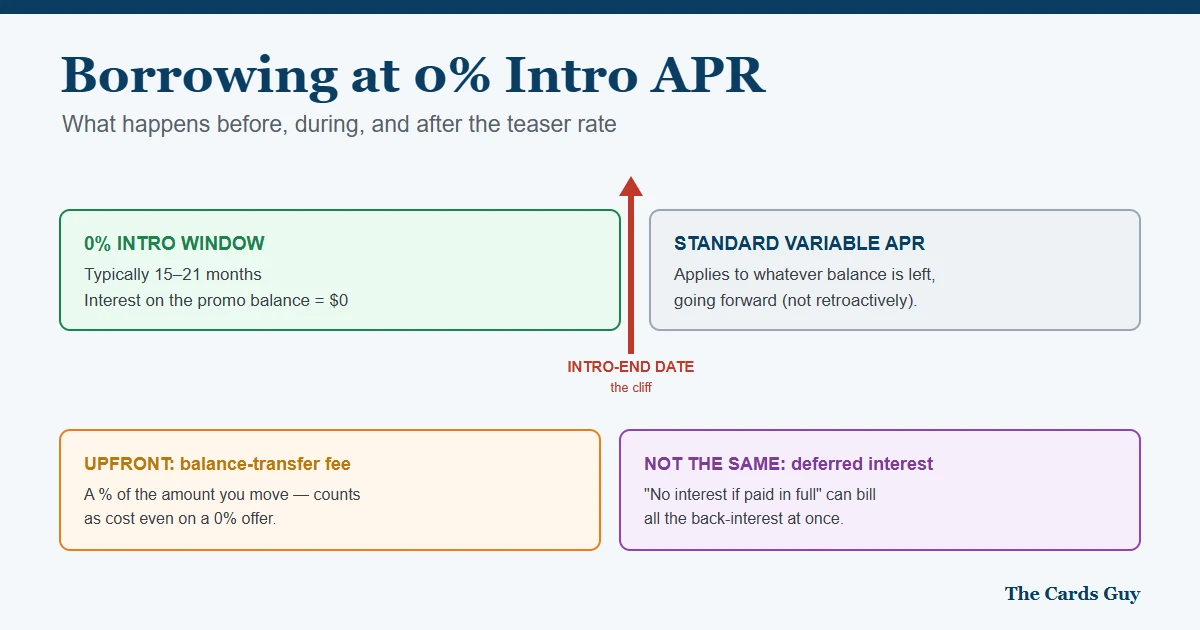
- Use a long 0% intro APR offer as a payoff tool, not a spending license.
- Assume a balance-transfer fee will apply (often 3%–5%) and do the math before you move debt.
- Build a payoff schedule that ends 30–60 days before the promo expires (life happens).
- Avoid opening multiple new cards at once — it can backfire on approvals and your credit profile.
6) Points and loyalty programs: still valuable — but 2025 made it more “hands-on”
Rewards didn’t suddenly become bad in 2025. What changed is how much “work” it takes to get the best value. Banks leaned harder into their own travel portals, bonus categories tied to in-house booking, and boosted redemption promos. At the same time, airline and hotel award pricing continued drifting upward in the background.
The practical takeaway: earn-and-burn beats hoarding.
If you earn transferable points (Chase Ultimate Rewards, Amex Membership Rewards, Capital One miles, Citi ThankYou points), the best move is usually to redeem within a reasonable window — not years later. Programs devalue quietly, and your points don’t earn interest.
One interesting 2025 example on the transfer-partner front: Bilt continued expanding partners and added Spirit Airlines as a transfer option in December 2025. That doesn’t mean everyone should transfer to Spirit — but it shows how competitive transfer ecosystems are getting.
7) Shutdowns, account reviews, and clawbacks: 2025’s reminder to stay boring
Every year, a slice of the rewards community learns the hard way that issuers can (and do) close accounts and freeze rewards. In 2025, American Express had another widely discussed shutdown wave reported by the points community. The pattern is consistent: accounts that look like they’re optimized for loopholes instead of real spending are the ones that get attention.
What tends to trigger trouble:
- Bounced payments or funding payments from unusual sources.
- Sudden, massive spend spikes that don’t match your profile.
- Heavy gift card / cash-equivalent patterns (especially repeatedly).
- Opening cards purely for bonuses and then going dormant immediately.
- Abusing referral/authorized-user mechanics or other promo loopholes.
If you want to keep your accounts for the long term, the goal is simple: look like a real customer. Steady spend, clean payments, and normal purchase behavior beat cleverness.
8) 2026 outlook: what’s confirmed, what’s likely, and what’s still rumor
Here’s how I’d separate the noise from the signal heading into 2026. When something is “confirmed,” it’s because the issuer has published it. When it’s “likely,” it’s based on where incentives are heading. And when it’s “watchlist,” it’s worth tracking — but not planning your wallet around yet.
| Topic | Confirmed for 2026 | Likely / expected | Watchlist / rumor |
| Lounge access economics | Capital One guest policies change Feb 1, 2026; authorized-user lounge access becomes more expensive. | Other issuers keep tightening guest rules and/or charging for additional users. | More crowd-control tech (reservations, waitlists, access windows). |
| Annual fees | Higher fees on refreshed premium cards are now ‘the new normal’ as renewals hit in 2026. | Mid-tier cards gradually creep upward unless competition forces restraint. | Rumored Sapphire Preferred annual fee increase to $150 (timing and offsets TBD). |
| Welcome offers & eligibility | Capital One’s Venture-family language moved toward a shared 48-month cooldown on bonuses. | More “family” rules and longer cooldowns across issuers. | Targeted “no lifetime language” offers may continue but can be inconsistent. |
| 0% intro APR offers | Long intro APR offers are still actively marketed, including a 24-billing-cycle option from U.S. Bank. | 0% balance-transfer offers stay competitive as long as consumer demand is high. | If credit losses rise meaningfully, issuers could pull back on the longest promos. |
| Apple Card / fintech competition | Goldman’s desire to exit is public; Apple is actively exploring partners. | Big banks compete to win large co-brand portfolios. | Which bank ultimately takes Apple Card (and whether network economics shift). |
9) My 2026 playbook (what I’d do with a real wallet)
I’d treat 2026 like a cleanup-and-focus year. With higher annual fees and tighter bonus rules, the best strategy is usually fewer cards — chosen intentionally — not more cards.
If you’re a travel points person
- Pick one main “transferable points” ecosystem and go deep (Chase, Amex, Capital One, or Citi).
- Don’t keep a premium card just because it feels premium — keep it because the credits and perks pay you back.
- Redeem proactively: don’t hoard points for 3–5 years hoping for a perfect trip.
If you’re primarily a cashback person
- Start with a strong baseline (a simple flat-rate card) and add categories only where you truly spend.
- Watch caps and rotating categories — the ‘headline’ earn rate matters less if you constantly hit limits.
- If you’re eligible for relationship bonuses (e.g., preferred banking tiers), that can quietly beat travel points for many households.
If you’re trying to pay down debt
- Prioritize the longest 0% intro APR you can qualify for, then follow a strict payoff schedule.
- Avoid annual-fee rewards cards until you’re out of revolving debt — the interest cost dwarfs the rewards.
- If you do a balance transfer, treat the fee like interest paid up front and factor it into your savings.
If you run a business (or side hustle)
- Only chase huge bonuses if your spend is organic — don’t manufacture spend just to ‘earn points.’
- Consider whether a premium business card is actually replacing costs you already have (lounge memberships, paid upgrades, etc.).
- Keep clean bookkeeping: separating expenses protects you in disputes, audits, and account reviews.
FAQ (quick answers)
Is Chase 5/24 still a thing going into 2026?
In practice, yes. Chase doesn’t publish every underwriting rule, but 5/24 remains one of the most consistently reported constraints for many Chase cards. If Chase is part of your plan, protect those slots.
What does “Amex once per lifetime” actually mean?
Most Amex offers include language that limits a welcome bonus to one per card product per lifetime. Sometimes targeted offers omit that language, but don’t assume you’ll see them (or qualify).
Are premium cards still worth it after all the fee increases?
They can be — but only if you have a system to actually use the credits. If you’re leaving credits on the table, a mid-tier card often delivers a better return.
Should I expect lower APRs in 2026?
Maybe a little, but don’t plan your budget around it. Even when broader rates fall, credit card APRs tend to stay high. If you carry balances, a long 0% offer is usually the better lever.
What’s the fastest way to get shut down or lose points?
Bounced payments, suspicious spend patterns, and behavior that looks like loophole-hunting. If your goal is long-term rewards, consistency beats cleverness.
Is it smart to hoard points for years?
Usually not. Points can devalue quietly, so redeeming within a reasonable time frame is the safer play — especially for airline awards.
Bottom line
2025 rewarded people who were organized: the new premium cards can be fantastic if you naturally use the credits, travel often, and redeem points with intention. But the era of “easy” bonus cycling is fading. For 2026, the winning approach is simple: pick a lane, respect issuer rules, and make every annual fee and every application earn its keep..