
What the headlines leave out, what could actually happen, and what it could mean for your wallet
Updated: January 19, 2026
You’ve probably seen the big claim: cap credit card interest at 10% and cut late fees down to $8. It sounds simple. In real life, it isn’t.
As of today, nothing on your credit card statement changes automatically. A president can push an idea hard, but forcing every issuer to change pricing usually takes a law that Congress passes – or a rule that survives the courts.
What a president can – and can’t – do on his own
Your APR and fees are written into your card agreement. Federal rules sit on top of that. That’s why this is harder than a headline makes it sound.
Here’s the practical reality:
- He can publicly pressure banks and card networks to change terms on their own.
- He can tell regulators to explore options – but if the authority isn’t clear, lawsuits follow fast.
- He can push Congress to pass a law. That’s the cleanest way to force a nationwide change.
- He can’t simply order private companies to rewrite millions of card contracts by himself and expect it to stick.
So until there’s an actual law or final rule with clear enforcement, most of this is talk and positioning – not a change to your current card terms.
Two separate fights: APR caps and late-fee caps
The 10% APR push
Trump has called for a one-year cap on credit card APRs at 10% starting January 20, 2026. But public reporting still doesn’t show a clear enforcement plan, which leaves banks asking a simple question: what happens if they don’t comply?
The most direct path is Congress. There’s already a bill that would do it:
- S.381, the “10 Percent Credit Card Interest Rate Cap Act,” introduced in February 2025, would cap credit card interest at 10% and runs through January 1, 2031 unless extended.
It also tries to keep issuers from getting around the cap by shifting costs into other finance charges, and it includes penalties if a lender knowingly violates it.
The $8 late-fee push
Late fees are a different story. The $8 number didn’t come out of nowhere – it was the CFPB’s earlier plan.
Here’s the recent timeline:
- June 2024: The CFPB finalized a rule that would set an $8 late-fee safe harbor for the largest issuers (over 1 million accounts).
- April 2025: A federal judge vacated that rule after the CFPB and industry groups agreed the rule was unlawful under the CARD Act.
- January 2026: Senators introduced S.3660 to put an $8 cap into law. As of January 19, 2026, Congress.gov says the bill text has not been posted yet.
In simple terms: the CFPB tried it, the courts knocked it out, and now lawmakers are trying to write it into the law directly.
How this could play out in real life
The biggest mistake people make with these stories is assuming the only thing that changes is the number on the statement. If rules change, the product usually changes too.
Example A: “10% for a year” turns into promo offers (not a true nationwide cap)
This is already happening. Bilt announced a new lineup of cards that includes a 10% introductory APR for 12 months on new eligible purchases. That’s not a permanent cap – it’s a limited-time offer, and it depends on approval and terms.
What that looks like for a normal person:
- It usually applies to new purchases, not old balances you already carry.
- It’s typically available only if you qualify for the card.
- When the promo ends, the APR can jump back up to a normal variable range.
So a lot of “10% APR” headlines may end up looking like this: more intro-rate deals, not a full reset across the whole market.
Example B: Congress passes a true 10% cap
If a real law forced every issuer down to 10%, the savings for people carrying balances could be big. But banks won’t just absorb it quietly. Big issuers have warned it could lead to less credit being available, especially for people with weaker credit.
What issuers would likely do next:
- Tighten approvals (especially for fair or rebuilding credit).
- Lower credit limits to reduce risk.
- Pull back on rich rewards or large welcome bonuses.
- Look for money elsewhere: more annual fees, more add-on fees, fewer “free” perks.
A simple way to picture it: you might get cheaper interest, but fewer people would be approved, and the cards that survive could be less generous.
Example C: Late fees are capped at $8
This one is easy to feel in your wallet if you ever pay late. Today, many big issuers charge something like $30-$41 for a late payment. An $8 cap would cut that fast.
Quick math example:
- Two late payments in a year at $35 each = $70
- Two late payments in a year at $8 each = $16
- Difference: $54 saved
But there’s a trade-off risk: issuers can respond by tightening credit on accounts that show late-payment risk, or by shifting costs into APR, annual fees, or rewards.
Example D: Both changes happen together
If both APR and late-fee revenue get squeezed at the same time, you could see the market split into two types of cards:
- Low-APR cards with thin rewards (maybe even with a fee).
- Rewards cards that keep higher APRs and stricter approvals, because the perks have to be paid for somehow.
That’s usually how these fights end up landing: the product changes, not just the rate line on your statement.
What to watch next
If you want to separate noise from real change, watch for these:
- A bill actually moving: hearings, markup, votes (APR caps would likely run through S.381 or similar).
- Any signed law or final agency rule with clear enforcement (not just a statement or deadline).
- Issuer “change in terms” notices – that’s how most consumers feel real changes first.
What you can do right now
None of this helps if you get hit with fees this month. It’s important to continue with the things that matter as of today. That includes:
- Set autopay for at least the minimum payment to avoid late fees.
- If you get a late fee once, call and ask for a one-time courtesy waiver.
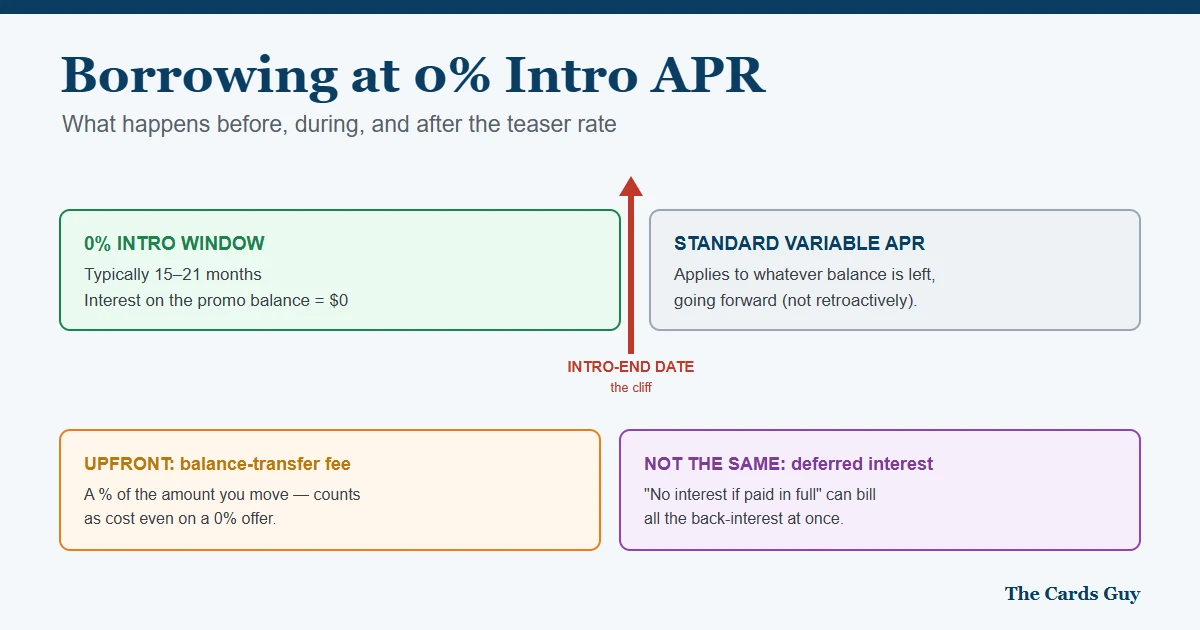
- If you carry a balance, look at 0% intro APR cards or balance transfers (watch the transfer fee and the promo end date).
- If you’re stretched, ask your issuer about a hardship plan. It’s not advertised, but it exists.
FAQs
Is my APR changing to 10% on January 20, 2026?
Not automatically. Unless Congress passes a law or your issuer changes your terms, your APR stays what your card agreement says.
Can Trump force every bank to cap APRs by himself?
He can push hard, but a nationwide cap usually needs Congress. Executive action is being discussed in the press, but it’s not a clean or proven path.
What is the bill that would cap APR at 10%?
S.381, the “10 Percent Credit Card Interest Rate Cap Act,” introduced February 4, 2025.
Is the late-fee cap already law?
No. The CFPB’s $8 rule was vacated in 2025. The current push is a new bill (S.3660).
Why did the CFPB late-fee rule fail?
A federal judge vacated it after the CFPB and banking groups agreed it violated the CARD Act requirements for penalty fees.
If APRs are capped, will banks cut rewards?
Very possible. Rewards are paid for by the way card portfolios make money. If that revenue gets capped, something usually gives.
Would everyone still get approved for cards under a cap?
Probably not. Banks have warned they may tighten approvals and reduce credit limits, especially for riskier borrowers.
If late fees are capped at $8, does that mean I can pay late without consequences?
No. Even with lower fees, late payments can still trigger penalty APRs, hurt your credit, and lead to account restrictions.
Will existing balances be covered by a cap?
It depends on how a law is written. Many changes apply going forward, but a true cap could force repricing across accounts.
What should I do if I’m carrying a balance right now?
Focus on a payoff plan, a 0% offer if you qualify, or a hardship plan. Political news may take months, but interest charges hit every day.