Personalized Card Recommendations

Blog

How to Check Your Credit Report for Errors

How to Check Your Credit Report for Errors: A Step-by-Step Guide

Your credit report is your financial resume, a detailed history that can either unlock opportunities or close doors. But what happens when this critical document contains errors? From simple clerical mistakes to signs of identity theft, inaccuracies on your credit report can lower your credit score, lead to higher interest rates, and even cause loan applications to be denied. Many people don’t realize that their report has errors until it’s too late. This is why proactive monitoring is essential for maintaining your financial health. This ultimate integrated guide provides a comprehensive checklist and a clear action plan, empowering you to find and fix credit report errors. We’ll walk you through the entire process, from obtaining your free reports to navigating the dispute process for a successful resolution. Table of Contents 1 Why Checking Your Credit Report is a Financial Necessity 2 Accessing and Monitoring Your Credit Reports for Free 3 A Comprehensive Checklist for Error Identification 4 The Definitive Guide to the Dispute Process and Resolution Why Checking Your Credit Report is a Financial Necessity _[Reviewed by [Financial Expert Name/Organization]]_ Your credit report is more than just a history of your financial transactions; it’s a detailed record that lenders, landlords, and even potential employers use to assess your reliability. An accurate report can open doors to better interest rates and financial opportunities, while one with errors can create significant roadblocks. Understanding why it’s important to check your credit report is the first step toward financial empowerment. Inaccuracies can lower your credit score, leading to loan denials or higher borrowing costs. Regularly reviewing your report is the best defense against financial discrepancies and identity theft. A Step-by-Step Guide on How to Check Your Credit Report Reviewing your credit report doesn’t have to be complicated. Following a structured approach ensures you cover all bases and can confidently identify any potential issues. 1. Obtain Your Reports: The first step is to get copies of your credit reports from all three major credit bureaus: Equifax, Experian, and TransUnion. 2. Verify Personal Information: Start with the basics. Ensure your name (and any variations), Social Security number, date of birth, and addresses are all correct. 3. Review Account History: Scrutinize every account listed. Check account numbers, balances, payment history, and credit limits. Make sure you recognize every account and that their statuses (open, closed) are accurate. 4. Examine Public Records: Look for any bankruptcies, liens, or judgments. Verify that this information is correct and is being reported within the legal time limits. 5. Check Inquiries: Review both “hard” and “soft” inquiries. Hard inquiries occur when you apply for credit. Ensure you recognize each one, as unauthorized hard inquiries can be a sign of fraud. Accessing and Monitoring Your Credit Reports for Free Staying on top of your credit health is easier and more accessible than ever. Federal law provides consumers with free access to their credit information, and numerous services can help you monitor for changes. How to Get All Three Credit Reports Free Weekly The Federal Trade Commission confirms that free weekly credit reports from Equifax, Experian, and TransUnion were made permanent in March 2021, and AnnualCreditReport.com is the only official, federally mandated website for these reports. To get your reports: – Visit `AnnualCreditReport.com`. – Fill out the secure form with your personal information to verify your identity. – Choose which reports you want to view (you can select one, two, or all three). – You can then view, download, and print your reports immediately. Avoid other websites that promise free reports but may enroll you in paid services. Stick to the official, government-mandated site for secure and truly free access. The Importance of Proactive Credit Monitoring for Errors While checking your reports weekly or annually is a great habit, credit monitoring services offer an additional layer of protection. These services track your credit files daily and alert you to significant changes, such as new accounts being opened, hard inquiries, or changes to your personal information. This real-time credit report monitoring allows you to react quickly to potential fraud or new errors, minimizing potential damage. Many financial institutions and credit card companies offer free credit monitoring as a perk, making it an accessible tool for everyone. A Comprehensive Checklist for Error Identification Knowing what to look for is crucial when you review your credit report. Errors can be subtle, but they can have a major impact. Use this credit report error checklist to guide your review and spot common credit report mistakes. Category Error / Indicator What to Look For Common Reporting Errors Incorrect Personal Information Misspellings of your name, wrong addresses, or an incorrect Social Security number. Accounts Belonging to Someone Else This often happens with individuals who have similar names or is a result of a clerical mix-up. Incorrect Account Status A closed account may be listed as open, or a debt that has been paid off might still show a balance. Duplicate Accounts The same debt may be listed multiple times, potentially with different creditors. Inaccurate Payment History A payment you made on time might be incorrectly reported as late, which can significantly harm your credit score. Taking steps toward proactively avoiding bad credit starts with ensuring your good habits are reported correctly. Outdated Negative Information The Consumer Financial Protection Bureau states that most negative information remains on a credit report for seven years, with Chapter 7 bankruptcies remaining for up to 10 years. Signs of Identity Theft Unauthorized Accounts Look for credit cards, loans, or other accounts that you never opened. This is a major red flag for identity theft. Unfamiliar Hard Inquiries If you see inquiries from companies you’ve never contacted, it could mean someone is trying to open an account in your name. Addresses You Don’t Recognize Fraudsters may change your address to divert mail and hide their activities. Accounts Wrongly in Collections If you see a collections account from a debt you don’t recognize, it could be fraudulent. If you suspect you’re a victim of a stolen

How to Check Your Credit Report for Errors: A Step-by-Step Guide Read More »

Neu Money Credit Cards Stand Out for Students

Unlocking Credit in the U.S.: Why Neu Money Credit Cards Stand Out for Students & Newcomers

If you’re new to the U.S. — whether as a student or an immigrant — building credit can often feel like a puzzle with pieces missing. Most traditional credit cards require a Social Security Number (SSN), a credit history, or a security deposit, which can block your path before it even begins. That’s where Neu Money comes in with two thoughtfully designed unsecured cards meant specifically for beginners: Neu Card 1: No-Interest Credit Builder (flat $7/month, zero interest, no annual fee) Neu Card 2: No-Fee Credit Builder (no monthly fees, variable APR, best if you pay in full monthly) Both start with an initial credit limit around $350 that grows as you make timely payments. Plus, both offer the rare 3% cash back on air travel (up to $1,000 yearly), a perk that resonates with students and newcomers who often travel internationally. Karl’s Take: A Balanced View on Neu Cards Karl, a fintech expert, highlights Neu’s innovative approach to accessibility — no SSN required upfront is a major game-changer for many. The flat monthly fee of Neu Card 1 offers a predictable path that eases anxiety around debt, a relief for those just learning to manage credit. Meanwhile, Neu Card 2’s fee-free structure appeals more to disciplined users who pay in full to avoid interest. That said, Karl also flags some limitations: Payment Reporting: Currently, Neu reports only to one of the major credit bureaus, limiting your credit-building impact compared to cards that report to all three. No Upgrade Path: Neu doesn’t offer a clear evolution to more robust credit cards, meaning once your credit improves, you’ll likely need to switch cards anyway. Cost Considerations: The $7 monthly fee for Neu Card 1 adds up over time, so if you can confidently pay off balances monthly, Neu Card 2 or other fee-free options might serve better. Karl encourages users to treat Neu as a foothold rather than the final destination on their credit journey. It’s a strong start for many, but knowledge about traditional cards and credit management must follow. What Reviewers Say: Practical Insights Recent expert reviews praise Neu for lowering barriers to entry — particularly for international students and immigrants without SSNs. The digital application is quick, and the unsecured nature (no security deposit needed) makes these cards more accessible than secured cards, which often require large deposits. However, reviewers also note: The starting credit limit is modest, so spending flexibility is limited initially. The Neu Card subscription model contrasts with many no-fee student cards, making long-term cost-benefit analysis important. Non-traditional reporting to credit bureaus might slow credit score growth. Neu serves an important niche but should be complemented with education about managing credit responsibly and exploring upgrade options as credit history develops. Quick Feature Snapshot Feature Neu Card 1 (No-Interest) Neu Card 2 (No-Fee) Monthly Fee $7 $0 APR / Interest 0% APR forever Variable APR if balance not paid in full Credit Limit $350+ (grows with on-time payments) $350+ (grows with on-time payments) Travel Rewards 3% back on air travel (up to $1,000/year) Same Foreign Transaction Fees None None Credit Reporting To TransUnion only To TransUnion only Best For Those who may carry balances Disciplined payers Final Thoughts Neu Money’s credit cards fill a vital gap in the U.S. financial landscape by catering to newcomers and students without SSNs. Their beginner-friendly terms, transparent fee structures, and travel perks make them uniquely accessible. However, newcomers should view these cards as stepping stones, gaining practical credit experience before moving on to more mainstream cards with broader benefits and credit bureau coverage. Karl’s recommendation: if you’re new and nervous about credit, Neu Card 1 provides safety and predictability. If you’re budget-conscious and confident in timely payments, Neu Card 2 offers a fee-free alternative. Either way, understand the trade-offs and prepare to graduate to a more traditional credit product to maximize your credit-building journey.   Frequently Asked Questions (FAQs) About Neu Money Credit Cards 1. How does Neu Money differ from other beginner credit cards? Neu Money offers unsecured credit cards specifically designed for students and newcomers to the U.S., which do not require a Social Security Number (SSN) to apply. This accessibility is a significant advantage over many traditional cards that require an SSN or a credit history upfront. 2. What are the main differences between Neu Card 1 and Neu Card 2? Neu Card 1 charges a flat $7 monthly fee but has 0% APR forever, making it ideal for those who may carry balances without paying interest. Neu Card 2 has no fees but uses a variable APR if balances are not paid in full each month, better suited for disciplined payers wanting a fee-free credit-building option. 3. Can I build my credit limit with Neu Cards? Yes, both Neu cards start with a credit limit of around $350, which can increase over time as you demonstrate responsible, on-time payments. 4. Are there any rewards with Neu Cards? Both cards offer 3% cash back on air travel expenses, up to $1,000 spent per year, which is a rare perk for beginner credit cards and particularly beneficial for international students and newcomers who travel frequently. 5. Is there a foreign transaction fee? No, neither Neu Card 1 nor Neu Card 2 charges foreign transaction fees, making them practical for international use. 6. What happens if I don’t have a Social Security Number? Neu Money allows applications without an SSN, making it uniquely accessible for newcomers who have not yet obtained one. If you have an SSN, you can provide it, but it’s not mandatory for approval. 7. Will using a Neu Card help improve my credit score? Yes, Neu reports payment activity to credit bureaus, helping you build credit history as you make timely payments. However, currently, Neu reports only to one major bureau, so credit-building impact may be more limited than cards that report to all three. 8. Are there any downsides to these cards? Neu Card 1 requires a monthly fee regardless of use, which

Unlocking Credit in the U.S.: Why Neu Money Credit Cards Stand Out for Students & Newcomers Read More »

Amex Platinum Card 2025 Refresh

Karl at The Cards Guy, What I Think About the 2025 Amex Platinum Refresh

American Express has just made its biggest update in years to the Platinum Card, bumping the annual fee from $695 to a hefty $895. As someone who watches the premium card space closely, I’ve dived into these changes—and here’s my candid take and recommendations for anyone thinking about keeping or getting this card. Karl says: “Fee Jump, But Big Perks” The fee spike is a headline-grabber, but Amex isn’t raising it without stacking new credits and lifestyle benefits. By my count, if you’re strategic, there’s over $3,500 in potential annual value—enough to offset the added cost for frequent users more than. Here’s what stands out to me: Hotel credit goes up: The hotel credit jumps to $600 annually, split into $300 twice a year, and can be used at select luxury partners via Amex Travel. For regular travelers, this can be a game-changer. Dining credit makes life sweeter: A new $400 credit for restaurant reservations opens up real savings at a huge list of spots. I always stack my credit with gift cards for maximum value. Digital entertainment and fitness boost: The digital entertainment credit now totals $300 for eligible streaming and news services. Plus, $300 at Lululemon and $200 for the Oura ring add some wellness love for active cardholders. Old perks remain: Lounge access (Centurion, Delta SkyClub, Priority Pass), airline fee credits, Saks credit, and automatic hotel elite status are all still here—no losses, just more options. Cool new look: The Platinum Card gets a mirrored-gloss finish for its latest edition. Sure, it’s just style, but it feels ultra-premium in the wallet. What Karl Recommends I always tell readers: the Platinum Card is a tool for those who use the perks, not just dream about them. With quarterly, biannual, and monthly credits, set reminders to activate and spend before time runs out, or your fee is basically wasted money. If you dine out, travel, or enjoy fitness splurges, Amex’s update puts serious cash back in your pocket. But if your spending doesn’t fit the benefit categories, think carefully before renewing or applying. For some, the new fee will outweigh the rewards. Business Platinum fans: You get matching hotel and dining credits, beefed-up earning rates on big purchases, and higher rewards on select business categories. Great for high-rollers, but less flexible for point redemption in 2025—watch that carefully. Karl’s Verdict Amex is clearly betting big that premium cardholders want richer perks and are willing to pay for them. If you max out the credits and prioritize travel and lifestyle spending, I say the new Platinum easily justifies its fee. For everyone else, make sure to do the math. Unused credits are just flashy window dressing. Better benefits, higher fee, and a whole lot to think about. As always, I’ll be bringing detailed breakdowns and tips at thecardsguy.com, so cardholders can squeeze every last dollar out of their cards. Written by Karl at thecardsguy.com — honest advice, not sponsored   FAQs for Amex Platinum Card 2025 Refresh What are the key new benefits of the Amex Platinum Card in 2025? The 2025 refresh introduces an increased annual fee of $895 but adds $3,500+ in annual credits and perks, including boosted hotel credits, a $400 dining credit via Resy, expanded streaming credits, fitness-related benefits with Lululemon and Oura Ring credits, and new elite statuses. Is the $895 annual fee for the Amex Platinum Card worth it? The value depends on how well you can maximize the new and existing credits and benefits. Frequent travelers and lifestyle-oriented users who utilize the hotel, dining, streaming, and ride credits can more than offset the higher fee. How does the Amex Platinum Card compare to competitors like Chase Sapphire Reserve and Capital One Venture X? The Amex Platinum offers superior lounge access, luxury hotel benefits, and comprehensive credits but at a higher fee. Chase Sapphire Reserve offers a slightly lower fee with good travel credits, while Capital One Venture X provides similar lounge access at a more affordable annual fee. What should I know about the welcome offer with the new Amex Platinum Card? New cardholders may earn up to 175,000 Membership Rewards points after spending $8,000 in the first 6 months. Offers vary by applicant, and there is no credit pull for offer viewing. Are there any unchanged benefits on the Amex Platinum Card after the 2025 refresh? Yes, key benefits like airline fee credits, Equinox memberships, Global Entry/TSA PreCheck credits, Saks credits, Uber Cash, Walmart+, hotel elite statuses, and airport lounge access remain intact. What are some alternatives to the Amex Platinum Card for travelers? Alternatives include the Chase Sapphire Reserve with a $795 annual fee and strong travel credits, Capital One Venture X with a $395 fee offering lounge access and credits, and Amex Gold Card with a $325 fee focused on dining and groceries. How do the Business Platinum Card updates differ from the Consumer Platinum Card? The Business Platinum sees new hotel credits and enhanced earnings on large purchases, but loses some points redemption flexibility, including limitations on the 35% airline rebate and stronger focus on business expenses.

Karl at The Cards Guy, What I Think About the 2025 Amex Platinum Refresh Read More »

Chase Freedom vs. Horizon Gold Card 2025

Horizon Freedom Gold vs. Chase Freedom: The Truth Behind the Cards in 2025

If you’re searching for a comparison between the Horizon Freedom Gold Card and the Chase Freedom cards, you’ve likely noticed they share a similar name. However, that’s where the similarities end. This comparison isn’t about weighing two equal options; it’s about exposing a dangerous financial trap and highlighting a genuinely valuable alternative. The Horizon Freedom Gold Card is a predatory, high-fee merchandise card with a history of legal trouble, designed to profit from those with limited credit options. In stark contrast, the Chase Freedom cards are legitimate, rewarding credit cards from one of the world’s most reputable banks. This guide breaks down the critical differences to protect you from a costly mistake and steer you toward a product that offers real financial benefit. Table of Contents 1 The Fundamental Difference: Store Card vs. Real Credit Card 2 Exposing the Truth: Is the Horizon Gold Card Legitimate? 3 Head-to-Head Comparison: Horizon Gold vs. Chase Freedom 4 The Horizon Outlet Experience: What Can You Actually Buy? 5 The Verdict: Why Chase Freedom is the Only Real Choice The Fundamental Difference: Store Card vs. Real Credit Card Before we compare features, fees, or benefits, it’s crucial to understand the most significant distinction: the Horizon Freedom Gold Card and the Chase Freedom cards are not in the same category. One is a limited merchandise card, while the other is a genuine, major-network credit card. What is the Horizon Freedom Gold Card? (Not a Real Credit Card) A common point of confusion is whether the Horizon Gold card is a real credit card. The answer is no. It is a merchandise or “store” card that can only be used to purchase products from a single online store: thehorizonoutlet.com. It does not carry a Visa, Mastercard, or American Express logo and cannot be used for everyday purchases, cash advances, or balance transfers. Its primary function is to finance purchases exclusively through the Horizon Outlet. What are the Chase Freedom Cards? (Legitimate Credit Cards) In sharp contrast, the Chase Freedom family of cards (like the Chase Freedom Flex and Chase Freedom Unlimited) are legitimate, major-network credit cards. Issued by JPMorgan Chase, one of the largest banks in the U.S., these cards are accepted virtually anywhere that takes Visa or Mastercard. They offer robust rewards programs, provide actual credit lines, and are powerful tools for building a positive credit history when used responsibly. Exposing the Truth: Is the Horizon Gold Card Legitimate? While the Horizon Gold card exists as a product, its business practices have faced intense scrutiny, leading many consumers to question its legitimacy and label it as predatory. The “Horizon Freedom Gold Card Scam”: A Look at Predatory Practices The term Horizon Freedom Gold Card scam is widely used by consumers online due to the card’s misleading marketing and fee structure. The card is often promoted as an easy way to get a credit line, targeting individuals with poor or no credit. However, users quickly discover that the high monthly and annual fees can easily outweigh the value of the limited credit offered. Independent financial experts and consumer advocacy groups frequently warn against such high-fee, limited-use cards, highlighting them as classic examples of predatory lending. These practices are why many consider the Horizon Freedom Gold Card predatory. For a deeper look at its structure, you can read our detailed investigation into the Freedom Gold Card. Legal Troubles: The CFPB Lawsuit and Horizon Card Services Bankruptcy The company’s history is riddled with legal issues. According to the Consumer Financial Protection Bureau (.gov), the CFPB did file a lawsuit against Horizon Card Services for deceptive practices and illegal fees, but the case was later voluntarily dismissed with prejudice. Additionally, Horizon Card Services has not declared bankruptcy; its parent company, Reliant Holdings, was the subject of the lawsuit. These events, particularly the initial allegations, serve as a significant red flag for anyone considering this card. Head-to-Head Comparison: Horizon Gold vs. Chase Freedom When placed side-by-side, the differences between these cards become starkly clear. This isn’t a comparison of equals; it’s a contrast between a limited, high-cost product and a valuable financial tool. Feature Horizon Freedom Gold Card Chase Freedom Cards (Flex/Unlimited) Card Type Merchandise Store Card Real Credit Card (Visa/Mastercard) Where to Use Only at thehorizonoutlet.com Worldwide (where Visa/Mastercard is accepted) Annual Fee Yes (often high) Often $0 Monthly Fees Yes (a significant hidden cost) $0 Rewards None Robust cashback rewards (e.g., 1.5%-5% back) Credit Reporting May report to one bureau Reports to all three major credit bureaus Issuer Horizon Card Services JPMorgan Chase Bank Fee Structure: The Hidden Costs of the Horizon Gold Card The most alarming aspect of the Horizon card is its fees. According to BestCreditCard, users report a monthly membership fee of $24.95, totaling $299.40 per year, which functions as a significant annual cost. There is no traditional horizon outlet cash advance; the card is strictly for merchandise. Chase Freedom cards, conversely, typically have no annual fee and no hidden monthly charges. Credit Building Potential: Fact vs. Fiction Many applicants hope to use the card for Horizon Gold card credit building. However, because it’s not a traditional credit card and may not report to all three major credit bureaus (Equifax, Experian, TransUnion), its impact on your credit score is minimal and often negative if fees are missed. A real credit card like a Chase Freedom is designed to help you build a comprehensive credit history by reporting your payment activity to all three bureaus. The Horizon Outlet Experience: What Can You Actually Buy? The sole purpose of the Horizon Gold card is to shop at the horizon outlet. But what does this store actually offer? A Look Inside thehorizonoutlet.com Products The thehorizonoutlet.com products catalog is notoriously limited, often featuring generic, overpriced electronics, home goods, and accessories. Reviews frequently point out that the prices of these items are inflated compared to what you could find at major retailers, diminishing the value of the card’s credit line even further. User Experience: Common Horizon Gold Card Complaints

Horizon Freedom Gold vs. Chase Freedom: The Truth Behind the Cards in 2025 Read More »

Freedom Gold Card Review Legit or a big Scam?

Is the Freedom Gold Card a Scam? 5 Legitimate Credit-Building Alternatives

If you’re asking, “Is the Freedom Gold Card a scam?” you’re already on the right track to protecting your financial future. In a world of complex financial products, it’s easy to be drawn in by promises of guaranteed approval and no credit checks. The hard truth is the Freedom Gold Card is not a real credit card and will not help you build credit. It’s a high-fee merchandise card that only works at a single online store. Table of Contents 1 The Truth About the Freedom Gold Card 2 5 Legitimate Alternatives for Building Credit (Even with No Credit Check) 3 Understanding Your Credit-Building Journey 4 Frequently Asked Questions (FAQ) The good news is that your search for a credit-building tool doesn’t have to end here. There are powerful, legitimate, and safe alternatives designed specifically for people with bad or no credit history. In this guide, we’ll expose why products like the Freedom Gold Card are a dead end and walk you through 5 legitimate alternatives that will actually help you build a strong credit foundation. For a complete breakdown of its fees and features, see our detailed Freedom Gold Card review. The Truth About the Freedom Gold Card If you’ve been searching for a way to build or rebuild your credit, you’ve likely come across offers that seem too good to be true. The Freedom Gold Card is often one of them, promising easy approval with no credit check. But before you apply, it’s crucial to understand what it is—and what it isn’t, as we explain in our detailed Freedom Gold Card review. Our Editorial Commitment To ensure accuracy and impartiality, our content is based on thorough research from reputable sources. We follow a strict editorial process to provide clear, unbiased information. However, this content is for informational purposes only and does not constitute financial advice. Is the Freedom Gold Card Legit? The Short Answer is No. To be blunt, the Freedom Gold Card is not a real credit card, and it will not help you build credit. The primary reason is that it is not a Visa, Mastercard, American Express, or Discover card. While the Freedom Gold Card may report payment activity to credit bureaus, its effectiveness for improving credit scores is not guaranteed, as noted by Credit.com. The Freedom Gold Card is a catalog credit card with a $750 unsecured credit limit that can only be used at TheHorizonOutlet.com, according to information from Credit.com. You pay a monthly fee for a line of “credit” that can’t be used for everyday purchases like gas or groceries. It’s a closed-loop system designed to sell you products, not to improve your financial standing. How to Spot Predatory and Fake Credit Products The Freedom Gold Card is a prime example of a predatory credit cards that target individuals with poor or no credit. These products often use misleading language to trap consumers in high-fee arrangements that offer little real value. Here’s how to protect yourself and identify fake credit cards or offers that don’t build credit: * Check for Major Network Logos: A legitimate credit card will almost always have a Visa, Mastercard, Amex, or Discover logo, allowing you to use it anywhere. * Confirm Credit Bureau Reporting: The entire point of a credit-building card is to report your responsible behavior to credit bureaus. If a card issuer doesn’t do this, it’s not a credit-building tool. Check their terms and conditions for this information. * Look for the Word “Unsecured”: If a card is advertised as an “unsecured credit card” with “guaranteed approval” and no credit check, be extremely cautious. Legitimate unsecured cards for bad credit are rare and often come with very high fees. * How to Check Legitimacy of a Website: Look for clear contact information, a physical address, and professional design. Search for third-party reviews outside of their own site. A lack of transparency is a major red flag. 5 Legitimate Alternatives for Building Credit (Even with No Credit Check) Now for the good news: there are excellent, legitimate tools available to help you build credit. Here are five powerful alternatives that actually work. Alternative How It Works Best For 1. Secured Credit Cards You provide a refundable security deposit (e.g., $200) which becomes your credit limit. Use the card and make payments, and the issuer reports your activity to credit bureaus. Beginners with bad or no credit history. It’s the most recommended and reliable starting point. 2. Credit Builder Loans A lender places a loan amount in a locked savings account. You make monthly payments, and once paid, the funds are released to you. Each payment is reported. Building a strong payment history without the temptation of a revolving credit line. 3. Graduating Secured Cards After 6-12 months of responsible use, the lender refunds your deposit and converts the card to a regular unsecured card, often with a higher limit. Those who want a clear and seamless path from a secured to an unsecured credit card. 4. Second-Chance Unsecured Cards These are unsecured cards for bad credit that don’t require a deposit but come with high annual fees and interest rates. They report to credit bureaus. A last resort for individuals who cannot provide a security deposit but need to build credit. 5. Reputable Personal Loans Small loans from credit unions or online lenders that verify your ability to repay. On-time payments on this installment loan are reported to credit bureaus. Diversifying your credit mix with an installment loan, but requires careful vetting of the lender. — Understanding Your Credit-Building Journey Building credit is a marathon, not a sprint. Consistency and patience are your most valuable assets. How Can I Build Credit with No Credit History? Starting from scratch can feel daunting, but the path is clear. 1. Open a Secured Credit Card or Credit Builder Loan: This is your first step to establishing a credit file. 2. Make On-Time Payments: Payment history is the single most important factor in your credit score. Never miss a

Is the Freedom Gold Card a Scam? 5 Legitimate Credit-Building Alternatives Read More »

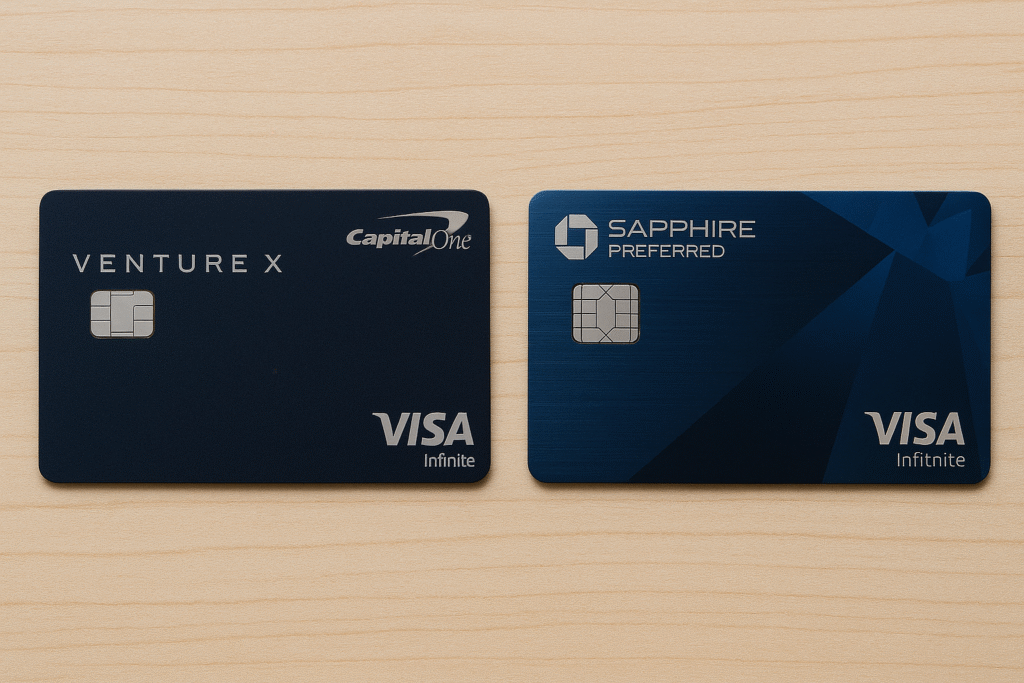
Capital One Venture X vs Chase Sapphire Preferred

Capital One Venture X vs. Chase Sapphire Preferred: A Persona-Based Guide

You’ve narrowed your search down to two of the best travel rewards cards available: the Capital One Venture X and the Chase Sapphire Preferred. Both offer compelling rewards and travel perks, but that’s where the decision gets tough. Reading endless feature lists can feel overwhelming, leaving you with the same question: which one is actually right for me? Forget the generic comparisons. This guide is different. We’re taking a persona-based approach to help you find the perfect fit. We’ll analyze every feature through the lens of specific traveler types—from the casual vacationer to the frequent flyer—to give you a clear, personalized recommendation. Table of Contents 1.Which Traveler Are You? The Persona-Based Verdict 2.The Financial Breakdown: Calculating the True Value 3.Head-to-Head Feature Showdown 4.Final Verdict: Which Card Should You Choose? Which Traveler Are You? The Persona-Based Verdict The best travel card isn’t just about points and perks; it’s about how those benefits align with your life. Let’s identify which traveler profile you fit into to find your perfect card. For Beginners and Casual Travelers If you’re new to travel rewards or take one or two big trips a year, your focus should be on simplicity, straightforward value, and a manageable annual fee. The question of venture x or sapphire preferred for beginners comes down to ease of use. For the casual traveler, the Chase Sapphire Preferred is often the superior choice. Its lower annual fee is less intimidating, and its rewards structure is easy to understand, with bonus points on broad categories like dining, online groceries, and streaming services. The card’s travel portal is user-friendly, and the points offer a simple 1.25 cents per point redemption value for travel, making it one of the easiest travel cards to get tangible value from without a steep learning curve. The Venture X, while powerful, requires you to use its travel credit and anniversary bonus to offset its higher fee, which can be more complex for a beginner. Verdict for Casual Travelers: The Chase Sapphire Preferred offers a lower barrier to entry and more straightforward value for those who travel less frequently. For Family Travel When considering the chase sapphire vs capital one venture x for families, the focus shifts to perks that can be shared and benefits that make family logistics easier. The Capital One Venture X shines here, primarily due to its generous authorized user policy. You can add up to four authorized users for free, and each one gets their own Priority Pass membership for airport lounge access. This is a game-changer for families, allowing everyone to relax in comfort before a flight. The Sapphire Preferred allows you to add authorized users for no additional fee, but they do not receive their own Priority Pass lounge access membership, and the card lacks comprehensive lounge access, making it less ideal for family airport perks. Verdict for Families: The Venture X’s authorized user perks for family lounge access make it the clear winner for family travel. For Everyday Spending & Earning Your travel card shouldn’t just reward you when you travel; it should be a workhorse for your daily expenses. When comparing venture x vs sapphire preferred for everyday spending, the best card depends on your budget’s focus. The Sapphire Preferred excels with 3x points on dining, online groceries, and select streaming services. The Venture X offers a simple, flat 2x miles on every single purchase, no matter the category. If your spending is heavily concentrated in the dining and grocery categories, the Sapphire Preferred might net you more rewards. However, for sheer simplicity and earning a high base rate on all other spending (like gas, retail, and bills), the Venture X’s 2x miles on everything is incredibly powerful. To maximize points on daily spend, you need to analyze your budget. If you’re looking to broaden your search for the best card for your wallet, our comprehensive guide on the top travel credit cards for everyday spending can help you compare even more options. Verdict for Everyday Spending: It’s a tie. Choose Sapphire Preferred if you’re a foodie who spends heavily on its bonus categories. Choose Venture X for a powerful, simple flat-rate earner on all purchases. The Financial Breakdown: Calculating the True Value Beyond the perks, the numbers have to make sense. Let’s break down the costs and rewards to see which card offers a better return on your investment. Financial Aspect Capital One Venture X Chase Sapphire Preferred Annual Fee & Net Value $395 fee, effectively reduced by a $300 annual travel credit and 10,000 anniversary miles (worth $100+). Can have a net positive value. $95 fee, partially offset by a $50 annual hotel credit. A straightforward, low-cost entry point. Points Valuation & Earning Earns a high, flat 2x miles on every purchase. Miles are valuable with an expanding list of transfer partners. Earns 3x points on dining, online groceries, and streaming. Points are highly valued due to key partners like Hyatt and United. Typical Sign-Up Bonus Often around 75,000 miles, worth at least $750 toward travel. Often around 60,000 points, worth $750 when redeemed for travel via the Chase portal. Head-to-Head Feature Showdown Let’s compare some of the most important travel-specific benefits side-by-side. Feature Capital One Venture X Chase Sapphire Preferred Winner Lounge Access Unlimited Priority Pass and Capital One Lounge access for you, your authorized users, and guests. No complimentary lounge access included. Venture X Travel Booking Portal Robust portal used to redeem the $300 annual credit. Offers price matching. Points are worth 25% more (1.25 cents each) when booking travel through the portal. Tie Travel Insurance Excellent protections including primary rental car insurance and trip cancellation coverage. Industry-leading protections, often cited as slightly more comprehensive and user-friendly. Sapphire Preferred (Slight Edge) Key Transfer Partners Strong list with many international carriers like British Airways, Air France/KLM, and Turkish Airlines. High-value, exclusive partners including World of Hyatt and United Airlines. Depends on preference Final Verdict: Which Card Should You Choose? Choosing between the Venture X and Sapphire Preferred isn’t

Capital One Venture X vs. Chase Sapphire Preferred: A Persona-Based Guide Read More »

Are Travel Credit Card Annual Fees *Really* Worth It? A Practical Guide

Are Travel Credit Card Annual Fees *Really* Worth It? A Practical Guide

That shiny new travel credit card promises a world of rewards, but then you see it: a $95, $250, or even a $695 annual fee. Is it a golden ticket or a costly trap? The sticker shock is real, and it leaves many people wondering if they’re leaving value on the table or simply paying for perks they’ll never use. This guide isn’t just another list of pros and cons. We’ll give you a practical framework to calculate the personal return on investment (ROI) for any travel card, so you can decide with confidence whether that fee is a smart investment in your travel goals. Table of Contents 1.The “Is It Worth It?” Calculation: Your Personal ROI Framework 2.Exploring No-Fee Alternatives: Get Rewards Without the Cost 3.Justifying the Cost: When Premium Cards Make Sense The “Is It Worth It?” Calculation: Your Personal ROI Framework Before you can decide if a fee is worth it, you need to stop thinking of it as a cost and start thinking of it as an investment. The key is to perform a simple cost-benefit analysis tailored to your own habits. The formula is straightforward: (Value of Rewards + Value of Benefits) – Annual Fee = Your Net Value. How to Use an `Annual Fee Calculator` for Your Credit Card You don’t need a fancy tool; a simple spreadsheet or notepad will do. Here’s a breakdown of the travel card cost-benefit analysis: 1. Estimate Your Rewards Value: Look at your spending over the last 6-12 months. How much did you spend on travel, dining, and groceries? Apply the card’s rewards multipliers (e.g., 3x points on dining) to your spending to estimate the points you’ll earn annually. Then, figure out how to calculate credit card points value. A common baseline is 1 cent per point, but this can vary. If 50,000 points are worth $500 in travel, your value is 1 cent per point. 2. Assign a Dollar Value to Benefits: This is the most crucial step in calculating credit card value. Go through the list of perks and assign a realistic dollar value based on whether you would have paid for that service anyway. * Free Checked Bags: For example, with most major airlines now charging around $35 for the first checked bag, checking one bag each way on two round trips would cost $140 per year. * Statement Credits: A $300 annual travel credit is worth exactly $300, provided you’ll use it. * Lounge Afrentalccess: A standard Priority Pass membership, the most common lounge network offered by credit cards, costs $99 per year plus $35 per visit. If you visit a lounge four times a year, you’d pay $239. A card that includes this benefit could therefore offer up to that much in value if you would otherwise pay for it. 3. Subtract the Annual Fee: Once you have the total value of rewards and benefits, subtract the annual fee. If the result is positive, the card is likely a good deal for you. The Fundamental Question: `Are Travel Credit Card Annual Fees Worth It` for You? The answer depends entirely on your lifestyle. A card’s annual fee is worth it when the tangible value you get from its benefits and rewards is significantly higher than the fee itself. For a frequent business traveler, a $550 card with lounge access and travel credits might provide over $1,000 in annual value. For a family that takes one vacation a year, a $95 card with free checked bags might be the perfect fit. The reason why credit cards have annual fees is simple: these fees help fund the expensive rewards programs and premium benefits offered. The card issuer is betting that a portion of users won’t maximize the benefits, which helps offset the cost of high-value customers. Proven Strategies on `How to Avoid a Credit Card Annual Fee` If you’re facing an upcoming fee on a card you no longer find valuable, you have a few options: * Ask for a Waiver: Call the number on the back of your card and ask the retention department if they can offer a credit card annual fee waiver. If you’ve been a loyal customer, they may waive it or offer a statement credit to offset the cost. * Downgrade Your Card: Ask to downgrade your card to a no-fee version within the same card family. This allows you to keep your credit line and account history intact while eliminating the fee. * Use a Military Waiver: If you are an active-duty military member, you may be eligible for financial relief. The Servicemembers Civil Relief Act (SCRA) caps interest rates on pre-service loans and credit cards at 6%. While the law doesn’t require it, many card issuers voluntarily waive annual fees for active-duty personnel as a matter of policy. Exploring No-Fee Alternatives: Get Rewards Without the Cost For those who are new to travel rewards or have simpler spending habits, a card with no annual fee is an excellent, risk-free way to earn points and build credit history. The `Best Travel Cards with No Annual Fee` Zero annual fee credit cards have become incredibly competitive. Many now offer strong rewards rates on travel and dining, sign-up bonuses, and even perks like no foreign transaction fees. These free travel credit cards provide a fantastic entry point into the world of rewards without the pressure of having to justify a fee each year. Your First `Starter Travel Credit Card`: A Beginner’s Guide If you’re looking for your first travel credit card with no annual fee, prioritize simplicity and broad reward categories. The best beginner travel credit card is one that rewards you for your everyday spending on things like dining, groceries, or gas. Look for a card that is easy to get and helps you learn the rewards ecosystem without the complexity of transfer partners or premium perks. `No Annual Fee vs. Annual Fee Credit Card`: A Head-to-Head Comparison Here’s a simple breakdown of the trade-offs: Card Type Pros Cons

Are Travel Credit Card Annual Fees *Really* Worth It? A Practical Guide Read More »

Travel Credit Cards for Work

How Travel Credit Cards Work: A Simple 3-Step Guide for Beginners

Diving into the world of travel credit cards can feel like learning a new language. With terms like ‘points,’ ‘miles,’ ‘annual fees,’ and ‘redemption portals,’ it’s easy to feel overwhelmed and suffer from ‘analysis paralysis.’ While many guides list features, they often fail to give you a clear starting point. We’re here to change that. This guide is your simple, step-by-step action plan. We will demystify the entire process by breaking it down into three clear stages: understanding the core concepts, creating your action plan, and mastering your first redemption. Forget the confusion; let’s get you ready to confidently choose and use your first travel card. Table of Contents 1.Step 1: Understanding the Core Concepts & Benefits 2.Step 2: Your Action Plan for Getting Started 3.Step 3: Mastering Your First Redemption Step 1: Understanding the Core Concepts & Benefits Before you can start earning rewards, you need to grasp the fundamentals. This first step is all about understanding the value proposition-what you get, what it costs, and how the points system actually works. Understanding the Core Benefits for Newcomers So, what are the benefits of a travel credit card? At their core, these cards are designed to reward you for your spending with points or miles that can be redeemed for travel. The travel card benefits for beginners can be grouped into a few key categories: Benefit Category How It Works Earning Rewards Earn points or miles on every purchase, with bonus rewards in specific categories like dining, groceries, or travel. Welcome Bonuses Receive a large sum of points (e.g., 60,000) for meeting a minimum spending requirement in the first few months. Travel Perks Enjoy benefits like free checked bags, airport lounge access, travel insurance, and credits for TSA PreCheck or Global Entry. Flexibility Transfer points to various airline and hotel partners, providing more options and potentially higher value when booking travel. Are Travel Cards Worth the Annual Fee? This is the most common question for newcomers. Many premium travel cards come with an annual fee, ranging from under $100 to over $500. The key is to evaluate if the benefits you’ll use outweigh the cost. Ask yourself: are travel cards worth the annual fee for my lifestyle? To figure this out, do a simple calculation. Add up the dollar value of the perks you will realistically use. For example: Perk / Bonus Example Value How It Adds Up Free Checked Bag ~$60 Value per round-trip flight, per person. Annual Hotel Credit $100 Direct statement credit for eligible hotel stays. Welcome Bonus ~$1,230 Based on a 60,000-point bonus from a card like the Chase Sapphire Preferred®, valued at ~2.05 cents per point by The Points Guy. If the value of these perks exceeds the annual fee, the card is likely worth it. For those completely new or hesitant to pay a fee, there are excellent best travel credit card no annual fee options that offer a great starting point into the world of rewards. How to Use Travel Points: The Basics Understanding how to use travel points is simpler than it seems. Think of them as a currency. You earn this currency by spending on your card, and then you spend it on travel. The value of travel rewards can vary, but a common baseline is 1 cent per point. So, 50,000 points are often worth at least $500 in travel. Here’s how travel points work in practice: Earn: You spend money on your card and accumulate points. Redeem: You log into your credit card’s online portal. Book: You can either book travel directly through the portal or transfer points to a partner airline or hotel to book with them. We’ll cover this in more detail in Step 3. Step 2: Your Action Plan for Getting Started Now that you understand the ‘what’ and ‘why,’ let’s focus on the ‘how.’ This section provides a clear roadmap for selecting and applying for your first card. Choosing Your First Travel Card With hundreds of cards on the market, choosing your first travel card can be the most intimidating step. The secret is to ignore the noise and focus on one thing: your own spending habits. Don’t pick a card because a blogger loves it; pick the one that best rewards your life. Look at your budget. Do you spend the most on dining out, groceries, or gas? Find a card that offers bonus points in those categories. Considering how a card aligns with your budget is a key part of the process. To simplify this process, start by exploring our detailed reviews of the top travel credit cards for everyday spending, which break down how different cards reward various lifestyles. For beginners, it’s also wise to look for cards known as easy approval travel credit cards to increase your chances of success. How to Apply for a Travel Credit Card Once you’ve picked a card, the application is next. The process of how to apply for a travel credit card is straightforward and usually takes less than 15 minutes online. You’ll need to provide personal information like your name, address, Social Security number, and annual income. The most important of the travel credit card requirements is your credit score. According to Experian, one of the three major credit bureaus, a FICO® Score of 670-739 is considered ‘Good,’ 740-799 is ‘Very Good,’ and 800-850 is ‘Exceptional.’ If you’re unsure of your score, you can check it for free through various services or even your current bank. Some issuers offer a credit card pre approval travel tool on their website, which can tell you if you’re likely to be approved without a hard inquiry on your credit report. A Step-by-Step Guide to Travel Rewards For those who love checklists, here is your step-by-step guide to travel rewards: Check Your Credit Score: Know where you stand before you apply. Analyze Your Spending: Identify your top 2-3 spending categories. Research Cards: Find 1-2 cards that offer bonus rewards in your top categories. Compare Welcome Bonuses

How Travel Credit Cards Work: A Simple 3-Step Guide for Beginners Read More »

How to Maximize Credit Card Travel Rewards

How to Maximize Credit Card Travel Rewards: A Foolproof Guide

The dream of using credit card points to book a ‘free’ flight or a luxury hotel stay is powerful. But for every success story, there’s a nagging fear: ‘Am I doing this wrong? Am I leaving value on the table or, worse, costing myself money?’ You’re not alone. While many guides focus on complex hacks, they often skip the fundamentals and the common pitfalls that trip up beginners. This guide is different. We’ve created a foolproof, 3-step strategy designed to help you maximize your rewards with confidence. We’ll show you the smartest ways to earn, the highest-value ways to redeem, and most importantly, the top 5 costly mistakes you must avoid. Table of Contents Step 1: Smartest Ways to Earn Rewards (Without Overspending) Step 2: Highest-Value Ways to Redeem Your Points Step 3: The 5 Most Costly Mistakes to Avoid Step 1: Smartest Ways to Earn Rewards (Without Overspending) Earning points is the first part of the equation, but it’s about being strategic, not just spending more. The goal is to optimize the spending you already do. Understand Your Card’s Bonus Categories Every travel card has bonus categories—areas of spending where you earn extra points, like 3x on dining or 2x on travel. The key is to align your card with your lifestyle. If you spend a lot on groceries, a card that rewards that spending is essential. Choosing the right card for your habits is the first and most crucial step. To solve this, our guide to the top travel credit cards for everyday spending analyzes which cards offer the best rewards for groceries, gas, and dining, helping you find the perfect match. Meet the Sign-Up Bonus Responsibly The sign-up bonus is often the single largest haul of points you’ll ever receive. However, it requires meeting a minimum spending threshold in a set time frame. Plan for it. Time your application with a large, planned purchase (like new tires or home repairs) rather than manufacturing spend. Never go into debt just to chase a bonus; the interest will wipe out any value you gain. Leverage Shopping Portals and Partner Offers Most card issuers have online shopping portals. By clicking through their portal before shopping at stores like Nike, Apple, or Home Depot, you can earn extra points on top of your regular rewards. It’s a simple step that can double or triple your earnings on purchases you were already going to make. Add Authorized Users (When It Makes Sense) Adding a trusted partner or family member as an authorized user can help you accumulate points faster, as their spending also earns rewards on your account. However, remember that you are ultimately responsible for the entire bill. Only do this if you have a clear agreement on spending and payments. Step 2: Highest-Value Ways to Redeem Your Points Earning points is only half the battle. How you redeem them determines their true value. A point can be worth less than a cent or more than five cents, depending on your strategy. The three primary methods offer different trade-offs between value and convenience. Redemption Methods Transfer Partners: Highest value (2.0 – 5.0+ cents). Best for premium cabin flights (business/first class) with airline and hotel loyalty programs. Requires flexibility and research. Issuer’s Travel Portal: Fixed value (1.0 – 1.5 cents). Convenient, straightforward booking for economy flights or hotels when award availability is limited. Good for beginners. Statement Credits: Lowest value (≤ 1.0 cent). For emergencies, covering annual fees, or when you have no upcoming travel plans. Generally offers the least value. Step 3: The 5 Most Costly Mistakes to Avoid Mistake #1: Hoarding Points and Fearing Devaluation Your points are not a savings account. Airlines and hotels can—and do—devalue their loyalty programs overnight, requiring more points for the same flight or hotel stay. The best strategy is to ‘earn and burn.’ Have a goal in mind, save up for it, and book it. Don’t let your hard-earned rewards lose value sitting in your account. Mistake #2: Ignoring Transfer Partners Relying solely on statement credits or the travel portal is a huge mistake. By not learning the basics of transfer partners, you could be cutting the value of your rewards in half. Take an hour to explore your card’s transfer partners and see the potential. Mistake #3: Mismanaging Annual Fees High annual fees can be intimidating, but they often come with benefits (like travel credits, lounge access, or free hotel nights) that can easily outweigh the cost. Before your annual fee is due, do a simple calculation: are the benefits you used this year worth more than the fee? If not, call your card issuer to see if there are any retention offers or consider downgrading to a no-fee card. Mistake #4: Letting Points Expire Points can expire due to account inactivity or if you close your card. Always read the fine print. For most programs, any small activity—like making a purchase or redeeming a small number of points—will reset the expiration clock. Mistake #5: Carrying a Balance Carrying a balance will cost you more in interest than you could ever hope to earn in rewards. Always pay your bill in full, every single month. No exceptions. Conclusion Maximizing credit card travel rewards isn’t about finding secret loopholes; it’s about building smart, sustainable habits. By following this 3-step strategy—earning strategically, redeeming for high value, and diligently avoiding common mistakes—you can turn your everyday spending into incredible travel experiences. You don’t need to be an expert, you just need to be mindful. Start by mastering one airline transfer partner for your favorite destination. This single skill can save you hundreds, if not thousands, of dollars and is the first step to becoming a savvy traveler. Frequently Asked Questions What’s the fastest way to earn enough points for a flight? The fastest way is by earning a sign-up bonus on a new credit card. These bonuses often provide enough points for a round-trip domestic flight or even a one-way international flight after meeting a

How to Maximize Credit Card Travel Rewards: A Foolproof Guide Read More »

Best Credit Cards for Travelers 2025

Study Abroad: Complete Guide to Avoiding Foreign Transaction Fees for Students (2025)

For international students coming to the US or American students heading abroad this summer, foreign transaction fees can silently drain your travel budget. If you’re researching “how to avoid 3% foreign transaction fee for students” or “credit cards for summer study abroad programs,” this comprehensive guide focuses specifically on strategies to eliminate these unnecessary charges and make your money go further during your academic adventures. Understanding Foreign Transaction Fees Foreign transaction fees are surcharges (typically 3%) added to purchases processed outside your home country or in foreign currencies. For students already on tight budgets, these fees represent a completely avoidable expense. Smart Strategies for International Students For International Students in the USA: International students face unique challenges when building credit in the US, but these options can help: 1. Student-Focused Cards with Global Appeal: Capital One Savor Rewards for Student Credit Card: Accepts limited credit history and offers generous rewards plus zero foreign transaction fees Firstcard® Secured Credit Builder Card with Cashback: Accessible option requiring security deposit Best options for credit cards for international students with no US credit history 2. Documentation Requirements for International Students: Valid student visa (F-1, J-1, or M-1) Proof of US address (utility bill or rental agreement) Student ID and enrollment verification (Foreign transaction fee applies on standard plans, but Premium plan users enjoy 0% foreign fees.) SSN or ITIN (Individual Taxpayer Identification Number) 3. Building US Credit Quickly: Become an authorized user on a trusted person’s established US account Use services that report rent payments to credit bureaus Consider secured credit cards with graduation paths to unsecured cards For US Students Studying Abroad: 1. Beyond No Foreign Transaction Fee Cards:  Alert your card issuer before departure (prevent security freezes) Understand dynamic currency conversion (always pay in local currency) Carry multiple payment options from different networks Enable travel alerts on your banking apps 2. ATM Strategy Abroad: Pair your credit card with a debit card that reimburses ATM fees Make fewer, larger ATM withdrawals to minimize flat withdrawal fees Research partner ATM networks at your destination before departure How to avoid ATM fees while studying abroad in Asia: use Charles Schwab or similar bank accounts that reimburse all ATM fees worldwide Pro tip: Some countries require chip-and-PIN cards at unattended terminals like train kiosks, toll booths, and gas stations. Even if your U.S. card defaults to signature, ask your issuer for a backup PIN before you travel. How to Choose Student Card for Semester Abroad in Europe When preparing for a European semester abroad, consider these specific factors when selecting your credit card: Region/Country Top Accepted Networks Cash Reliance Level Notes Western Europe Visa, Mastercard, Amex Low Contactless payment widely available Eastern Europe Visa, Mastercard Medium Major cities card-friendly, rural areas cash-heavy Southeast Asia Visa, Mastercard High Tourist areas accept cards, local areas cash-only Latin America Visa, Mastercard Medium-High Varies significantly by country Australia/NZ All major networks Low Excellent card acceptance throughout Middle East Visa, Mastercard Medium Major cities excellent, elsewhere variable Common Foreign Fee Traps for Students 1. Digital Subscriptions: Streaming services, apps, and online services often process payments internationally, triggering fees on standard cards 2. Booking Platforms: Many travel and accommodation sites process payments through international payment centers 3. Currency Conversion Services: Airport kiosks and tourist-area exchange services typically offer poor rates 4. Foreign Transaction vs. Currency Conversion: Understanding the difference can save substantial money: Foreign transaction fees: Charged by your card issuer Currency conversion fees: Charged by merchants when they offer to process inyour home currency (almost always decline this option) Beyond Credit Cards: Comprehensive Fee Avoidance For complete protection from foreign fees: 1. Digital Wallets with Multi-Currency Support: Several fintech options allow holding multiple currencies Can offer significantly better exchange rates than traditional banks 2. Student-Specific Banking Packages: Some banks offer comprehensive international student packages May include fee-free international transfers and multi-currency accounts 3. International Money Transfer Services: Services like Wise offer significantly better rates than traditional bank transfers Particularly valuable for paying tuition or receiving funds from home FAQs: Foreign Transaction Fees for Students Are foreign transaction fees the same worldwide? Most US-issued cards charge a consistent percentage (typically 3%) regardless of the foreign country. How do I know if my current card charges foreign fees? Check your card agreement under “Fees” or call the number on the back of your card. Will using a VPN trigger foreign transaction fees for online purchases? No. Fees are based on where the merchant processes the payment, not your IP address. Does withdrawing cash abroad incur foreign transaction fees? Yes, plus potentially ATM fees and cash advance fees if using a credit card. Can I dispute foreign transaction fees if I wasn’t aware of them? Generally no, as they’re disclosed in your cardholder agreement. Focus on prevention instead. Which credit card has no foreign transaction fee for students with no credit history? The Capital One Savor Student Cash Rewards Credit Card is designed for students with limited credit history and charges no foreign transaction fees. What are the best credit cards for students studying abroad in Europe? Capital One student cards and Bank of America Travel Rewards for Students are excellent options for European study abroad programs due to their Visa/Mastercard network acceptance and zero foreign transaction fees.   The Bottom Line For students with international plans, eliminating foreign transaction fees should be a top financial priority. The savings—potentially hundreds of dollars over a semester abroad—justify the small effort required to obtain the right financial tools before departure. The Capital One Savor Rewards for Students Credit Card remains our top recommendation for most students due to its combination of no foreign fees, valuable rewards structure, wide global acceptance, and accessibility for those with limited credit history. Looking for personalized credit card recommendations for your specific study abroad destination? Contact our CardGuy experts for a custom consultation!

Study Abroad: Complete Guide to Avoiding Foreign Transaction Fees for Students (2025) Read More »