Personalized Card Recommendations

Credit Cards

Best Credit Cards for Car Rentals 2025

Best Credit Cards for Car Rentals in 2025

Skip the Fees, Get the Perks Renting a car? Your credit card might be your best insurance policy—and your secret to free upgrades, travel rewards, and waived fees. Whether you’re booking for a business trip or vacation, the right credit card can save you hundreds of dollars on rental costs and protect you from unexpected damage charges. Below, we break down the best credit cards for car rentals in 2025, including cards with primary insurance, rental loyalty perks, and bonus rewards on car rental spending. Why Use a Credit Card for Car Rentals? Many credit cards offer collision damage waiver (CDW) coverage when you pay for the rental with the card and decline the rental agency’s insurance. This can include: ✅ Primary or secondary coverage for damage or theft 🚗 Access to elite loyalty programs like Hertz President’s Circle or National Executive 🏆 Bonus points or miles when booking rentals through travel portals 💰 Savings of $15–$30/day by skipping the rental company’s insurance add-on Best Credit Cards for Car Rentals in 2025 Card Best For Insurance Type Bonus Rewards Annual Fee Chase Sapphire Preferred® Travelers on a budget Primary (up to 31 days) 2X on travel $95 Chase Sapphire Reserve® Luxury travel Primary (up to $75K) 3X on travel $795 Capital One Venture X Rewards Premium perks + car rentals Primary (15 days U.S. / 31 days Intl.) 10X on rentals $395 The Platinum Card® from Amex Elite status & perks Secondary (enrollment required) Status with Hertz, Avis, National $695 Ink Business Preferred® Business travel Primary (business use only) 3X on travel $95 Capital One Venture Rewards Flat-rate rewards + flexibility Secondary U.S. / Primary abroad 5X on rentals via Capital One Travel $95 Featured Card Highlights 💼 Capital One Venture X Rewards Primary coverage for theft or damage 10X miles on car rentals booked through Capital One Travel $300 annual travel credit + airport lounge access Best for: Frequent travelers who want full-featured benefits with flexible miles  Chase Sapphire Reserve® Primary insurance up to $75,000 Includes trip delay, baggage delay, and rental car elite status Comes with Priority Pass™ lounge access and premium travel protections The Platinum Card® from American Express Rental car insurance (must enroll), plus elite status at Avis, Hertz, and National Perfect for travelers seeking upgrades and white-glove service What’s Primary vs. Secondary Coverage? Coverage Type What It Means Primary Pays first, no need to file with personal insurance Secondary Pays only after your auto insurance is billed Pro Tip Primary is better if you don’t want to involve your own insurer Pro Tips for Using a Credit Card with Car Rentals Always decline the rental company’s CDW/LDW if your card provides coverage Use the same card to reserve and pay for the rental Book through Chase Travel or Capital One Travel for bonus rewards Keep receipts and rental contracts in case of claims Check coverage limits—some cards exclude certain countries or vehicle types FAQs About Car Rental Credit Cards What credit card is best for rental car coverage? Chase Sapphire Reserve and Capital One Venture X offer primary rental car coverage with high limits and premium travel perks. Do I need rental car insurance if I use a credit card? Not necessarily. If your card provides primary coverage, you can decline the rental company’s insurance and still be protected. Which credit cards offer rental car elite status? Amex Platinum and Business Platinum offer status with Hertz, Avis, and National, giving you faster service and free upgrades. Are there no-annual-fee credit cards with rental insurance? Yes, cards like Chase Freedom Unlimited® offer secondary coverage, though coverage is more limited than premium cards. Final Thoughts: Don’t Rent Without the Right Card The best credit cards for car rentals in 2025 do more than earn points—they offer valuable protection, elite status, and real savings. If you rent cars even a few times a year, choosing a card with primary insurance and travel perks is a no-brainer. Whether you want simple rewards or premium benefits, there’s a card to match your driving style. Related Articles: Top Business Credit Cards for Frequent Travelers in 2025 Capital One Spark Miles for Business Review Best Credit Cards for Fair Credit 2025

Best Credit Cards for Car Rentals in 2025 Read More »
Best Student Credit Cards with No Credit 2025

Best Student Credit Cards with No Credit in 2025

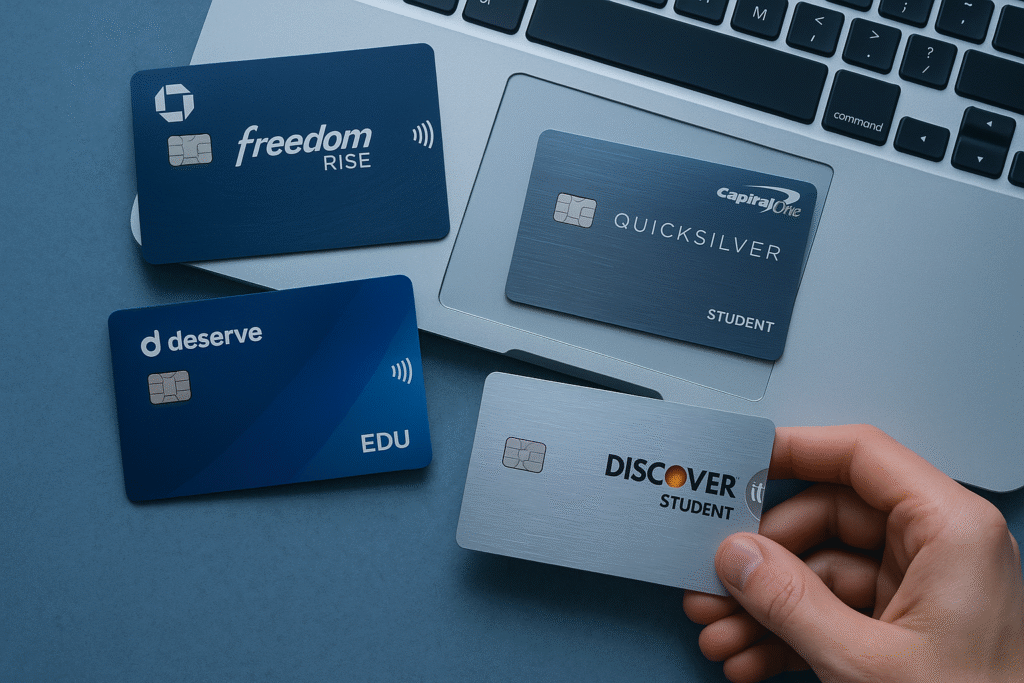
That Actually Help You Build Credit Starting college is a huge milestone—and so is building your credit. If you have no credit history, the good news is that you can still get approved for a credit card designed for students. These cards are specifically built to help you build credit from scratch, earn rewards, and learn good money habits without the burden of high fees or complicated rules. Here are the best student credit cards with no credit in 2025, plus tips to help you start strong. Top Picks for Students with No Credit History   Discover it® Student Cash Back Best for: Students who want high cash back with no credit score required 5% cash back on rotating categories (up to $1,500/quarter), then 1% Unlimited Cashback Match™ after Year 1 $0 annual fee 0% intro APR on purchases for 6 months Reports to all three major credit bureaus 💡 No FICO score needed to apply. Great for students starting from zero. Capital One Savor Student Cash Rewards Credit Card Best for: Dining, entertainment, and travel rewards 3% cash back on dining, entertainment, streaming, and grocery stores 5% back on hotels and rental cars (booked through Capital One Travel) $0 annual fee & no foreign transaction fees $100 sign-up bonus after spending $300 in 3 months 💡 One of the most rewarding student cards with no credit history needed. Discover it® Student Chrome Best for: Gas station and restaurant spenders 2% cash back at gas stations and restaurants (up to $1,000/quarter), then 1% 1% on all other purchases Same Cashback Match™, $0 annual fee, and 6-month 0% intro APR No credit score required to apply 💡 Simpler structure than the Cash Back version but still great for everyday spending. Capital One Platinum Secured Best for: Students with no income or limited approval odds Secured card: Requires refundable deposit (as low as $49 for a $200 limit) $0 annual fee Potential credit line increase in 6 months Helps build credit when used responsibly 💡 If you’ve been denied unsecured cards, this is a reliable way to start building credit. Chase Freedom Rise® Best for: Automatic payments + cash back + Chase ecosystem 1.5% cash back on every purchase $0 annual fee $25 bonus for setting up auto-pay in the first 3 months Free credit score tracking & credit limit increase reviews 💡 Built for students and young adults just entering the credit world—with added incentives for good habits. How to Build Credit Fast with No History If you’ve never had a credit card or loan before, here’s how to make your first card count: 💳 Use your card monthly, even for small purchases like gas or Netflix 🧾 Pay your bill on time—every time 📉 Keep your balance under 30% of your credit limit 🚫 Don’t apply for multiple cards at once 📊 Monitor your score with free tools from Capital One, Discover, or Chase Best Card for Every Student Type Student Type Best Card Cash back maximizers Discover it® Student Cash Back Dining, streaming, and travel Capital One Savor Student Cash Rewards Credit Card Simple rewards structure Discover it® Chrome Low approval odds or no income Capital One Platinum Secured Prefer Chase or auto-pay setup Chase Freedom Rise® Final Thoughts: Start Smart, Graduate to Better Cards The best credit cards for students with no credit are more than just training wheels—they’re your first step toward financial independence, higher scores, and better card options down the line. By choosing the right starter card and using it wisely, you can go from “no credit” to great credit before graduation. Related Guides: 7 Beginner Credit Cards That Actually Raise Your Score Discover it® Student Cash Back vs. Capital One SavorOne Student Secured vs Unsecured Student Cards: Which Should You Start With?

Best Student Credit Cards with No Credit in 2025 Read More »

Credit Cards for Fair Credit

Best Credit Cards for Fair Credit in 2025: Real Options That Work

If your credit score falls in the 580–669 range, you’re not alone—and you’re not out of options. In fact, 2025 brings a host of credit card choices designed for fair credit that can help you build (or rebuild) your score while still earning rewards and avoiding steep fees. Below, we break down the best secured and unsecured cards for fair credit this year, plus strategies to help you graduate to better cards fast. What Is “Fair” Credit, Exactly? Fair credit typically means a FICO score between 580 and 669. This score range may result from: A limited credit history A few late payments High utilization or recent hard inquiries Many card issuers hesitate to approve applicants in this bracket—but that’s changing. Top Credit Cards for Fair Credit in 2025 We’ve sorted these into two key categories: secured (requires a refundable deposit) and unsecured (no deposit, but may have higher interest or fees). Best Secured Credit Cards for Fair Credit 1. Discover it® Secured Credit Card Rewards: 2% back at gas stations and restaurants, 1% on everything else Bonus: Cashback Match™ in Year 1 Why it’s great: Reports to all 3 bureaus and graduates to unsecured Annual Fee: $0 2. Capital One Quicksilver Secured Cash Rewards Rewards: Unlimited 1.5% cash back Annual Fee: $0 Minimum Deposit: $200 Upgrade path: Eligible for unsecured version after consistent payments 3. Citi® Secured Mastercard® Annual Fee: $0 Why it’s solid: Basic card for establishing credit with no frills Reports to: All 3 credit bureaus Best Unsecured Credit Cards for Fair Credit 1. Capital One QuicksilverOne Cash Rewards Rewards: 1.5% cash back on all purchases Annual Fee: $39 Credit Needed: Fair Best for: Earning rewards while rebuilding 2. Petal® 2 “Cash Back, No Fees” Visa® Credit Card Rewards: Up to 1.5% cash back Annual Fee: $0 Credit Reporting: Yes – all 3 bureaus Unique feature: Uses cash flow underwriting (not just credit score) 3. Upgrade Cash Rewards Visa® Rewards: 1.5% back once payment is made Annual Fee: $0 Extra: Fixed monthly payments, flexible use like a hybrid card 4. Capital One Platinum Credit Card Annual Fee: $0 Rewards: None Best for: Simple starter card with upgrade potential Tips to Improve Your Score With a Fair Credit Card ✅ Pay on time – Payment history is 35% of your FICO score 📉 Keep utilization below 30% – Even lower is better 🔍 Check your score monthly – Use tools like CreditWise (free) 📈 Ask for a credit line increase – Especially after 6 months of on-time payments 🔁 Upgrade when eligible – Many cards auto-review your account Final Thoughts: Build Smart, Graduate Fast The best credit cards for fair credit in 2025 don’t just accept you—they set you up for long-term success. Choose a card that: Reports to all three credit bureaus Has no or low fees Offers upgrade potential With consistent use, your fair credit can turn into good credit and beyond—opening the door to top-tier travel cards, premium perks, and lower interest rates. Related Posts You Might Like: 7 Beginner Credit Cards That Actually Raise Your Score in July 2025 Capital One Platinum Credit Card Review 2025 Secured vs Unsecured Student Cards Guide Ready to Get Started? Contact Us Today!

Best Credit Cards for Fair Credit in 2025: Real Options That Work Read More »

7 Beginner Credit Cards That Build Credit

7 Beginner Credit Cards That Actually Raise Your Score in July 2025

Building credit from scratch can feel overwhelming—especially with so many credit cards claiming to help. The truth? Not all beginner cards are created equal. Some are simply easier to get, while others are designed to genuinely improve your score over time. In this guide, we’ll show you 7 beginner credit cards that are proven to help raise your score, often in as little as six months, and how to choose the one that fits your needs. Not All Starter Cards Help You Build Credit Fast—Here’s Why Getting approved for a credit card is only the first step. Many cards for new users offer minimal benefits or fail to report to all three credit bureaus (Equifax, Experian, TransUnion), which means your responsible use might not help your score at all. To truly improve your credit, you need a card that: Reports to all three bureaus Offers the possibility to graduate to an unsecured card Provides tools like score monitoring and reminders Has no predatory fees or confusing terms 7 Credit Cards That Can Boost Your Score in Under a Year Card Name Best For Graduates? Reports to 3 Bureaus Annual Fee Discover it® Secured Reward + growth Yes, after 7 mo ✅ $0 Capital One Platinum Secured Low deposits Yes, after 6 mo ✅ $0 Chase Freedom Rise No history + cash back Yes, after 12 mo ✅ $0 Petal 2 Visa No score needed Already unsecured ✅ $0 OpenSky® Secured Low barrier to entry No upgrade ✅ $35 Chime Credit Builder Interest-free + flexible Not traditional ✅ $0 Bank of America® Secured Bonus category rewards Yes, 9–12 mo ✅ $0 Discover it® Secured: Score Growth + Cash Back Reports monthly to all three credit bureaus 2% cash back at gas stations & restaurants (up to $1,000/quarter) Matched cash back in your first year Graduates to unsecured after 7 months of responsible use Capital One Platinum Secured: Low Deposit, Easy Growth Approval possible with $49 refundable deposit for $200 credit line Automatic credit line review at 6 months No annual fee or foreign transaction fees Chase Freedom Rise: Great for First-Timers With Chase 1.5% unlimited cash back on all purchases Boost approval odds by opening a Chase checking account with a $250 Deposit. May qualify for Chase Freedom Unlimited upgrade after 12 months Petal 2 Visa: No Credit History Required Uses banking history and income to approve applicants Starts with 1% cash back, increases to 1.5% with on-time payments No fees, no deposits, and instant access to your FICO score OpenSky® Secured Visa: No Credit Check Option Doesn’t require a credit check to apply Helps users who’ve been denied elsewhere or are rebuilding post-bankruptcy $35 annual fee; refundable deposit required Chime Credit Builder Visa: No Interest or Deposit No credit check or security deposit required No interest; you set the limit by transferring funds to the account Ideal for those who bank with Chime and want structured building Bank of America® Secured: Choose Your Own Rewards Category Choose your bonus rewards category (gas, online shopping, dining, etc.) May graduate to unsecured with good behavior in 9–12 months Includes access to your free FICO score monthly When Will You Actually See Your Credit Score Improve? With responsible use, many users report credit improvements in as little as 3–6 months. Month Typical Impact on Score 1 Slight dip or no change (new account opened) 3 +20 to +40 points (assuming on-time payments & low use) 6 +50 to +80 points Factors that help: Paying your bill early or on time Keeping balances below 30% of your limit (ideally under 10%) Not applying for other new credit too often 3 Habits That Actually Raise Your Score Pay early and in full Don’t just wait for the due date—pay as soon as the statement closes to lower reported utilization. Keep your utilization low If your limit is $200, try not to carry more than $20–50 at any time. Don’t close the account after graduation Older accounts help your credit history. Even if you move on to better cards, keep your oldest one open. FAQ: Beginner Credit Card Questions What credit card builds credit the fastest for beginners? Discover it® Secured and Chase Freedom Rise are two top picks for fast credit growth due to frequent reporting and upgrade potential. Can I build credit without a secured card? Yes—cards like Petal 2 and Chase Freedom Rise offer unsecured options that don’t require a deposit. How long until I see results? Most users see improvements in 3–6 months with responsible use. Results vary based on payment history and utilization. Ready to Raise Your Score?   Choose the beginner card that fits your lifestyle and goals. Whether you’re starting from zero or rebuilding, there’s a card that can help you get there. See More HERE Disclaimer: TheCardsGuy is not a financial advisor. Always review the terms and consult with a credit professional before applying.

7 Beginner Credit Cards That Actually Raise Your Score in July 2025 Read More »

Discover vs Quicksilver Student July 2025

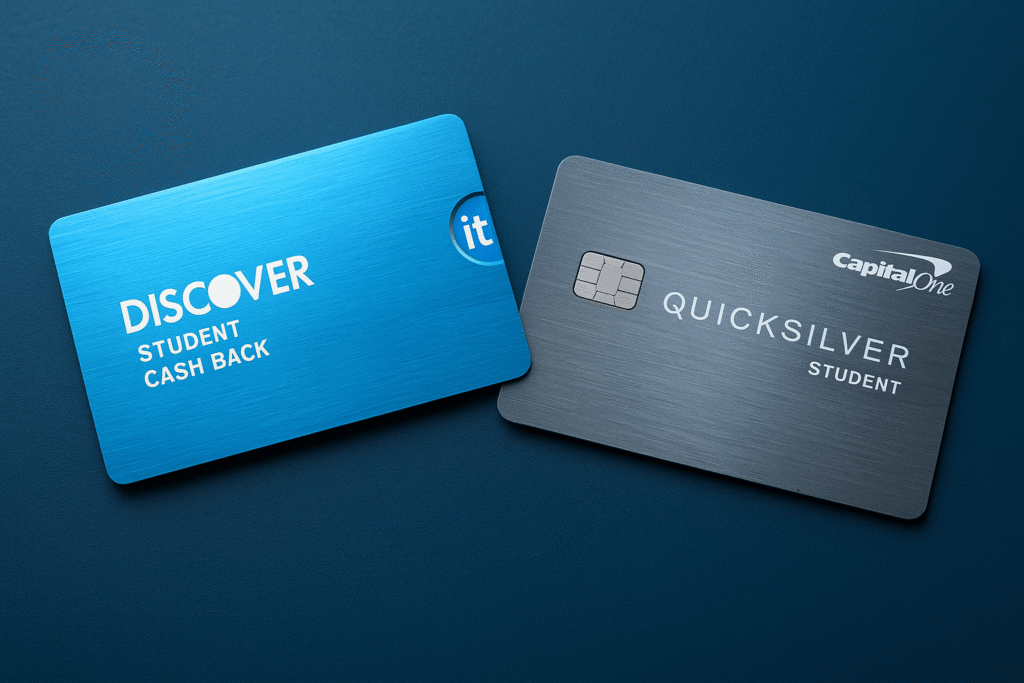
Discover it® Student Cash Back vs. Capital One Quicksilver Student, Which One Wins in 2025?

Choosing your first credit card as a student isn’t just about rewards—it’s about finding a tool that helps you build credit, avoid fees, and fit your lifestyle. In 2025, two cards dominate that conversation: the Discover it® Student Cash Back and the Capital One Quicksilver Student Cash Rewards Credit Card. Both offer no annual fees and rewards. But the better card for you depends on how you spend—and how much credit history you have. Let’s compare them side by side. Quick Comparison: Discover vs. Capital One Student Feature Discover it® Student Cash Back Capital One Quicksilver Student Annual Fee $0 $0 Rewards 5% on rotating categories (up to $1,500/quarter, activation required), then 1% on all others 1.5% unlimited on all purchases Bonus Cashback Match: Discover doubles your first-year cashback None Intro APR 0% for 6 months (then variable) None Foreign Transaction Fees None None Credit Requirements No/limited credit history Fair credit (630+) Tools Free FICO® Score, fraud alerts CreditWise monitoring, credit line increase eligibility Cashback Rewards Discover it® Student Cash Back gives 5% cash back in rotating categories like gas stations, grocery stores, and restaurants (with quarterly activation), and 1% on everything else. Capital One Quicksilver Student offers a flat 1.5% cash back on all purchases—no activation or tracking required. Verdict: Discover is better if you don’t mind tracking categories and want higher earning potential. Capital One wins if you prefer simplicity. Sign-Up Bonus and Perks Discover matches all the cashback you earn in your first year automatically—there’s no cap or enrollment required. Capital One offers no signup bonus, but you may qualify for a higher credit line after six months of responsible use. Verdict: Discover offers greater bonus value upfront, while Capital One helps you grow your limit faster. International Use Both cards have no foreign transaction fees. Capital One, a Visa product, is more widely accepted internationally than Discover. Verdict: Discover is excellent for domestic use. Capital One may be the better choice for international students or frequent travelers. Approval Odds Discover is well-known for approving students with no credit history, making it ideal for beginners. Capital One generally looks for at least fair credit, around 630+. Verdict: New to credit? Discover is your best bet. Have some history? Capital One is worth considering. Credit-Building Features Both cards report to all three credit bureaus and help you establish a positive credit history. Discover includes free FICO® scores, fraud monitoring, and U.S.-based customer service. Capital One includes CreditWise, which gives real-time credit monitoring and upgrade paths. Who Should Choose Which? Choose Discover it® Student Cash Back if: You’re brand new to credit You want to earn the most cash back your first year You’re good at tracking rotating bonus categories Choose Capital One Quicksilver Student if: You prefer consistent, flat-rate rewards You already have some credit history You want a card accepted almost anywhere Frequently Asked Questions Is Discover or Capital One better for students? It depends on your goals. Discover is better for maximizing rewards with no credit history. Capital One is simpler and more widely accepted abroad. Which card is easier to get? Discover typically approves students with no prior credit. Capital One is better if you have at least fair credit. Do both cards help build credit? Yes. Both report to all three major credit bureaus and offer tools to monitor your progress. Are there any fees to watch for? Neither card charges an annual fee or foreign transaction fees. Both are student-friendly. Final Verdict Both the Discover it® Student Cash Back and Capital One Quicksilver Student are excellent entry-level credit cards. Your choice depends on your priorities: Choose Discover if you want to earn maximum rewards and have no credit history. Choose Capital One if you prefer flat-rate rewards, plan to travel, or already have some credit experience. Ready to Compare Cards? check out our: Best Student Credit Cards with No Credit How to Build Credit Fast as a Student Is Discover or Capital One better for students? Both are great for students, but it depends on your goals. Discover is ideal if you’re new to credit and want to maximize cashback with the first-year match. Capital One is better if you want flat-rate rewards and a card that’s widely accepted internationally. Which card is easier to get approved for? Discover is typically easier to get approved for if you have little or no credit history. Capital One usually requires at least a fair credit score (around 630+), so it’s better if you’ve already established some credit. Do both cards help build credit? Yes. Both cards report to all three major credit bureaus and offer tools like credit monitoring and alerts to help you build and manage your credit profile. Do either of these cards charge foreign transaction fees? No. Both the Discover it® Student and Capital One Quicksilver Student cards have no foreign transaction fees, making them good options for international travel or study abroad. Which student credit card earns more cashback? Discover offers 5% on rotating categories (with activation), plus a first-year cashback match, making it more rewarding for active users. Capital One gives a flat 1.5% on all purchases, which is better for those who prefer simplicity.

Discover it® Student Cash Back vs. Capital One Quicksilver Student, Which One Wins in 2025? Read More »

Build Credit Fast as a Student in July 2025

9 Proven Strategies How to Build Credit Fast as a Student in 2025

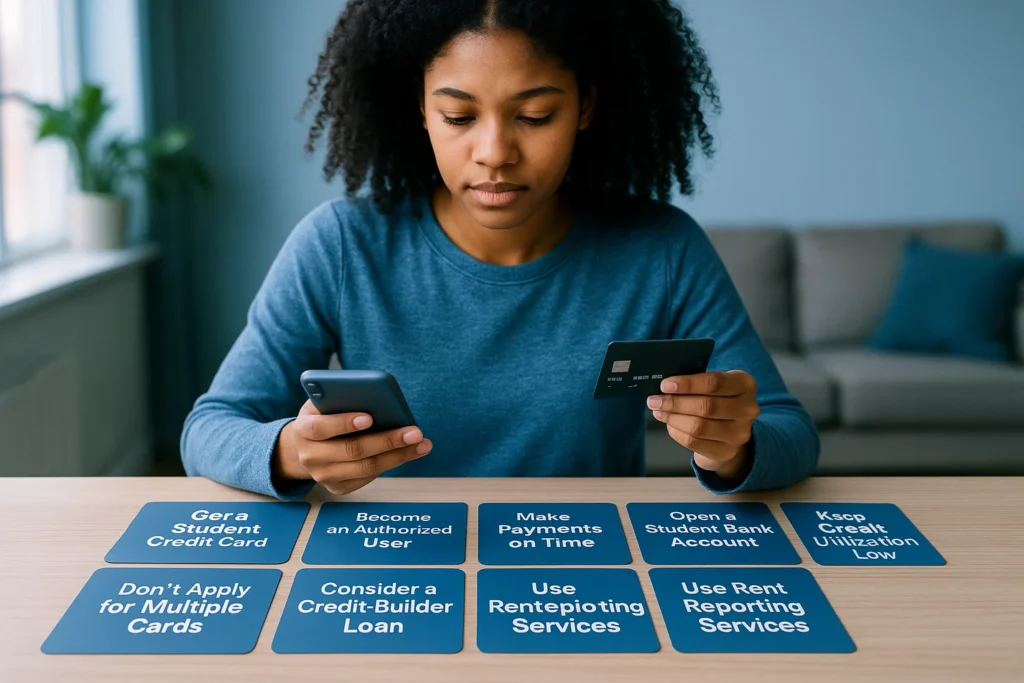
If you’re a student with little to no credit history, you’re not alone. Building credit might seem complicated—but the truth is, you can start today with just a few simple steps. Whether you’re trying to qualify for your first apartment, get better loan rates, or open a rewards credit card, strong credit is your key to financial freedom. Here are 9 proven strategies to build your credit quickly and responsibly as a student in 2025. Open a Student or Secured Credit Card This is one of the easiest and fastest ways to begin your credit journey. Student credit cards are designed specifically for young adults with limited credit history. Secured credit cards, meanwhile, require a refundable deposit but offer high approval odds—even with no score. Top picks: Discover it® Student Cash Back Capital One Quicksilver Secured OpenSky® Secured Visa® (no credit check) 👉 Check out our Best Credit Cards for Students with Bad Credit  Become an Authorized User on a Parent’s Personal Credit Card Ask a parent or trusted adult if you can be added as an authorized user on their existing credit card. You don’t even need to use the card—in many cases, the account’s history will appear on your credit report and help you build a positive profile fast. Although it is recommended to use the card on your own to get the feeling of using and paying back a credit card on your own. 📌 Pro Tip: Make sure the card reports to all three bureaus and has a solid payment history. Pay On Time, Every Time Your payment history makes up 35% of your FICO score—the largest single factor. That’s why paying your credit card bill (or student loan, if you have one) on time every month is the #1 rule of credit-building. Set up autopay, text alerts, or calendar reminders. Even one missed payment can hurt. Keep Credit Utilization Low Using too much of your available credit can lower your score—even if you pay it all off at the end of the month. Aim to use less than 30% of your credit limit. If your limit is $500, try not to carry more than a $150 balance. ⏱ Bonus tip: Pay your balance before the statement closes to lower reported utilization. Take Out a Credit Builder Loan These small loans are designed to help people with no credit establish a positive payment history. You “repay” a loan held in a savings account, and once it’s paid off, the money is yours. Where to find them: Self (credit-building app) Local credit unions Online lenders Report Your Rent and Utility Payments Normally, rent and utility payments don’t help your credit score. But with services like Experian Boost, RentReporters, or LevelCredit, you can add them to your credit file. Once Your credit is a little better you can use the Bilt Mastercard 🏠 Especially useful if you’re renting while in college. Monitor Your Credit for Free Stay in control by watching your score and understanding what’s helping or hurting it. Tools to try: Credit Karma Discover Credit Scorecard Experian Free Reports You’re entitled to one free report each year from each credit bureau at AnnualCreditReport.com. Ask for a Credit Line Increase Once you’ve had a credit card for 6+ months and made consistent on-time payments, consider requesting a higher credit limit. A larger limit lowers your credit utilization ratio, which can increase your score—without needing another card. Use Credit-Building Apps Apps like Self, Grow Credit, and Kikoff are built to help you establish and grow your credit profile over time. They may report small recurring payments to credit bureaus and can be great if you’re just starting out and don’t want to risk using a credit card. Frequently Asked Questions Can I build credit with no job? Yes. As long as you have a source of income (even part-time or allowance) and make payments on time, you can build credit with a secured card, credit builder loan, or by becoming an authorized user. How long does it take to get a 700 credit score? If you’re starting from scratch and manage your credit well (on-time payments, low utilization), you can reach 700 in 12–18 months. Do student loans affect credit? Yes. Student loans are installment loans and impact your credit history, length of credit, and payment history—positively if paid on time. Can I build credit at 17 or 18? Yes! At 18, you can legally open a credit card in your name (with income). At 16 or 17, becoming an authorized user is a great way to begin. Final Thoughts: Start Small, Grow Big Building credit as a student doesn’t require fancy tricks—it just takes smart habits. Use the tools available to you, keep your balances low, and always pay on time. The sooner you start, the faster you’ll unlock better financial opportunities. Ready to Start? Find the perfect card to begin your credit journey Compare the Best Student Credit Cards for 2025

9 Proven Strategies How to Build Credit Fast as a Student in 2025 Read More »

Student Bad Credit Cards July 2025 Guide

Best Credit Cards for Students with Bad Credit in 2025

Starting your credit journey as a student can be challenging—especially if you have bad credit or no credit history. But don’t worry, there are several credit cards designed specifically to help students build credit responsibly. Whether you’re looking for a secured card with low fees or an unsecured option with rewards, we’ve rounded up the best credit cards for students with bad credit in 2025. Top Picks: Best Student Credit Cards for Bad Credit Card Type Annual Fee Rewards Credit Needed Discover it® Secured Secured $0 2% gas/dining, 1% other Poor/None Capital One Quicksilver Secured Secured $0 1.5% on all purchases Poor/None OpenSky® Secured Visa® Secured $35 None No credit check Petal® 1 Visa Unsecured $0 Up to 10% at select merchants Fair Credit One Bank® Platinum Visa® Unsecured Varies 1% on select purchases Poor Secured vs. Unsecured Credit Cards: What’s the Difference? If you’re just starting out or rebuilding credit, this is an important distinction: Secured Credit Cards Require a refundable cash deposit that acts as your credit limit. They are easier to get approved for and help you build a credit history. Unsecured Credit Cards Don’t require a deposit but usually require a higher credit score or income. Still not sure which is right for you? Read our full guide on Secured vs Unsecured Student Cards  What to Look for in a Student Credit Card Feature Why It Matters No or Low Annual Fee Keeps costs down while building credit Reports to All 3 Bureaus Ensures your responsible use boosts your score Upgrade Path Lets you transition to better cards without closing accounts Rewards Stretch your spending while building credit No Credit Check (Optional) Ideal if your credit is poor or nonexistent Looking for more options with no credit history?  Check out our Best Student Credit Cards with No Credit Guide  Frequently Asked Questions Can I get a student credit card if I have bad credit? Yes! Many secured and some unsecured cards are designed for students with limited or poor credit histories. Options like the Discover it® Secured or OpenSky® Visa are commonly approved. Read our Discover it® review → What’s the easiest credit card for a student to get? Secured cards are typically the easiest. OpenSky® doesn’t even require a credit check, making it very accessible. Are there student credit cards with no annual fee? Yes. Several great cards like the Discover it® Student Cash Back and Petal® 1 Visa offer no annual fees. What credit card can I get with a 500 credit score? Most secured cards accept students with scores around 500 or no score at all. Cards like First Progress, Capital One Platinum Secured, and OpenSky® are good starting points. See our Capital One Platinum review → Tips to Build Credit as a Student Make at least the minimum payment on time every month. Keep your credit utilization below 30% of your limit. Avoid opening too many new accounts too quickly. Set up autopay or reminders to avoid missed payments. Monitor your credit with free tools like Credit Karma or your bank. Still Not Sure Which Card to Pick? Subscribe to our newsletter for monthly recommendations, card comparisons, and approval tips just for students.  

Best Credit Cards for Students with Bad Credit in 2025 Read More »

Chase Sapphire Reserve 2025 changes with credit card mascot

Massive Changes to Chase Sapphire Reserve: Is It Still Worth It in 2025?

Chase has officially redrawn the premium credit card battlefield. On June 23, 2025, the bank launched its long-rumored Chase Sapphire Reserve® for Business — and it came with a twist. Alongside it, Chase quietly but significantly revamped its flagship Sapphire Reserve® (Personal) card. The result? A bold and calculated move to challenge the Amex Platinum, Capital One Venture X, and every other card in the high-end travel rewards space — not just with flashy perks, but with real, tangible value. What’s New: Chase’s Massive Two-Card Revamp Feature Sapphire Reserve (Personal) Sapphire Reserve for Business Signup Bonus 100,000 points 200,000 points Spending Requirement $5,000 in 3 months $30,000 in 6 months Annual Fee $550 $795 Authorized User Fee $75/user $0 Max Travel Value $2,000+ $4,000+ with Points Boost Chase Reserve for Business: $3,500+ in Annual Credits Chase is clearly targeting business owners who value real-world utility over aspirational perks. Here’s what comes with the Sapphire Reserve for Business: ✅ $300 Annual Travel Credit ✅ $500 The Edit Hotel Credit (2x $250 credits) ✅ $200 Google Workspace Credit ✅ $100 GiftCards.com Credit ✅ $400 ZipRecruiter Credit ✅ $120 DoorDash DashPass ✅ $60 DoorDash Dining Credits ✅ $240 DoorDash Non-Restaurant Credits ✅ $120 Global Entry/PreCheck/NEXUS ✅ $120 Lyft Credit Total Value: Over $3,560 — more than 4x the annual fee if used wisely. Sapphire Reserve (Personal): Lifestyle Loyalty Perks The personal version of the card received a refresh too, including: $300 Travel Credit $120 Instacart+ & $60 Instacart Credit $120 Apple One Credit $120 Peloton Credit $120 DoorDash DashPass $120 Lyft Credits $100 Global Entry/NEXUS $50 Entertainment Credit (Sapphire Tables, StubHub, etc.) These updates make it one of the most well-rounded lifestyle rewards cards on the market. Rewards Earning & Redemption: What’s Changing? Category Personal Business Chase Travel Portal 10X 8X Direct Airfare & Hotels 3X 4X Advertising 1X 3X (uncapped) Lyft 10X (until 9/2025) 5X (until 9/2027) Everything Else 1X 1X Redemption Rate (Points Boost) Up to 2.0¢/pt Up to 2.0¢/pt Redemption Value Tip: Chase’s new Points Boost system offers dynamic redemptions up to 2¢ per point, compared to Amex’s static 1¢–1.5¢ per point (unless booking premium travel).   Competitive Comparison: Chase vs Amex Platinum vs Capital One Venture X Feature Chase Sapphire Reserve (Biz) Amex Platinum Venture X Annual Fee $795 $695 $395 Travel Credits $300 + $500 hotel $200 hotel + $200 airline $300 travel Lifestyle Credits Google Workspace, DoorDash, Lyft Uber, Walmart+, Equinox Priority Pass, Capital One Lounge Rewards Redemption Up to 2¢ via Points Boost 1¢–1.5¢ via Amex Travel 1¢–1.1¢ on portal Status Perks IHG, Southwest A-List (with spend) Hilton Gold, Marriott Gold Hertz President’s Circle Business Focus Strong Weak Moderate 💡 Verdict: Chase now rivals Amex on luxury while beating them on practical use, especially for small business owners who can actually use ZipRecruiter or Workspace credits.   Application Tips & Eligibility 5/24 Rule: Applies to personal card; unclear for business card (likely yes) Sapphire Rule: You can now hold both the personal and business Sapphire cards Bonus Eligibility: You’re eligible for the business bonus even if you’ve received a Sapphire personal bonus in the past 48 months Pro Tip: Apply through your Chase business banking portal if eligible — internal approval rates tend to be higher. Final Thoughts: Is It Worth It? Yes — if you can unlock the full value. The Chase Sapphire Reserve overhaul represents a massive shift in the premium credit card space. Rather than focusing only on “luxury travel,” Chase has leaned into a high-ROI, real-world value strategy that rewards cardholders who spend and redeem smartly. Whether you’re a points enthusiast or a business owner looking for premium travel protection and versatile rewards, this new Sapphire lineup delivers more than just prestige — it offers purchasable practicality. Frequently Asked Questions (FAQ) What is the 4-year rule for Chase Sapphire Reserve? Chase’s 4-year rule means you can only receive the welcome bonus on a Sapphire card (Preferred or Reserve) if it has been at least 48 months since you last earned a Sapphire bonus. It applies across both cards — not per card. Is the Chase Sapphire Reserve increasing its annual fee? Yes. As of June 23, 2025, the Chase Sapphire Reserve annual fee increased from $550 to $795. However, the card also added over $3,500 in value through new perks, credits, and travel benefits. Does Chase Sapphire Reserve cover TSA PreCheck or Global Entry? Yes. Cardholders receive a $100 statement credit every four years for Global Entry, TSA PreCheck, or NEXUS application fees. This benefit is available on both the personal and business versions. What can I replace the Chase Sapphire Reserve with? If the higher annual fee doesn’t justify the perks for you, top alternatives include: Capital One Venture X – Lower $395 fee, 2X points on everything, and $300 travel credit. Amex Platinum – $695 fee with luxury lifestyle credits and premium lounge access. Chase Sapphire Preferred – $95 fee with 3X on dining/travel and access to Chase Ultimate Rewards.

Massive Changes to Chase Sapphire Reserve: Is It Still Worth It in 2025? Read More »

Capital One Platinum Credit Card 2025 review with friendly card mascot

Best Student Credit Cards with No Credit 2025 Guide

Top Picks + Tips from a Real Card Nerd Hi, I’m Karl Brown — and if you’re a student trying to get your very first credit card, I’ve been exactly where you are. I remember being overwhelmed by all the options, especially when I had zero credit history. But here’s the good news: you don’t need a credit score, a cosigner, or a ton of income to get started. You just need the right card — and some solid guidance. So I’ve put together this list of the best student credit cards for no credit in 2025, based on personal experience, real-world research, and what I wish I had known when I applied for my first card.   Why This Guide Matters When I was applying for my first card, I had no idea that some credit cards are actually designed for people with no credit history. These cards don’t penalize you for being new — they help you build credit from scratch. And bonus? Many of them come with rewards, $0 fees, and even perks like free credit monitoring.   My Top Picks for Students With No Credit These are the cards I recommend again and again — either because I’ve used them myself, or because I’ve seen them work for friends and readers.   Discover it® Student Cash Back This was actually one of the first cards I got approved for — and it still holds up in 2025. 5% cash back on rotating categories like Amazon, groceries, or restaurants 1% cash back on all other purchases Cashback Match™: whatever you earn in your first year gets doubled No annual fee No credit score needed to apply Check if You Qualify → Capital One Quicksilver Rewards for Students If you’re not into tracking categories, this is a great one. 1.5% flat cash back on everything — super simple No foreign transaction fees, No annual fee You can pre-qualify without hurting your score Get Pre-Qualified → See Full Benefits → Capital One Savor Rewards for Students Perfect if you’re like me and spend a lot on food, concerts, and Netflix. 3% cash back on dining, grocery stores, entertainment, and streaming No foreign transaction fees, No annual fee You can pre-qualify without hurting your score Get Pre-Qualified → See Full Benefits → Chase Freedom Rise® This is a newer card that replaced Chase’s old student card — and it’s built for people with no credit. 1.5% cash back on all purchases No annual fee Approvals are higher if you already have a Chase checking account with $250 in it. Learn More → Bank of America® Travel Rewards Credit Card for Students If you’re planning to study abroad (or just want to earn travel points), this one’s for you. 1.5 points per $1 on all purchases No foreign transaction fees No annual fee  Learn More → Quick Comparison Table Card Best For Rewards Annual Fee Discover it® Student Overall pick 5% categories + 1% $0 Capital One Quicksilver Rewards for Students Simplicity 1.5% on all purchases $0 Capital One Savor Rewards for Students Food & fun 3% on top categories $0 Chase Freedom Rise® Chase users/new credit 1.5% flat $0 Bank of America Travel Rewards Student Study abroad/travel 1.5 points per $1 $0   What to Look for in a First Card Here’s what I personally look for when applying: $0 annual fee: Never pay to build credit. There are so many free options. Reward types that match your life: If you eat out a lot or shop online, get rewarded for it. Soft pull pre-approval tools: Use them to avoid damaging your score. Reports to all 3 bureaus: This is what builds your credit.  Tips from Personal Experience Don’t apply for more than one card at a time Pay on time — even if it’s just the minimum Keep your balance low (under 30% of your credit limit) Set up autopay and never get charged any late fees Don’t overspend just to earn rewards — I’ve made that mistake 😅 What to Do If You’re Denied It happens. If you get denied, don’t panic. Look into: Secured cards like the Discover it® Secured or Capital One Platinum Secured Alternative underwriting cards like Petal® 2, which look at cash flow, not just credit You can always build from there — and reapply in a few months once your file improves.   Final Thoughts from Karl I know how stressful it can be to feel like you’re starting from scratch. But if you choose one of these student cards and use it responsibly, you’ll be on your way to a strong credit profile before you graduate. I started with no credit, and now I’m the guy writing about them — so you’ve got this. 👉 Need help deciding? Check out my full student card comparison page here   Frequently Asked Questions   What is the best student credit card for no credit in 2025? Top picks include the Discover it® Student Cash Back, Capital One Quicksilver Rewards for Students, and Chase Freedom Rise. These cards offer no annual fees, soft pull pre-approval, and solid rewards for first-time users. Can a student with no credit get a credit card? Yes. Many student cards are specifically designed for applicants with no credit history. Some do not require a FICO score at all, and many offer tools to help you build credit responsibly over time. Do I need a cosigner to get a student credit card? No — most major student cards do not require a cosigner. You can apply using your income from part-time work, scholarships, or grants. Are secured credit cards a good alternative if I get denied? Yes. If you’re denied a traditional student card, secured credit cards like the Discover it® Secured or Capital One Platinum Secured can be great options. They require a refundable deposit but help you build credit the same way.

Best Student Credit Cards with No Credit 2025 Guide Read More »

Capital One Platinum Credit Card Review 2025 with credit card mascot

Capital One Platinum Credit Card Review 2025

A No-Frills Option to Build Credit Early – From Someone Who’s Been There Hi, I’m Karl Brown — and if you’re starting from scratch with credit, I’ve been exactly where you are. When I first tried to build credit, I didn’t want to deal with complicated rewards, high fees, or strict approval requirements. I just needed something simple that would actually help me get started. That’s why I’m a fan of the Capital One Platinum Credit Card — a no-frills tool for building or rebuilding your credit, with no annual fee and automatic credit line reviews. Here’s what you need to know before applying.   Why the Capital One Platinum Card Is Great for Credit Building This card may not come with flashy perks or rewards, but it delivers exactly what beginners need: No annual fee – You’ll never pay to keep the card open, which makes it ideal if you’re still figuring things out No security deposit required – Unlike secured cards, this is an unsecured card, so you don’t need to front any cash Automatic credit line reviews – You’re automatically considered for a higher credit limit after just 6 months of on-time payments. That’s a big plus for improving your credit utilization ratio Free credit score tracking – With Capital One’s CreditWise®, you can monitor your score and track your credit journey in real time $0 fraud liability – If your card is lost or stolen, you’re protected from unauthorized charges No foreign transaction fees – Uncommon for a no-annual-fee card, and handy if you travel or study abroad Things to Know Before You Apply Let’s be real — no card is perfect. Here are a few things to consider: No rewards program – You won’t earn cash back or points. If rewards matter to you, look into the Capital One Quicksilver Student or Discover it® Student Cash Back High APR – Like most starter cards, the interest rate is on the higher side. That’s why it’s best to pay your balance in full each month Who Should Consider the Capital One Platinum Card? This card is ideal for: People with fair or limited credit (around a 580+ FICO score) Students or young adults without a long credit history Anyone focused on building or rebuilding credit without paying fees Users who want a simple, low-maintenance credit tool It may not be right for: Rewards chasers Anyone who regularly carries a balance Users who already qualify for mid-tier or premium credit cards My Personal Tips for Using This Card When I started with this card, these were the habits that helped me most: ✅ Set up autopay — Even if it’s just the minimum, always pay on time. ✅ Keep your balance low — Stay under 30% of your credit limit (or better, under 10%). ✅ Use it for small recurring charges — Like a Spotify subscription or gas, then pay it off monthly. ✅ Check your CreditWise tool often — Watch your score climb over time — it’s motivating. ✅ Ask for product upgrades later — Once your credit improves, you can request a card with rewards or better terms.   Capital One Platinum vs. Other Credit-Building Cards Feature Capital One Platinum Mastercard Discover it® Secured Capital One Quicksilver Rewards for Students Annual Fee $0 $0 $0 Security Deposit Required ❌ ✅ ❌ Rewards Program ❌ ✅ (2% categories) ✅ (1.5% back) Pre-Qual Without Credit Impact ✅ ✅ ✅ Automatic Credit Line Reviews ✅ ✅ (with upgrade path) ✅ Foreign Transaction Fees ❌ ✅ (3%) ❌   Final Thoughts from Karl If you’re looking for a simple, reliable way to build credit without fees or extra complications, the Capital One Platinum card is a strong choice. I personally used this card in my early credit journey, and while it didn’t wow me with perks, it did exactly what I needed — helped me build a solid credit foundation. Use it responsibly for a few months, and you’ll likely be in a better position to upgrade to a card that rewards you even more. 👉 Ready to start? See if you’re pre-approved without affecting your credit score    Frequently Asked Questions   Is the Capital One Platinum card good for building credit? Yes. It reports to all three major credit bureaus and includes features designed to help build credit over time, like automatic limit reviews. What credit score is needed for the Capital One Platinum card? You’ll generally need fair credit (580–669) or a limited credit profile. Pre-qualification is available online with no credit impact. Does the Capital One Platinum card have rewards? No. This is a no-rewards card focused entirely on helping you build or rebuild credit. Is this card secured or unsecured? It’s unsecured — no deposit required. How soon can I get a credit limit increase? You’ll automatically be considered for a credit limit increase after 6 months of on-time payments.

Capital One Platinum Credit Card Review 2025 Read More »