Personalized Card Recommendations

Student Credit Cards

Best Student Credit Cards with No Credit 2025

Best Student Credit Cards with No Credit in 2025

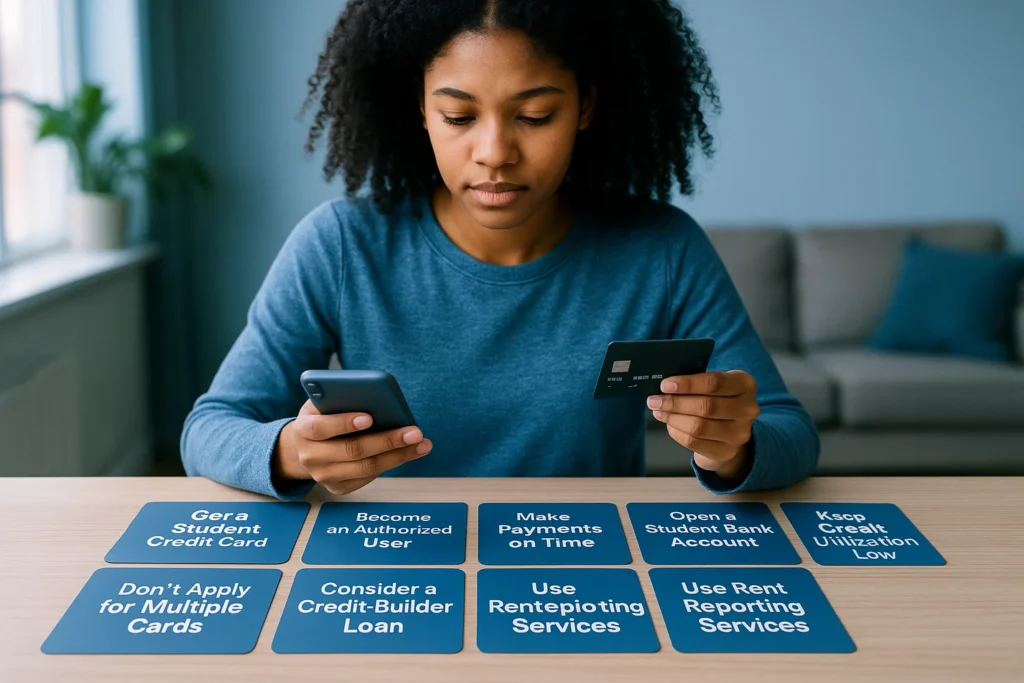
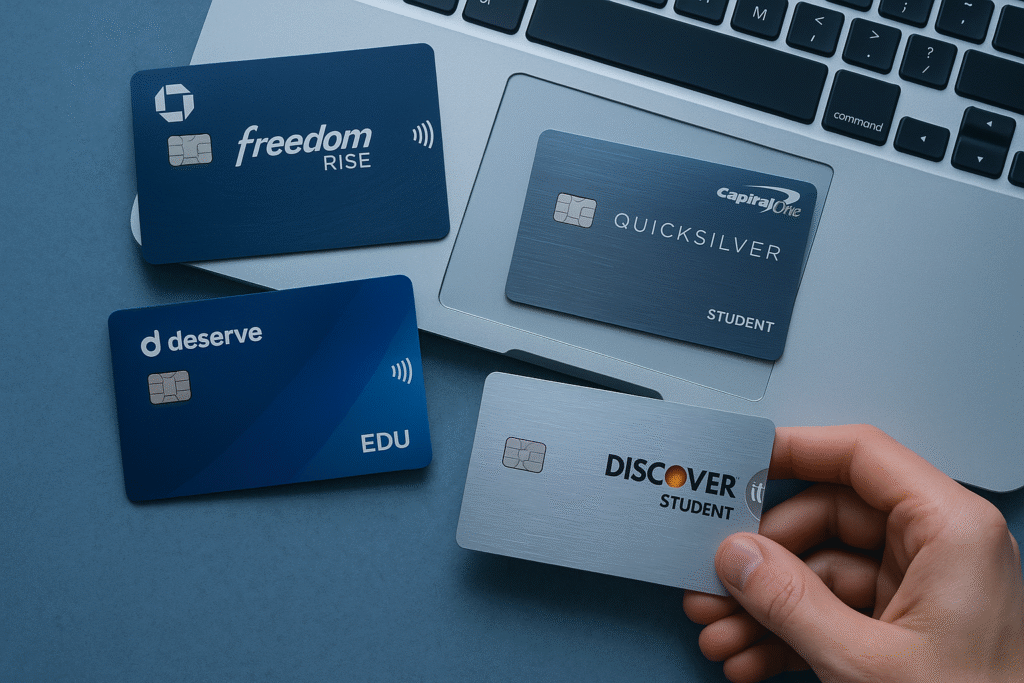
That Actually Help You Build Credit Starting college is a huge milestone—and so is building your credit. If you have no credit history, the good news is that you can still get approved for a credit card designed for students. These cards are specifically built to help you build credit from scratch, earn rewards, and learn good money habits without the burden of high fees or complicated rules. Here are the best student credit cards with no credit in 2025, plus tips to help you start strong. Top Picks for Students with No Credit History   Discover it® Student Cash Back Best for: Students who want high cash back with no credit score required 5% cash back on rotating categories (up to $1,500/quarter), then 1% Unlimited Cashback Match™ after Year 1 $0 annual fee 0% intro APR on purchases for 6 months Reports to all three major credit bureaus 💡 No FICO score needed to apply. Great for students starting from zero. Capital One Savor Student Cash Rewards Credit Card Best for: Dining, entertainment, and travel rewards 3% cash back on dining, entertainment, streaming, and grocery stores 5% back on hotels and rental cars (booked through Capital One Travel) $0 annual fee & no foreign transaction fees $100 sign-up bonus after spending $300 in 3 months 💡 One of the most rewarding student cards with no credit history needed. Discover it® Student Chrome Best for: Gas station and restaurant spenders 2% cash back at gas stations and restaurants (up to $1,000/quarter), then 1% 1% on all other purchases Same Cashback Match™, $0 annual fee, and 6-month 0% intro APR No credit score required to apply 💡 Simpler structure than the Cash Back version but still great for everyday spending. Capital One Platinum Secured Best for: Students with no income or limited approval odds Secured card: Requires refundable deposit (as low as $49 for a $200 limit) $0 annual fee Potential credit line increase in 6 months Helps build credit when used responsibly 💡 If you’ve been denied unsecured cards, this is a reliable way to start building credit. Chase Freedom Rise® Best for: Automatic payments + cash back + Chase ecosystem 1.5% cash back on every purchase $0 annual fee $25 bonus for setting up auto-pay in the first 3 months Free credit score tracking & credit limit increase reviews 💡 Built for students and young adults just entering the credit world—with added incentives for good habits. How to Build Credit Fast with No History If you’ve never had a credit card or loan before, here’s how to make your first card count: 💳 Use your card monthly, even for small purchases like gas or Netflix 🧾 Pay your bill on time—every time 📉 Keep your balance under 30% of your credit limit 🚫 Don’t apply for multiple cards at once 📊 Monitor your score with free tools from Capital One, Discover, or Chase Best Card for Every Student Type Student Type Best Card Cash back maximizers Discover it® Student Cash Back Dining, streaming, and travel Capital One Savor Student Cash Rewards Credit Card Simple rewards structure Discover it® Chrome Low approval odds or no income Capital One Platinum Secured Prefer Chase or auto-pay setup Chase Freedom Rise® Final Thoughts: Start Smart, Graduate to Better Cards The best credit cards for students with no credit are more than just training wheels—they’re your first step toward financial independence, higher scores, and better card options down the line. By choosing the right starter card and using it wisely, you can go from “no credit” to great credit before graduation. Related Guides: 7 Beginner Credit Cards That Actually Raise Your Score Discover it® Student Cash Back vs. Capital One SavorOne Student Secured vs Unsecured Student Cards: Which Should You Start With?

Best Student Credit Cards with No Credit in 2025 Read More »
Discover vs Quicksilver Student July 2025

Discover it® Student Cash Back vs. Capital One Quicksilver Student, Which One Wins in 2025?

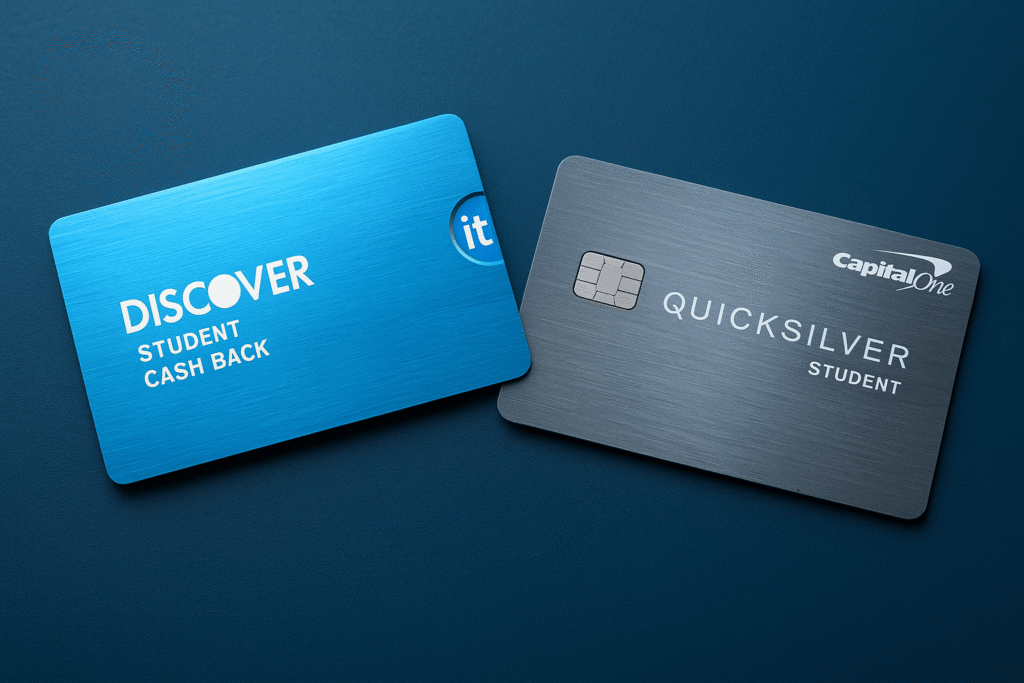
Choosing your first credit card as a student isn’t just about rewards—it’s about finding a tool that helps you build credit, avoid fees, and fit your lifestyle. In 2025, two cards dominate that conversation: the Discover it® Student Cash Back and the Capital One Quicksilver Student Cash Rewards Credit Card. Both offer no annual fees and rewards. But the better card for you depends on how you spend—and how much credit history you have. Let’s compare them side by side. Quick Comparison: Discover vs. Capital One Student Feature Discover it® Student Cash Back Capital One Quicksilver Student Annual Fee $0 $0 Rewards 5% on rotating categories (up to $1,500/quarter, activation required), then 1% on all others 1.5% unlimited on all purchases Bonus Cashback Match: Discover doubles your first-year cashback None Intro APR 0% for 6 months (then variable) None Foreign Transaction Fees None None Credit Requirements No/limited credit history Fair credit (630+) Tools Free FICO® Score, fraud alerts CreditWise monitoring, credit line increase eligibility Cashback Rewards Discover it® Student Cash Back gives 5% cash back in rotating categories like gas stations, grocery stores, and restaurants (with quarterly activation), and 1% on everything else. Capital One Quicksilver Student offers a flat 1.5% cash back on all purchases—no activation or tracking required. Verdict: Discover is better if you don’t mind tracking categories and want higher earning potential. Capital One wins if you prefer simplicity. Sign-Up Bonus and Perks Discover matches all the cashback you earn in your first year automatically—there’s no cap or enrollment required. Capital One offers no signup bonus, but you may qualify for a higher credit line after six months of responsible use. Verdict: Discover offers greater bonus value upfront, while Capital One helps you grow your limit faster. International Use Both cards have no foreign transaction fees. Capital One, a Visa product, is more widely accepted internationally than Discover. Verdict: Discover is excellent for domestic use. Capital One may be the better choice for international students or frequent travelers. Approval Odds Discover is well-known for approving students with no credit history, making it ideal for beginners. Capital One generally looks for at least fair credit, around 630+. Verdict: New to credit? Discover is your best bet. Have some history? Capital One is worth considering. Credit-Building Features Both cards report to all three credit bureaus and help you establish a positive credit history. Discover includes free FICO® scores, fraud monitoring, and U.S.-based customer service. Capital One includes CreditWise, which gives real-time credit monitoring and upgrade paths. Who Should Choose Which? Choose Discover it® Student Cash Back if: You’re brand new to credit You want to earn the most cash back your first year You’re good at tracking rotating bonus categories Choose Capital One Quicksilver Student if: You prefer consistent, flat-rate rewards You already have some credit history You want a card accepted almost anywhere Frequently Asked Questions Is Discover or Capital One better for students? It depends on your goals. Discover is better for maximizing rewards with no credit history. Capital One is simpler and more widely accepted abroad. Which card is easier to get? Discover typically approves students with no prior credit. Capital One is better if you have at least fair credit. Do both cards help build credit? Yes. Both report to all three major credit bureaus and offer tools to monitor your progress. Are there any fees to watch for? Neither card charges an annual fee or foreign transaction fees. Both are student-friendly. Final Verdict Both the Discover it® Student Cash Back and Capital One Quicksilver Student are excellent entry-level credit cards. Your choice depends on your priorities: Choose Discover if you want to earn maximum rewards and have no credit history. Choose Capital One if you prefer flat-rate rewards, plan to travel, or already have some credit experience. Ready to Compare Cards? check out our: Best Student Credit Cards with No Credit How to Build Credit Fast as a Student Is Discover or Capital One better for students? Both are great for students, but it depends on your goals. Discover is ideal if you’re new to credit and want to maximize cashback with the first-year match. Capital One is better if you want flat-rate rewards and a card that’s widely accepted internationally. Which card is easier to get approved for? Discover is typically easier to get approved for if you have little or no credit history. Capital One usually requires at least a fair credit score (around 630+), so it’s better if you’ve already established some credit. Do both cards help build credit? Yes. Both cards report to all three major credit bureaus and offer tools like credit monitoring and alerts to help you build and manage your credit profile. Do either of these cards charge foreign transaction fees? No. Both the Discover it® Student and Capital One Quicksilver Student cards have no foreign transaction fees, making them good options for international travel or study abroad. Which student credit card earns more cashback? Discover offers 5% on rotating categories (with activation), plus a first-year cashback match, making it more rewarding for active users. Capital One gives a flat 1.5% on all purchases, which is better for those who prefer simplicity.

Discover it® Student Cash Back vs. Capital One Quicksilver Student, Which One Wins in 2025? Read More »

Build Credit Fast as a Student in July 2025

9 Proven Strategies How to Build Credit Fast as a Student in 2025

If you’re a student with little to no credit history, you’re not alone. Building credit might seem complicated—but the truth is, you can start today with just a few simple steps. Whether you’re trying to qualify for your first apartment, get better loan rates, or open a rewards credit card, strong credit is your key to financial freedom. Here are 9 proven strategies to build your credit quickly and responsibly as a student in 2025. Open a Student or Secured Credit Card This is one of the easiest and fastest ways to begin your credit journey. Student credit cards are designed specifically for young adults with limited credit history. Secured credit cards, meanwhile, require a refundable deposit but offer high approval odds—even with no score. Top picks: Discover it® Student Cash Back Capital One Quicksilver Secured OpenSky® Secured Visa® (no credit check) 👉 Check out our Best Credit Cards for Students with Bad Credit  Become an Authorized User on a Parent’s Personal Credit Card Ask a parent or trusted adult if you can be added as an authorized user on their existing credit card. You don’t even need to use the card—in many cases, the account’s history will appear on your credit report and help you build a positive profile fast. Although it is recommended to use the card on your own to get the feeling of using and paying back a credit card on your own. 📌 Pro Tip: Make sure the card reports to all three bureaus and has a solid payment history. Pay On Time, Every Time Your payment history makes up 35% of your FICO score—the largest single factor. That’s why paying your credit card bill (or student loan, if you have one) on time every month is the #1 rule of credit-building. Set up autopay, text alerts, or calendar reminders. Even one missed payment can hurt. Keep Credit Utilization Low Using too much of your available credit can lower your score—even if you pay it all off at the end of the month. Aim to use less than 30% of your credit limit. If your limit is $500, try not to carry more than a $150 balance. ⏱ Bonus tip: Pay your balance before the statement closes to lower reported utilization. Take Out a Credit Builder Loan These small loans are designed to help people with no credit establish a positive payment history. You “repay” a loan held in a savings account, and once it’s paid off, the money is yours. Where to find them: Self (credit-building app) Local credit unions Online lenders Report Your Rent and Utility Payments Normally, rent and utility payments don’t help your credit score. But with services like Experian Boost, RentReporters, or LevelCredit, you can add them to your credit file. Once Your credit is a little better you can use the Bilt Mastercard 🏠 Especially useful if you’re renting while in college. Monitor Your Credit for Free Stay in control by watching your score and understanding what’s helping or hurting it. Tools to try: Credit Karma Discover Credit Scorecard Experian Free Reports You’re entitled to one free report each year from each credit bureau at AnnualCreditReport.com. Ask for a Credit Line Increase Once you’ve had a credit card for 6+ months and made consistent on-time payments, consider requesting a higher credit limit. A larger limit lowers your credit utilization ratio, which can increase your score—without needing another card. Use Credit-Building Apps Apps like Self, Grow Credit, and Kikoff are built to help you establish and grow your credit profile over time. They may report small recurring payments to credit bureaus and can be great if you’re just starting out and don’t want to risk using a credit card. Frequently Asked Questions Can I build credit with no job? Yes. As long as you have a source of income (even part-time or allowance) and make payments on time, you can build credit with a secured card, credit builder loan, or by becoming an authorized user. How long does it take to get a 700 credit score? If you’re starting from scratch and manage your credit well (on-time payments, low utilization), you can reach 700 in 12–18 months. Do student loans affect credit? Yes. Student loans are installment loans and impact your credit history, length of credit, and payment history—positively if paid on time. Can I build credit at 17 or 18? Yes! At 18, you can legally open a credit card in your name (with income). At 16 or 17, becoming an authorized user is a great way to begin. Final Thoughts: Start Small, Grow Big Building credit as a student doesn’t require fancy tricks—it just takes smart habits. Use the tools available to you, keep your balances low, and always pay on time. The sooner you start, the faster you’ll unlock better financial opportunities. Ready to Start? Find the perfect card to begin your credit journey Compare the Best Student Credit Cards for 2025

9 Proven Strategies How to Build Credit Fast as a Student in 2025 Read More »

Student Bad Credit Cards July 2025 Guide

Best Credit Cards for Students with Bad Credit in 2025

Starting your credit journey as a student can be challenging—especially if you have bad credit or no credit history. But don’t worry, there are several credit cards designed specifically to help students build credit responsibly. Whether you’re looking for a secured card with low fees or an unsecured option with rewards, we’ve rounded up the best credit cards for students with bad credit in 2025. Top Picks: Best Student Credit Cards for Bad Credit Card Type Annual Fee Rewards Credit Needed Discover it® Secured Secured $0 2% gas/dining, 1% other Poor/None Capital One Quicksilver Secured Secured $0 1.5% on all purchases Poor/None OpenSky® Secured Visa® Secured $35 None No credit check Petal® 1 Visa Unsecured $0 Up to 10% at select merchants Fair Credit One Bank® Platinum Visa® Unsecured Varies 1% on select purchases Poor Secured vs. Unsecured Credit Cards: What’s the Difference? If you’re just starting out or rebuilding credit, this is an important distinction: Secured Credit Cards Require a refundable cash deposit that acts as your credit limit. They are easier to get approved for and help you build a credit history. Unsecured Credit Cards Don’t require a deposit but usually require a higher credit score or income. Still not sure which is right for you? Read our full guide on Secured vs Unsecured Student Cards  What to Look for in a Student Credit Card Feature Why It Matters No or Low Annual Fee Keeps costs down while building credit Reports to All 3 Bureaus Ensures your responsible use boosts your score Upgrade Path Lets you transition to better cards without closing accounts Rewards Stretch your spending while building credit No Credit Check (Optional) Ideal if your credit is poor or nonexistent Looking for more options with no credit history?  Check out our Best Student Credit Cards with No Credit Guide  Frequently Asked Questions Can I get a student credit card if I have bad credit? Yes! Many secured and some unsecured cards are designed for students with limited or poor credit histories. Options like the Discover it® Secured or OpenSky® Visa are commonly approved. Read our Discover it® review → What’s the easiest credit card for a student to get? Secured cards are typically the easiest. OpenSky® doesn’t even require a credit check, making it very accessible. Are there student credit cards with no annual fee? Yes. Several great cards like the Discover it® Student Cash Back and Petal® 1 Visa offer no annual fees. What credit card can I get with a 500 credit score? Most secured cards accept students with scores around 500 or no score at all. Cards like First Progress, Capital One Platinum Secured, and OpenSky® are good starting points. See our Capital One Platinum review → Tips to Build Credit as a Student Make at least the minimum payment on time every month. Keep your credit utilization below 30% of your limit. Avoid opening too many new accounts too quickly. Set up autopay or reminders to avoid missed payments. Monitor your credit with free tools like Credit Karma or your bank. Still Not Sure Which Card to Pick? Subscribe to our newsletter for monthly recommendations, card comparisons, and approval tips just for students.  

Best Credit Cards for Students with Bad Credit in 2025 Read More »

Secured vs unsecured student cards guide 2025 for building credit

Secured vs Unsecured Student Cards Guide

Hi, I’m Karl Brown, and I’ve been through the maze of student credit card options. One of the biggest questions I faced when starting out was: Should I go for a secured card or an unsecured student card? If you’re asking the same, this guide is for you.   Why This Matters for First-Time Credit Builders Building credit early can help you qualify for apartments, car loans, and even job opportunities. But the type of card you choose at the beginning can make a big difference. Let’s break down what each one is and who it’s best for.   What Is a Secured Credit Card? A secured credit card requires a refundable deposit (usually $200–$500) that acts as your credit limit. It’s ideal for students with no credit history or those who may not qualify for a regular unsecured card. Pros: Easier approval: Especially useful if you’ve been denied an unsecured card Credit building: Reports to all three major bureaus Control over spending: Credit limit is tied to your deposit, helping prevent debt Cons: Upfront deposit required: Not always feasible for students on a tight budget Limited perks: Fewer rewards or benefits compared to unsecured cards What Is an Unsecured Student Credit Card? These are regular credit cards designed specifically for students. They don’t require a deposit and often come with basic rewards. Pros: No deposit: You can start building credit without locking up money Rewards and perks: Many offer cash back or points Credit limit flexibility: Typically higher than secured cards Cons: Harder to get: May require some income or a decent approval profile Temptation to overspend: Easier access to credit can be risky Side-by-Side Comparison Table Feature Secured Card Unsecured Student Card Deposit Required Yes No Approval Difficulty Easier Moderate Credit Building Yes Yes Rewards Rare or minimal Often includes cash back Risk of Overspending Lower (limited credit) Higher (more credit available) Best For Students with no credit or low income Students with some financial history   Recommended Cards   Secured Options: Discover it® Secured Credit Card Capital One Platinum Secured OpenSky® Secured Visa® Credit Card Unsecured Student Options: Discover it® Student Cash Back Capital One Quicksilver Rewards For Students Chase Freedom Rise® My Personal Advice When I started out, I didn’t have any credit or much income. A secured card was my gateway. Within a year of consistent payments, I was eligible to upgrade to an unsecured card with rewards. If you have no credit or limited income, start with a secured card. If you already have a checking account, part-time job, or are an authorized user on someone else’s card, try pre-qualifying for a student card.   FAQs   What is the main difference between secured and unsecured student cards? Secured cards require a deposit and are easier to get; unsecured cards offer rewards but require stronger approval criteria. Can I upgrade from a secured card to an unsecured one? Yes. Many issuers review your account after 6–12 months of on-time payments and may offer an upgrade. Do both types help build credit? Absolutely. As long as the card reports to all three credit bureaus and you use it responsibly. What if I get denied for both? Try alternative credit cards like Petal® 2 that look at cash flow instead of credit scores. Or reapply after 3–6 months of improved financial activity.   Final Take Whether you choose a secured or unsecured student credit card, what matters most is how you use it. Pay on time, keep your balances low, and build healthy habits. Start smart, and you’ll be setting yourself up for long-term financial success.

Secured vs Unsecured Student Cards Guide Read More »

Student Credit Cards Research

Best Student Credit Cards with No Foreign Transaction Fees (Summer 2025)

As summer approaches, thousands of students are finalizing plans for international travel and study abroad programs. If you’re wondering “which credit card has no foreign transaction fee for students” or researching “student credit cards with no foreign transaction fees 2025,” you’ve come to the right place. These fees typically add 3% to every purchase made abroad, potentially costing you hundreds in unnecessary expenses during your summer adventures or semester abroad program. Top Student Credit Cards with Zero Foreign Transaction Fees After analyzing dozens of options, these cards stand out for students planning international travel in 2025: 1. Capital One Savor Rewards for Students Credit Card Our top recommendation for most student travelers and best credit card for college students who want to travel ● Foreign Transaction Fee: $0 (All Capital One cards do not charge a foreign transaction fee) ● Annual Fee: $0 ● Rewards: 1-8% cash back (8% on entertainment, 4% on dining and streaming, 3% at grocery stores, 1% on everything else) ● Welcome Bonus: $50 after spending $100 in first 3 months ● Network: Mastercard (excellent global acceptance) ● Credit Requirements: Limited history accepted ● Standout Feature: High entertainment cashback rate perfect for student travelers exploring new destinations – 8% cashback on Capital One Entertainment purchases – 3% cashback at grocery stores, dining, entertainment & popular streaming services – 1% cashback on all other purchases 2. Capital One Quicksilver Rewards for Students Credit Card Best for students seeking a straightforward, travel-friendly credit card ● Foreign Transaction Fee: $0 ● Annual Fee: $0 ● Rewards: Earn unlimited 1.5% cash back on every purchase ● Network: Mastercard (widely accepted world wide) ● Credit Requirements: Available to students with limited or no credit history ● Standout Feature: Simple flat-rate cash back with no categories or enrollment needed. Strong option for international students or study abroad travel, combining ease of use, no foreign fees and global acceptance. 3. Discover it® Student Cash Back Best for maximizing first-year rewards ● Foreign Transaction Fee: $0 ● Annual Fee: $0 ● Rewards: 5% cash back in rotating quarterly categories (when activated) ● Special Feature: Discover matches all cash back earned in your first year ● Important Note: More limited international acceptance compared to Visa/Mastercard 4. Bank of America® Travel Rewards for Students Best for flexible travel redemption ● Foreign Transaction Fee: $0 (no Bank of America student credit card foreign transaction fee) ● Annual Fee: $0 ● Rewards: Points redeemable for statement credits against travel purchases ● Special Feature: Introductory 0% APR on purchases and balance transfers for the first 15 months. After that, 18.24% to 28.24%. ● Standout Feature: No need to book through a specific portal to redeem rewards What Foreign Transaction Fees Actually Cost Students Let’s break down what 3% foreign transaction fees would cost during a typical summer abroad: Expense Category Typical Amount Fee at 3% Accommodation $1,200 $36 Meals $800 $24 Transportation $500 $15 Activities $700 $21 Shopping $400 $12 TOTAL $3,600 $108 That’s $108 wasted—enough for an extra adventure excursion or several memorable meals! Critical Features for Student Travel Cards When selecting a card for international use, prioritize these features: 1. $0 Foreign Transaction Fees: The non-negotiable requirement 2. Wide Network Acceptance: Visa and Mastercard offer the broadest international acceptance 3. No Annual Fee: Especially important for students on tight budgets 4. Reward Structure: Look for categories that match your travel spending patterns 5. Credit Building Features: Free FICO score access and responsible use reporting 6. Security Features: Fraud alerts and easy card freezing through mobile apps How to Choose Student Card for Study Abroad Program Student credit cards are specifically designed for those with limited credit history. To maximize approval chances: 1. Include all income sources on your application (including financial aid and parental support if they regularly help with expenses) 2. Apply 3-4 months before your trip to ensure you receive the card in time 3. Consider starting with your existing bank, where your banking relationship may improve approval odds 4. Use pre-qualification tools to check approval odds without hard credit inquiries Ready for Your Summer Adventures The right student credit card does more than save on fees—it provides security, convenience, and rewards while building your credit history. For students backpacking in Europe or studying abroad in Asia, these cards offer protection from unnecessary fees while providing valuable travel benefits. Apply for one of our recommended no-foreign-transaction-fee student cards today to ensure you’re fully prepared for your international summer adventures! Pro Tip: Always carry multiple payment methods when traveling internationally, and be sure to notify your card issuer of your travel plans to prevent security freezes.

Best Student Credit Cards with No Foreign Transaction Fees (Summer 2025) Read More »

Best Credit Cards for Travelers 2025

Study Abroad: Complete Guide to Avoiding Foreign Transaction Fees for Students (2025)

For international students coming to the US or American students heading abroad this summer, foreign transaction fees can silently drain your travel budget. If you’re researching “how to avoid 3% foreign transaction fee for students” or “credit cards for summer study abroad programs,” this comprehensive guide focuses specifically on strategies to eliminate these unnecessary charges and make your money go further during your academic adventures. Understanding Foreign Transaction Fees Foreign transaction fees are surcharges (typically 3%) added to purchases processed outside your home country or in foreign currencies. For students already on tight budgets, these fees represent a completely avoidable expense. Smart Strategies for International Students For International Students in the USA: International students face unique challenges when building credit in the US, but these options can help: 1. Student-Focused Cards with Global Appeal: Capital One Savor Rewards for Student Credit Card: Accepts limited credit history and offers generous rewards plus zero foreign transaction fees Firstcard® Secured Credit Builder Card with Cashback: Accessible option requiring security deposit Best options for credit cards for international students with no US credit history 2. Documentation Requirements for International Students: Valid student visa (F-1, J-1, or M-1) Proof of US address (utility bill or rental agreement) Student ID and enrollment verification (Foreign transaction fee applies on standard plans, but Premium plan users enjoy 0% foreign fees.) SSN or ITIN (Individual Taxpayer Identification Number) 3. Building US Credit Quickly: Become an authorized user on a trusted person’s established US account Use services that report rent payments to credit bureaus Consider secured credit cards with graduation paths to unsecured cards For US Students Studying Abroad: 1. Beyond No Foreign Transaction Fee Cards:  Alert your card issuer before departure (prevent security freezes) Understand dynamic currency conversion (always pay in local currency) Carry multiple payment options from different networks Enable travel alerts on your banking apps 2. ATM Strategy Abroad: Pair your credit card with a debit card that reimburses ATM fees Make fewer, larger ATM withdrawals to minimize flat withdrawal fees Research partner ATM networks at your destination before departure How to avoid ATM fees while studying abroad in Asia: use Charles Schwab or similar bank accounts that reimburse all ATM fees worldwide Pro tip: Some countries require chip-and-PIN cards at unattended terminals like train kiosks, toll booths, and gas stations. Even if your U.S. card defaults to signature, ask your issuer for a backup PIN before you travel. How to Choose Student Card for Semester Abroad in Europe When preparing for a European semester abroad, consider these specific factors when selecting your credit card: Region/Country Top Accepted Networks Cash Reliance Level Notes Western Europe Visa, Mastercard, Amex Low Contactless payment widely available Eastern Europe Visa, Mastercard Medium Major cities card-friendly, rural areas cash-heavy Southeast Asia Visa, Mastercard High Tourist areas accept cards, local areas cash-only Latin America Visa, Mastercard Medium-High Varies significantly by country Australia/NZ All major networks Low Excellent card acceptance throughout Middle East Visa, Mastercard Medium Major cities excellent, elsewhere variable Common Foreign Fee Traps for Students 1. Digital Subscriptions: Streaming services, apps, and online services often process payments internationally, triggering fees on standard cards 2. Booking Platforms: Many travel and accommodation sites process payments through international payment centers 3. Currency Conversion Services: Airport kiosks and tourist-area exchange services typically offer poor rates 4. Foreign Transaction vs. Currency Conversion: Understanding the difference can save substantial money: Foreign transaction fees: Charged by your card issuer Currency conversion fees: Charged by merchants when they offer to process inyour home currency (almost always decline this option) Beyond Credit Cards: Comprehensive Fee Avoidance For complete protection from foreign fees: 1. Digital Wallets with Multi-Currency Support: Several fintech options allow holding multiple currencies Can offer significantly better exchange rates than traditional banks 2. Student-Specific Banking Packages: Some banks offer comprehensive international student packages May include fee-free international transfers and multi-currency accounts 3. International Money Transfer Services: Services like Wise offer significantly better rates than traditional bank transfers Particularly valuable for paying tuition or receiving funds from home FAQs: Foreign Transaction Fees for Students Are foreign transaction fees the same worldwide? Most US-issued cards charge a consistent percentage (typically 3%) regardless of the foreign country. How do I know if my current card charges foreign fees? Check your card agreement under “Fees” or call the number on the back of your card. Will using a VPN trigger foreign transaction fees for online purchases? No. Fees are based on where the merchant processes the payment, not your IP address. Does withdrawing cash abroad incur foreign transaction fees? Yes, plus potentially ATM fees and cash advance fees if using a credit card. Can I dispute foreign transaction fees if I wasn’t aware of them? Generally no, as they’re disclosed in your cardholder agreement. Focus on prevention instead. Which credit card has no foreign transaction fee for students with no credit history? The Capital One Savor Student Cash Rewards Credit Card is designed for students with limited credit history and charges no foreign transaction fees. What are the best credit cards for students studying abroad in Europe? Capital One student cards and Bank of America Travel Rewards for Students are excellent options for European study abroad programs due to their Visa/Mastercard network acceptance and zero foreign transaction fees.   The Bottom Line For students with international plans, eliminating foreign transaction fees should be a top financial priority. The savings—potentially hundreds of dollars over a semester abroad—justify the small effort required to obtain the right financial tools before departure. The Capital One Savor Rewards for Students Credit Card remains our top recommendation for most students due to its combination of no foreign fees, valuable rewards structure, wide global acceptance, and accessibility for those with limited credit history. Looking for personalized credit card recommendations for your specific study abroad destination? Contact our CardGuy experts for a custom consultation!

Study Abroad: Complete Guide to Avoiding Foreign Transaction Fees for Students (2025) Read More »

Best Buisness Credit Cards

Best Student Credit Cards for No-Income Applicants in 2025: Complete Guide

Finding the right student credit card when you have limited or no income can be challenging. But with the right information, you can identify cards with higher approval odds and features that match your student lifestyle. In this guide, we’ll explore the best student credit cards for no-income applicants in 2025, along with essential strategies for building credit and avoiding common pitfalls. Looking for tips on getting approved? Check out our companion article: “How to Get Approved for a Student Credit Card Without a Job or Cosigner“ Top Student Credit Cards for No-Income or No-Cosigner Applicants 1. Discover it® Student Cash Back Why it’s perfect for students without traditional income: No credit history required 5% cash back in rotating quarterly categories (up to quarterly maximum, activation required) 1% unlimited cash back on all other purchases 0% Intro APR† for 6 months on purchases – ideal for managing expenses without immediate interest Then, a 17.24% to 26.24% Standard Variable Purchase APR will apply Cash back match for your first year (all cash back earned is doubled) No annual fee Free FICO® Credit Score access Approval tip: Discover tends to be more lenient with income requirements for students. Financial aid, scholarships, and allowances from parents often qualify as income. Our research confirms: “This popular card offers 5% cash back on rotating categories (up to a quarterly maximum) and 1% on all other purchases. Plus, it matches all the cash back you earn at the end of your first year!” 2. Capital One Savor Rewards for Students Credit Card Why it’s ideal for students with limited income: 3% cashback on dining, entertainment, popular streaming services, and grocery stores 1% on all other purchases No annual fee No foreign transaction fees Considers various forms of student income Earn a one-time $50 cash bonus after spending $100 on purchases within the first 3 months from account opening A great perk: you can easily check if you’re pre-approved without impacting your credit score Approval tip: Capital One considers non-traditional income sources and may approve students with limited income if they have some banking history. According to our research: “This card offers unlimited 3% cash back on dining, entertainment, and popular streaming services. Best for students who spend a lot on food and entertainment.” 3. Bank of America Travel Rewards Credit Card for Students Perfect for students who: Need a card without strict income requirements Want unlimited 1.5 points per $1 spent on all purchases Are looking for no annual fee Plan to study abroad (no foreign transaction fees) Earn 25,000 online bonus points after making at least $1,000 in purchases in the first 90 days of account opening — redeemable for a $250 statement credit toward travel and dining purchases Enjoy a 0% Intro APR for 15 billing cycles on purchases and on any balance transfers made within 60 days of opening your account (then a variable APR applies) Approval tip: Having an existing Bank of America checking or savings account can significantly increase approval odds. 4. Chase Freedom Rise® Credit Card Great entry-level card because: No annual fee 1% cash back on all purchases Earn $25 after enrolling in automatic payments in the first 3 months of account opening. Freedom Rise® cardmembers may be eligible for a credit line increase in as little as 6 months. Having a total available balance of at least $250 in Chase checking or savings accounts will further increase your chances of getting approved for Chase Freedom Rise® Upgrade available after 12 months to Freedom Unlimited® if your Rise® card is active, you’ve made at least one purchase, and all payments have been made on time Approval tip: Chase may consider your banking relationship, so having a Chase checking account could help your approval chances. Our research notes: “Perfect for students looking to build credit with no annual fee and an easy-to-use rewards program. Best for students who want a simple, no-fee card that offers rewards for everyday purchases.” 5. Petal® 1 “No Annual Fee” Visa® Credit Card Excellent for students because: Designed for those with limited or no credit history Uses banking history rather than just credit score No annual fee 2-10% cash back at select merchants Credit limits from $300-$5,000 Approval tip: Petal looks at your banking history and cash flow rather than just credit score, making it ideal for students with bank accounts but limited income. Which Credit Card Type Should a College Student Get? According to our research: “As a college student, you may have little or no credit history, so the best credit cards for you will be geared toward students in your situation. A rewards student credit card, such as Discover it® Student Cash Back Card or Discover it® Chrome for Students, can help you earn cash back on everyday purchases.” When choosing between cards, consider: Your spending habits – Pick a card with rewards that match where you spend most Fee structure – Avoid annual fees while building credit Credit-building features – Free credit score access, gradual limit increases Approval likelihood – Some issuers are more friendly to no-income students How to Build Your Credit as a Student Once you’ve secured your first card, follow these strategies to build strong credit: 1. Pay On Time, Every Time Payment history accounts for 35% of your FICO score. Even one missed payment can significantly damage your credit. Pro tip: Set up automatic payments for at least the minimum due to avoid missed payments. 2. Keep Your Credit Utilization Low Try to use less than 30% of your available credit limit. High utilization can negatively impact your score even if you pay in full. If possible, aim to keep it below 10% — that’s even better for your credit score and shows lenders you’re managing your credit responsibly. Example: If your credit limit is $500, try to keep your balance below $150. 3. Monitor Your Credit Score Regularly Many student cards offer free credit score access. Check monthly to track your progress and catch any

Best Student Credit Cards for No-Income Applicants in 2025: Complete Guide Read More »

Business Guy Satisfied Credit Card User

How to Get Approved for a Student Credit Card Without a Job or Cosigner in 2025

Are you a college student wondering how to get a credit card without a job or someone willing to cosign? You’re not alone! This challenge affects thousands of students looking to build credit while still in school. The good news? It’s absolutely possible to get approved – even without traditional employment or a willing cosigner. This guide will show you exactly how to navigate the approval process in 2025. What Are Student Credit Cards and How Do They Work? Student credit cards are specifically designed for college students with limited or no credit history. Unlike regular credit cards, they feature: Lower barriers to entry – Easier approval for those with no credit history Lower credit limits – Typically starting at $300-$1,000 Educational resources – Tools to learn about credit management Student-focused rewards – Cash back on common student expenses No or low annual fees – Keeping costs manageable while in school According to our research, student cards function just like regular credit cards, providing a revolving line of credit that you can use for purchases and repay over time. The key difference is that they’re tailored to the needs and financial situations of students. Can I Really Get a Student Credit Card Without a Job or Cosigner? Yes, you can! While card issuers need to verify you can repay what you borrow, “income” doesn’t necessarily mean a traditional job. Here’s what you need to know: What Counts as “Income” for Student Credit Card Applications The Credit CARD Act established different rules based on your age: If you’re 18-20 years old, you can include: Financial aid (money left after tuition and housing) Scholarships and grants (remaining funds after expenses) Regular allowance from parents or family Work-study program earnings Part-time or gig work income Regular deposits to your bank account If you’re 21 or older, you can also include: Household income (including spouse or partner’s income) Income to which you have reasonable access As our research revealed: “If you can’t show proof of income, it won’t be possible to qualify for a student credit card. But that doesn’t necessarily mean you need a job.” The Cosigner Situation in 2025 Most major credit card companies no longer accept cosigners. According to our findings: “While some credit card companies permit a cosigner, which can be a parent or guardian, to help a student under 21 qualify for a card, this practice is not the standard.” This actually makes your situation more common than you might think – even students with willing parents often can’t use a cosigner! Application Tips to Maximize Your Approval Chances Follow these strategies to improve your odds of approval: 1. Document all income sources Include financial aid refunds, allowances, and any part-time work Be prepared with documentation like bank statements showing regular deposits 2. Apply where you already bank Having an existing relationship with a bank increases approval odds Your banking history provides additional information about your financial habits 3. Check your credit report first Even with no credit history, check for errors that could hurt your chances Free reports are available at AnnualCreditReport.com 4. Start with pre-qualification Many issuers offer pre-qualification tools that won’t affect your credit score This helps identify cards you’re likely to be approved for 5. Apply for one card at a time Multiple applications create multiple hard inquiries on your credit report Wait at least 3-6 months between applications if denied As our research noted: “Your best bet is waiting a bit, then applying for a credit card at the bank where you have your primary checking account. If you get declined, call their reconsideration line (you should always do this when you get declined) and talk through the decision to see if they’ll change their minds.” What To Do If You Can’t Get Approved If traditional student cards aren’t working out, you have excellent alternatives: 1. Secured Credit Cards Secured cards are specifically designed for people with no credit history: How they work: You provide a security deposit (typically $200-$500) that becomes your credit limit Benefits: Much easier approval, builds credit just like a regular card Graduation potential: Many secured cards review your account after 6-12 months of responsible use and may return your deposit and upgrade you to a regular card Top options: Discover it® Secured Credit Card, Capital One Platinum Secured 2. Become an Authorized User This strategy lets you piggyback on someone else’s good credit: Ask a parent or trusted person to add you to their existing credit card Their payment history helps build your credit profile You’ll get a card with your name but aren’t legally responsible for payments Most major card issuers report authorized user activity to credit bureaus As our research highlights: “You can build credit as a college student by signing up for a student credit card or a secured credit card on your own, or you can try to find someone to be a co-signer for you. You could also ask to become an authorized user on someone else’s account.” The best cards to become an authorized user on to build credit quickly are Discover and American Express cards. It’s important to note that piggybacking only helps build your credit if you’re added to a personal credit card—not a business one. 3. Credit Builder Loans An alternative to credit cards entirely: Small loan where payments are held in a savings account until fully paid Once completed, you receive the money plus interest Builds positive payment history with each on-time payment Available through credit unions and online lenders 4. Paying Rent Through Bilt Rewards Paying rent through Bilt Rewards—with or without the Bilt World Elite Mastercard® issued by Wells Fargo—can help build your credit. Bilt reports your on-time rent payments to the major credit bureaus (Experian, Equifax, and TransUnion), helping you establish credit history even if your landlord doesn’t accept credit cards. Common Questions About Student Credit Card Approval Can I get a credit card with absolutely no income? While challenging, you need to show some

How to Get Approved for a Student Credit Card Without a Job or Cosigner in 2025 Read More »