Personalized Card Recommendations

The Cards Guy

0% APR vs. BNPL vs. Store Financing 2025 | The Cards Guy

0% APR vs. BNPL vs. Store Financing The Safest Way to Float Holiday Costs (2025)

By Karl • The Cards Guy Holiday carts get big fast—TVs, laptops, toys, flights. If you’re going to spread costs, do it in a way that keeps protections and avoids surprise interest. Here’s the quick verdict and the details you actually need. The Cards Guy Take (TL;DR) Safest overall: A 0% intro APR purchase card — if you can pay it off in full before the promo ends. You get strong dispute rights, purchase protection, and often extended warranty on eligible items.  OK for small, predictable buys: BNPL “pay-in-4” plans (weeks, not months). Keep it to one provider and set auto-pay so you don’t stack loans or miss due dates.  Proceed with caution: Store “deferred interest” financing. If you don’t wipe the balance to $0 by the deadline, you can owe retroactive interest on the entire purchase from day one.  Side-by-Side: Which Option Fits Your Holiday Cart? Feature 0% Intro APR Credit Card BNPL (Pay-in-4 / Monthly) Store Financing (Deferred Interest) Typical term 6–21 months (on purchases) 6–8 weeks (pay-in-4) or set monthly plans 6–24 months “no interest if paid in full” Interest 0% during promo; then regular APR on remaining balance Often 0% (pay-in-4); some monthly plans charge APR 0% only if paid in full; otherwise all deferred interest is charged retroactively Consumer protections Strong (FCBA dispute rights), often purchase protection and extended warranty on eligible items Varies, generally less robust than credit cards; refunds/returns can be clunky Protections depend on the store/issuer; financing rules can be strict Credit impact Can help build credit if used responsibly Mixed; easy approval but missed payments may be reported Store cards/financing can be rigid; missed payoff is costly Best for Big electronics, appliances, furniture, travel Small to mid purchases you’ll clear in weeks A single store’s big buy you’re 100% sure you’ll pay off on time Decision Tree: Pick Your Path in 20 Seconds Need > 6 months to pay? → 0% intro APR card (on purchases).  Can comfortably clear in ~6–8 weeks? → BNPL pay-in-4, but limit to one plan at a time.  Store promo looks “too good to pass up”? → Only if you can guarantee $0 balance before the date. If not, use 0% APR card instead.  Why 0% Intro APR Usually Wins Stronger protections: Card rails give you robust fraud and dispute rights, plus common perks like purchase protection and extended warranty on eligible items.  Longer runway: 6–21 months > 6–8 weeks. You get time to ride out January bills.  Rewards: Many 0% APR cards still earn cash back/points during the promo.  But… only win if you finish at $0 before the promo expires. Set auto-pay + reminders (below). The 0% APR Holiday Play (Step-by-Step) Open a 0% intro APR purchase card (not just balance transfers).  Route big-ticket gifts (TV, laptop, appliances) and travel to this card.  Set three reminders: 30 days, 10 days, and 3 days before the promo end.  Divide balance by months left to make a fixed payoff plan (round up).  Don’t mix: avoid cash advances and keep new impulse buys off this card.  Pro move: Time big purchases right after your statement closes for the longest interest-free “float” before the first payment is due. If You Use BNPL, Use It Like a Pro One provider at a time (no “loan stacking”).  Auto-pay on and funded (watch debit-account timing).  Snapshot: save order confirmations, delivery proof, refund emails—returns can take longer to sync.  Avoid monthly BNPL with APR unless you’ve compared total cost vs. 0% APR card.  Store Financing: Read This Twice “No interest if paid in full” = deferred interest. One dollar left on day 181? You could owe all interest from purchase date.  Fine print traps: separate bills for promo vs. non-promo purchases, minimum payment that doesn’t retire the promo, limited dispute help.  Good only if you can mathematically finish at $0 on time—set calendar paydowns from day one.  Karl’s Quick Match: Which Should You Use? New TV/Laptop/Appliance ($500–$2,500) → 0% intro APR card for runway + protections.  Coats/Toys/Small Home Goods you’ll clear quickly → BNPL pay-in-4 (single plan, auto-pay).  One-store splurge with great promo and guaranteed payoff → Store financing is fine; otherwise pass.  The Payoff Plan You’ll Actually Follow Take your promo end date and your current balance.  Compute: balance ÷ months remaining = minimum monthly payoff.  Round up by 10–15% to build buffer.  Put auto-pay on that rounded number.  Add calendar alerts at 30/10/3 days pre-deadline to nuke any remainder.  Holiday Gotchas to Avoid Returns + promos: A return that posts after your promo ends won’t erase retro interest on store plans.  Split tenders: Splitting a purchase across cards can break protections. Use one funding source.  Refurb/marketplace: Many protections apply to new items from authorized sellers only.  Card Picks from The Cards Guy If you’re leaning toward 0% APR cards this holiday season, here are our top recommendations: Chase Freedom Unlimited® – 15 months 0% APR on purchases, plus rewards on every category.  Citi® Diamond Preferred – Longest 0% intro APR period, ideal for large holiday purchases.  Wells Fargo Reflect® – Up to 21 months with consistent on-time payments, giving you breathing room. The Cards Guy Take: Safer than BNPL or store financing when paired with a payoff plan.   FAQs   Is a 0% APR card always better than BNPL? Not always. If you’ll pay a small item off in weeks, BNPL is fine. For bigger purchases needing months, the 0% APR card wins on protections and flexibility. Will a 0% APR card hurt my credit? You’ll get a hard inquiry when you apply; after that, on-time payments and reasonable utilization can help over time. Can I carry a balance past the promo end? You can—but you’ll pay your normal APR on what’s left. Build a fixed payoff to hit $0 on time. Is store financing ever the best choice? Only if the math says you’ll hit $0 before the promo ends. If there’s any doubt, use a 0% APR purchase card instead.

0% APR vs. BNPL vs. Store Financing The Safest Way to Float Holiday Costs (2025) Read More »
Citi ThankYou Transfer Partners 2025

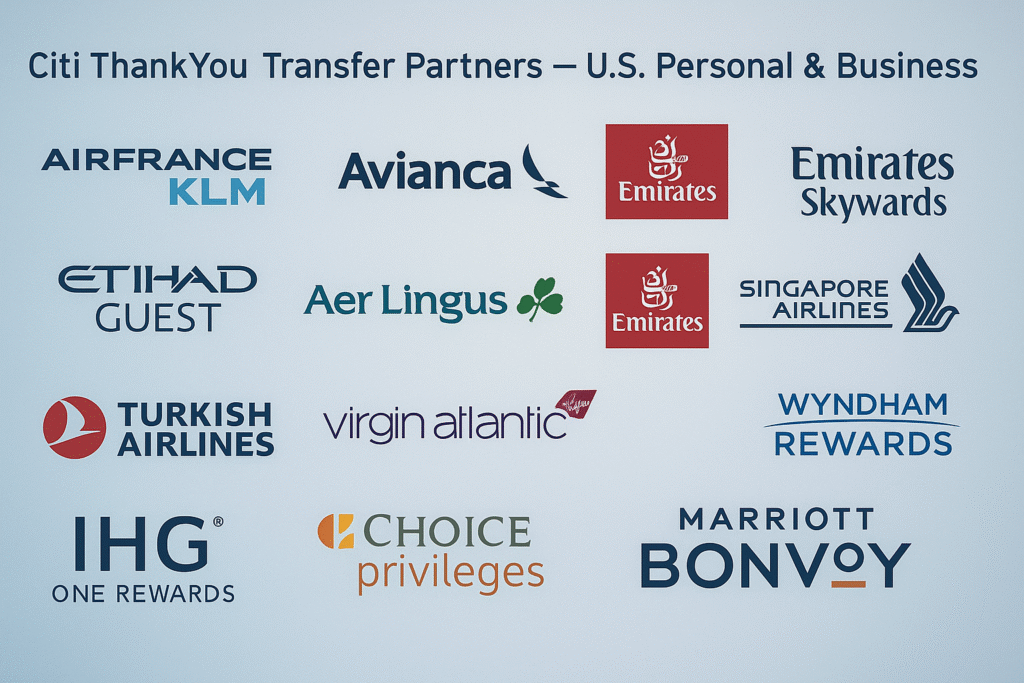
Citi ThankYou® Transfer Partners — U.S. Personal & Business

Last updated: October 5, 2025 Citi splits ratios by card. Premium cards (Strata Premier/Elite) usually get 1:1. No‑annual‑fee cards often get ~30% worse ratios (e.g., 1:0.7). Emirates is 5:4. Current transfer bonuses From To Bonus Ends Citi ThankYou Turkish Miles&Smiles 50% bonus Oct 18, 2025 Citi ThankYou Avianca LifeMiles 25% bonus Oct 18, 2025   Airline partners (premium‑card ratios shown) Program Alliance Ratio (premium / no‑fee) Speed Best Use Idea American Airlines AAdvantage oneworld 1:1 (or 1:0.7 on some cards) Instant Great domestic/partners; Web Specials Aeromexico Rewards SkyTeam 1:1 / 1:0.7 ≤48h RTW niche Avianca LifeMiles Star 1:1 / 1:0.7 Instant Low fees; UA domestics Cathay Pacific Asia Miles oneworld 1:1 / 1:0.7 Instant AA/CX awards Emirates Skywards Non‑alliance 1:0.8 (5:4) Instant Niche Etihad Guest Non‑alliance 1:1 / 1:0.7 Instant AA partner charts EVA Air Infinity MileageLands Star 1:1 / 1:0.7 ≤48h Unique 1:1 with Citi Flying Blue (AF/KL) SkyTeam 1:1 / 1:0.7 Instant Promo Rewards JetBlue TrueBlue U.S. 1:1 / 1:0.7 Instant Simple domestic Qantas Frequent Flyer oneworld 1:1 / 1:0.7 Instant Book AA/oneworld Qatar Privilege Club (Avios) oneworld 1:1 / 1:0.7 Instant Qsuite when open Singapore KrisFlyer Star 1:1 / 1:0.7 24–48h SQ premium Thai Royal Orchid Plus Star 1:1 / 1:0.7 2–3 days Regional Asia niches Turkish Miles&Smiles Star 1:1 / 1:0.7 Instant US domestic UA 7.5K–10K Virgin Atlantic Flying Club Non‑alliance 1:1 / 1:0.7 Instant ANA premium cabins   Hotel partners Program Type Ratio Speed Notes Choice Privileges Hotel 1:2 (or 1:1.4 on some cards) Instant Excellent in Europe Wyndham Rewards Hotel 1:1 / 1:0.7 Instant Vacasa/road trips ALL – Accor Live Limitless Hotel 2:1 / 2:0.7 24–48h Fixed‑value LHW Leaders Club Hotel 5:1 / 5:0.7 24–48h Occasional luxury plays Preferred Hotels (I Prefer) Hotel 1:4 / 1:2.8 24–48h Boutique stays   Links: Citi ThankYou transfer hub; partner booking pages (AAdvantage, Flying Blue, Asia Miles, KrisFlyer, Turkish, Virgin, Choice, Wyndham, etc.). FAQs Q1. Which airlines can I transfer Citi ThankYou® points to in 2025? Citi ThankYou® points can be transferred to major global airlines such as American Airlines AAdvantage, Aeromexico Rewards, Air France–KLM Flying Blue, Avianca LifeMiles, Cathay Pacific Asia Miles, Emirates Skywards, Etihad Guest, Singapore KrisFlyer, Turkish Miles&Smiles, Virgin Atlantic Flying Club, and more. Most transfers occur instantly, though some may take up to 48 hours. What are the best Citi ThankYou® transfer partners for maximum value? Top Citi transfer partners include Avianca LifeMiles for low-fee Star Alliance awards, Turkish Miles&Smiles for cheap United domestic flights, Singapore KrisFlyer for premium long-haul redemptions, and Virgin Atlantic Flying Club for ANA business or first class. The best partner depends on your destination and travel goals. Do Citi ThankYou® transfer ratios vary by card type? Yes. Premium cards such as the Citi Strata Premier® and Citi Strata Elite® typically offer 1:1 transfer ratios to airline and hotel partners. No-annual-fee cards, like the Citi Rewards+® or Custom Cash®, often transfer at reduced ratios — around 1:0.7 — and may have limited access to some partners. How long do Citi ThankYou® point transfers take to complete? Most Citi ThankYou® transfers are instant, especially to partners like Flying Blue, Virgin Atlantic, and Avianca LifeMiles. However, some programs such as EVA Air, Singapore KrisFlyer, or Accor Live Limitless may take 24–48 hours to process. Always verify timing before booking award flights or hotel stays. Find your next best card The Cards Guy helps you pair the right credit card with your lifestyle—saving on travel, bills, and everyday spend. Start earning smarter today.

Citi ThankYou® Transfer Partners — U.S. Personal & Business Read More »

Amex Membership Rewards Transfer Partners

American Express Membership Rewards® Transfer Partners — U.S. Personal & Business

Last updated: October 5, 2025 Big roster, frequent bonuses. Emirates transfers are 5:4 (since Sept 16, 2025). Transfers to U.S. airlines (Delta/JetBlue) trigger Amex’s small excise fee. Hawaiian ended June 30, 2025. Core notes Most transfers are instant; a few take up to ~48 hours. Excise fee: $0.0006 per point (max $99) for U.S. airlines. Watch for monthly/seasonal promos (e.g., Flying Blue). Current transfer bonuses From To Bonus Ends Amex Membership Rewards Flying Blue (AF/KL) 20% bonus Oct 31, 2025 Amex Membership Rewards Marriott Bonvoy 30% bonus Nov 30, 2025   Airline partners & ratios Program Alliance Ratio Speed Best Use Idea Aer Lingus AerClub (Avios) oneworld via Avios 1:1 Instant Short‑haul Avios Aeromexico Rewards SkyTeam 1:1.6 ≤24h RTW chart niche Air Canada Aeroplan Star 1:1 Instant Great partners Air France–KLM Flying Blue SkyTeam 1:1 Instant Promo Rewards ANA Mileage Club Star 1:1 ≤48h ANA biz/first round‑trip Avianca LifeMiles Star 1:1 Instant Low surcharges British Airways Executive Club oneworld 1:1 Instant Short nonstops; Iberia biz Cathay Pacific Asia Miles oneworld 1:1 Instant AA/CX partners Delta SkyMiles SkyTeam 1:1* Instant *Excise fee Emirates Skywards Non‑alliance 5:4 Instant Niche Etihad Guest Non‑alliance 1:1 Instant AA partners niche Iberia Plus (Avios) oneworld 1:1 Instant Off‑peak biz to MAD JetBlue TrueBlue U.S. 1000:800* Instant *Excise fee Qantas Frequent Flyer oneworld 1:1 Instant Oneworld access Qatar Privilege Club (Avios) oneworld 1:1 Instant Qsuite when open Singapore KrisFlyer Star 1:1 24–48h Long‑haul SQ premium Virgin Atlantic Flying Club Non‑alliance 1:1 Instant ANA sweet spot   Hotel partners Program Type Ratio Speed Notes Choice Privileges Hotel 1:1 Instant Strong in Europe Hilton Honors Hotel 1:2 Instant Use with 5th‑night‑free Marriott Bonvoy Hotel 1:1 Instant Use with promos/need   Links: Amex transfer hub; partner booking pages (Aeroplan, Flying Blue, Asia Miles, KrisFlyer, Virgin, etc.). FAQs What are the current Amex Membership Rewards® transfer bonuses for October 2025? A: As of October 2025, you’ll get a 20% bonus to Flying Blue (Air France–KLM) through October 31 and a 30% bonus to Marriott Bonvoy through November 30. Bonuses change monthly, so check before you transfer. How long do Amex Membership Rewards® point transfers take? A: Most transfers are instant, especially to partners like Aeroplan, British Airways, and Virgin Atlantic. A few programs — such as ANA Mileage Club or Singapore KrisFlyer — can take up to 48 hours to post. Which Amex transfer partners give the best value? Air Canada Aeroplan, Avianca LifeMiles, Air France–KLM Flying Blue, and Virgin Atlantic Flying Club consistently deliver strong value for flights, especially when Amex runs transfer bonuses or you find award seats on partners. Are there any fees for transferring Amex points to airlines? Yes. Transfers to U.S.-based airlines (Delta and JetBlue) include a small excise fee of $0.0006 per point, capped at $99. International airline and hotel transfers don’t charge this fee. Find your next best card The Cards Guy helps you pair the right credit card with your lifestyle—saving on travel, bills, and everyday spend. Start earning smarter today.

American Express Membership Rewards® Transfer Partners — U.S. Personal & Business Read More »

Best Travel eSIMs for 2025

Travel Data That *Actually* Works in 2025: The eSIM Guide I Give Friends

If you only need data abroad, don’t pay carrier roaming. Buy a travel eSIM before you fly, turn it on when you land, and make calls over apps (WhatsApp, FaceTime Audio, Google Voice). You’ll save a lot and you’ll be online in minutes. When to pick an eSIM vs a local SIM eSIM: best for fast setup, short trips, and multi‑country hops. No store visits, no ID lineups at the kiosk. • Local SIM: still worth it for long stays in one country or if you need a local number and heavy calling. • UK Three SIM is the hybrid: a normal phone line with wide roaming for a daily fee and a fair‑use cap; handy if you need native voice/SMS everywhere. My short list (why travelers like these) Provider Coverage / notable plans Why people like it Heads‑up Airalo Global and regional eSIMs (incl. Discover+ with data, calls, and texts in many countries) Huge catalog; easy top‑ups and install in app Data‑only unless you choose a plan that includes calls/texts Nomad 200+ destinations; Global and Global‑EX long‑duration plans Simple prices; good regional bundles; long‑duration options Check country list on Global‑EX (fewer countries than standard Global) Holafly Unlimited‑style data plans in 160+ destinations “Unlimited” is simple for heavy users Subject to fair‑use throttling; speeds can slow if you push it aloSIM 200+ countries; regional packs (e.g., Western Europe) Low entry price; frequent promos Data‑only; confirm device support Ubigi Global and country packs; month‑to‑month options Solid app; easy renewals; works on phones, tablets, and laptops Prices vary by region; check hotspot terms   Set‑up tips that avoid headaches Install the eSIM on Wi‑Fi at home. Don’t wait for the airport. • Leave your US line on but set it to data‑off. That keeps iMessage/2FA working while your eSIM handles data. • Turn on hotspot only if your plan allows it. Some “unlimited” plans throttle or block tethering. • Keep a few dollars in Google Voice for the rare number that needs a normal call. Three UK: when a physical SIM still makes sense If you need a normal phone number and SMS everywhere, a Three UK SIM (or eSIM) still works well. Their Go Roam lets you use your UK allowances in lots of countries with a daily charge, and there’s a 12GB fair‑use cap when roaming. For many trips, a data eSIM is cheaper—but Three is the easiest path if you want native voice without apps. Bottom line Most travelers are happier on a data eSIM + app calling. If you must have native voice/SMS everywhere, take a Three UK SIM. Either way, set it up before you fly and you’ll hit the ground connected. FAQs Q1: What’s the best travel eSIM for 2025? A: Airalo is the top pick overall for 2025 thanks to its wide global coverage, easy top-ups, and clear pricing. It’s ideal for multi-country trips and quick setup before you fly. Q2: Which eSIM offers unlimited data for travel? A: Holafly provides “unlimited”-style plans in 160+ destinations, great for heavy data users. Just note fair-use throttling can apply after high-volume usage. Q3: What’s the most affordable global eSIM? A: Nomad and aloSIM both offer strong regional and global plans at budget-friendly rates, with flexible durations and frequent promos for travelers. Q4: When should I still use a physical SIM? A: A Three UK SIM or eSIM makes sense if you need native voice/SMS everywhere. It supports Go Roam in many countries with a daily fee and 12 GB fair-use cap. Find your next best card The Cards Guy helps you pair the right credit card with your lifestyle—saving on travel, bills, and everyday spend. Start earning smarter today.

Travel Data That *Actually* Works in 2025: The eSIM Guide I Give Friends Read More »

Best Student Credit Cards 2025

Best Student Credit Cards 2025 Back-to-Campus & Holiday Shopping

By Karl • The Cards Guy Heading back to campus this fall or prepping for holiday shopping means managing tight budgets, unexpected expenses, and the start of your credit-building journey. The right student credit card can help you earn rewards, avoid fees, and build a solid credit history. Here are my top picks for October 2025 — with practical advice for students juggling textbooks, groceries, and gifts. The CardsGuy Overall Pick  Discover it® Student Cash Back The Discover it Student Cash Back continues to stand out as the best all-around student card. It offers 5% rotating cash back categories (up to the quarterly max when activated), 1% on everything else, and Discover’s famous first-year Cashback Match — doubling all rewards you earn in the first 12 months. Add in a $0 annual fee and a 0% intro APR on purchases for 6 months, and it’s hard to beat for both back-to-school and holiday shopping. Best for: students who’ll actually activate categories and want to maximize rewards in their first year.   Strong Alternatives (Match by Your Spending Style) 🔹 Capital One SavorOne Student Cash Rewards Perfect for everyday student life, this card earns 3% cash back on dining, grocery stores, entertainment, and popular streaming services, with $0 annual fee. There’s a small welcome bonus for early use, and you’ll also earn bonus rewards when booking hotels, vacation rentals, and rental cars through Capital One Travel. Best for: students who spend most on food, concerts, and subscriptions.   🔹 Capital One Quicksilver Student Cash Rewards For simplicity, this card gives a flat 1.5% cash back on everything, with no annual fee. It’s the best “set and forget” option — plus you get boosted rewards through Capital One Travel on hotels and rentals. Best for: students who don’t want to track categories or rotating calendars.   🔹 Bank of America® Customized Cash Rewards for Students A flexible option: choose a 3% category (online shopping, gas, dining, travel, drugstores, or home improvement). You’ll also get 2% at grocery stores and wholesale clubs (on combined quarterly limits) and 1% everywhere else. The big bonus: a 0% intro APR for 15 billing cycles on purchases and balance transfers — ideal if you need wiggle room for textbooks or dorm essentials. Best for: students who want control over their top rewards category, especially for online shopping during the holidays.   🔹 Chase Freedom Rise℠ This card makes credit-building straightforward: 1.5% cash back on all purchases, no annual fee, and an automatic credit limit review in as little as 6 months with responsible use. Students can also earn a $25 statement credit just for setting up autopay. Best for: students focused on building credit quickly and safely.   🔹 Bank of America® Travel Rewards for Students If you’re studying abroad or plan to travel, this card shines with 1.5 points per $1 on all purchases, bonus points on travel booked through the BoA Travel Center, no foreign transaction fees, and a 0% intro APR for 15 billing cycles. Best for: students going abroad or traveling frequently. Quick Picks by Situation Biggest first-year rewards: Discover it Student Cash Back Dining + entertainment spenders: Capital One SavorOne Student No-frills, flat cash back: Capital One Quicksilver Student or Chase Freedom Rise International students/study abroad: Bank of America Travel Rewards for Students Need 0% APR for school setup costs: Bank of America student cards with 15-cycle intro APR Holiday Shopping Playbook  Front-load rewards: If you’re buying mostly online, use Discover it Student when online shopping is a 5% category. If groceries, food, or entertainment are your biggest Q4 spend, SavorOne Student’s steady 3% will beat most cards. Plan around intro APR: If you need time to pay off bigger purchases like a laptop or textbooks, BoA’s student cards with 0% intro APR give you breathing room — but set reminders to clear the balance before the rate jumps. Study-Abroad Cheat Sheet  Always bring a no-foreign-transaction-fee card like Bank of America Travel Rewards. Carry at least one Visa and one Mastercard to avoid acceptance issues abroad. Use mobile apps to lock/unlock cards and monitor fraud instantly. Spend in local currency to avoid costly conversion fees at checkout. Remember, most student cards carry $0 fraud liability protections, giving you peace of mind when traveling. How to Choose (3-Step) Identify your top 3 spend categories (food, online shopping, travel, etc.). Match your energy level: High: rotating categories (Discover). Medium: customizable categories (BoA). Low: flat-rate cash back (Quicksilver or Freedom Rise). Consider extras: APR offers, no foreign fees, and credit-building tools. The Cards Guy Takeaway If you’re just starting out, the Discover it Student Cash Back is my overall pick for the biggest first-year value. For simplicity, Quicksilver Student or Freedom Rise will do the job. And if you’re heading abroad, BoA Travel Rewards for Students should be in your wallet. The best part? All of these cards have no annual fee, so you can focus on building your credit while enjoying rewards — whether that’s on your daily Starbucks run or flights home for the holidays. FAQs: Student Credit Cards 2025 Do student credit cards really help build credit? Yes. By reporting your payment history to the three major credit bureaus, student cards let you start building a score early. On-time payments and low balances set the foundation for qualifying for premium travel or cash-back cards later. What credit score do you need to get a student credit card? Most student cards are designed for beginners and don’t require a long credit history. Many accept applicants with limited or no credit, though you’ll usually need proof of income (or a co-signer if under 21).   Can student credit cards be used while studying abroad? Yes, but not all are created equal. If you’ll be traveling internationally, choose a card with no foreign transaction fees (such as Bank of America Travel Rewards for Students) to avoid paying ~3% extra on every purchase.   What’s better for students — cash back or travel rewards? For

Best Student Credit Cards 2025 Back-to-Campus & Holiday Shopping Read More »

How to Get Approved a Business Credit Card

How to Apply for a Business Credit Card and Get Approved

The thought of applying for a business credit card can feel daunting. You’re building a business, and the last thing you need is a complicated application process filled with jargon and uncertainty. Many entrepreneurs worry: Do I have the right documents? Is my business too new? Will this hurt my personal credit score? These are valid concerns that stop many from taking this crucial financial step. But it doesn’t have to be this way. This guide is designed to demystify the process and provide a clear, actionable roadmap. We will walk you through the exact business credit card application steps, from gathering your documents to hitting the submit button with confidence. Forget the anxiety; this is the practical, straightforward business credit card explained, focusing on how to get approved for a business credit card, even if you’re just starting out. We’ll address your biggest questions head-on, providing the clarity you need to secure a vital tool for your company’s growth. Table of Contents 1 Step 1: The Pre-Application Checklist 2 Step 2: The Online Application Walkthrough 3 Applying with a New Business or No Revenue 4 How Your Personal Credit is Impacted 5 After You Apply: Timelines and Next Steps Step 1: The Pre-Application Checklist Before you even navigate to an application page, getting organized is the single most important step toward a successful outcome. Card issuers need to verify both your personal and business identity. Having everything ready streamlines the process and prevents errors. Here is your essential business credit card application checklist. What Documents Do I Need for a Business Credit Card? While you may not need to upload physical documents for a standard business credit card application online, you will need the information they contain. Gather the following: Information Category Required Details Personal Information Full Legal Name & Date of Birth: For identity verification. Social Security Number (SSN): Required for the personal guarantee. Phone Number: Standard contact information. Total Annual Income: Includes all reasonably accessible income, not just your salary. As per Experian. Business Information Legal Business Name, Address & Phone: Address cannot be a P.O. Box. Employer Identification Number (EIN): Or SSN for sole proprietors. An EIN is key to building separate business credit. Business Structure: e.g., Sole Proprietorship, LLC, S-Corp. Industry, Annual Revenue & Years in Business: Provide accurate figures or reasonable estimates. Check Your Personal Credit Score Issuers will heavily weigh your personal credit score. A personal FICO score of 670 or higher is generally considered ‘good’ and is often the entry point for qualifying for unsecured business credit cards. Knowing your score beforehand helps you manage expectations and choose the right card. Step 2: The Online Application Walkthrough With your information gathered, you’re ready to tackle the application. The how to get a business credit card process is mostly standardized across issuers. Business Credit Card Application Steps: Choose the Right Card: The first step is selecting a card that aligns with your business spending and goals. This is more critical than the application itself. Our guide on how to choose the best business credit card provides an in-depth look at making this decision. Navigate to the Secure Application Page: Always ensure you are on the bank’s official, secure website (look for https://). Enter Your Business Information: Fill in the fields using the information you gathered. Be precise—discrepancies between your registered information and your application can trigger a denial. Enter Your Personal Information: You will be listed as the ‘Authorizing Officer.’ This is where you’ll provide your SSN and total income. This section is for the personal guarantee business credit card clause, which is standard. Review and Submit: Triple-check every field for typos or errors before submitting. An incorrect digit in your EIN or SSN is a common reason for instant denial. Applying with a New Business or No Revenue This is the biggest hurdle for most entrepreneurs. How can you get a business credit card for new business no revenue? The key is that issuers underwrite the application based on your personal creditworthiness. * Leverage Personal Income: When the application asks for ‘total annual income,’ you should include all sources of income available to you to repay the debt, not just the business’s revenue. This is the most critical factor for a business credit card with no revenue. * Start with a Bank You Know: If you have a personal checking or savings account with a bank, applying for one of their business cards can be easier, as they have an existing financial relationship with you. * Consider a secured business credit card: If you’re struggling for approval, a secured business credit card is a fantastic option. You provide a security deposit that typically becomes your credit limit. It’s one of the best startup business credit cards with no credit history, as it allows you to build a positive payment history for your business. For instance, one of our clients, a freelance graphic designer just starting out, was approved for their first business card by including their spouse’s stable income on the application and applying with the bank where they held a personal account for over five years. This leveraged their personal financial history to secure a card for their new business. How Your Personal Credit is Impacted Let’s clear up the most common question: does applying for business credit card affect personal credit? Yes, it does, in a few key ways: 1. The Hard Inquiry: When you apply, the issuer performs a business credit card hard inquiry on your personal credit report. This can temporarily lower your score by a few points. Multiple hard inquiries in a short period can have a greater impact. 2. The Personal Guarantee: By signing the application, you are personally guaranteeing to pay back the debt if the business cannot. This is a standard requirement. 3. Reporting to Personal Bureaus: As detailed by mp, Many business credit card issuers report account activity to personal credit bureaus, though policies vary: some report all activity, others only negative activity,

How to Apply for a Business Credit Card and Get Approved Read More »

Guide On How to Choose Your First Credit Card

How to Choose Your First Credit Card: A Beginner’s Guide

Stepping into the world of credit can feel both exciting and intimidating. Choosing your first credit card is a significant financial step, but it’s often clouded by confusing jargon and the fear of making a mistake. How do you know which card is right for you? What do terms like APR and credit limit even mean? If you’re feeling lost, you’re in the right place. While we at The Cards Guy specialize in creating custom physical cards, we believe the most important card you’ll own is your first credit card. It’s a key to building your financial future, and we want to help you start on the right foot. This guide is designed for absolute beginners, breaking down the entire process into simple, actionable steps. We’ll help you assess your needs, understand the basics, and choose a card that empowers you to build credit responsibly from day one. Table of Contents 1 First-Time Decision Making 2 No Credit History Solutions 3 Application & Management Basics First-Time Decision Making Choosing your first credit card can feel like a major milestone, but it often comes with a wave of confusion. With so many options and unfamiliar terms, it’s easy to feel overwhelmed. This section breaks down the first-time decision process into simple, manageable steps, helping you understand what you need before you start comparing cards. Understanding Your First Credit Card Before diving into applications, it’s crucial to grasp what a credit card is and how it works. Think of it as a tool for building your financial future. This beginner credit card guide from The Cards Guy will walk you through the first credit card decision process, starting with the absolute basics. A first-time credit card isn’t just about making purchases; it’s your entry point into the world of credit, which affects future loans for cars, homes, and more. Key terms you need to know: * APR (Annual Percentage Rate): This is the interest you’ll pay on any balance you don’t pay off in full each month. As a beginner, your goal should be to always pay your balance in full to avoid interest entirely. * Annual Fee: Some credit cards charge a yearly fee just for having the card. For a first card, it’s wise to look for options with no annual fee. * Credit Limit: This is the maximum amount of money you can borrow on the card. Your limit will likely be low when you start, but it can increase over time with responsible use. * Grace Period: This is the time between the end of a billing cycle and your payment due date. If you pay your full balance during this period, you won’t be charged interest. Finding the Right First Credit Card Once you understand the basics, the next step is identifying the type of card that fits your situation. The best first credit card is one that is easy to get approved for and helps you build credit safely. For most beginners, options fall into one of three main categories: Card Type Primary User Key Feature Student Credit Cards Enrolled college students Designed for limited or no credit history, often with no annual fee and small rewards. Secured Credit Cards Individuals (non-students) needing to build credit. Requires a refundable security deposit that serves as the credit limit, making approval much easier. Retail Store Cards Frequent shoppers at a specific store. Easy to get, but can only be used at that retailer, offering less flexibility. The goal when choosing a first credit card is not to find the one with the flashiest rewards, but the one that offers the highest chance of approval and the lowest costs. No Credit History Solutions One of the biggest hurdles for beginners is the classic paradox: you need credit history to get a credit card, but you need a credit card to build credit history. Fortunately, the financial industry has created specific products to solve this exact problem. Credit Cards for Building Credit If you have no credit history, your focus should be on cards and strategies designed specifically for credit-building. The best option is one that reports your payment activity to all three major credit bureaus (Equifax, Experian, and TransUnion). Solution How It Works Best For Secured Credit Card You provide a refundable cash deposit that acts as your credit limit, eliminating risk for the bank. Payments are reported to credit bureaus, and you can graduate to an unsecured card over time. Almost anyone with no credit history who needs a reliable way to build a credit score from scratch. Student Credit Card An unsecured card with lenient approval requirements for enrolled students, typically with a lower credit limit. Students at the beginning of their financial journey who can use their status to get approved. Authorized User A family member adds you to their credit card account. Their responsible payment history can help build your credit file. Young adults with a trusted family member who has an established, positive credit history. Application & Management Basics You’ve done your research and picked the right type of card. Now it’s time to apply and, once approved, manage it wisely. This final phase is where your habits will determine your success. The First Credit Card Application The process of how to apply for a first credit card is straightforward. You’ll typically fill out an online application that takes just a few minutes. Before you start, it’s helpful to understand what lenders are looking for and what documents are needed for a first credit card application. You will need to provide: * Personal Information: Full name, address, date of birth, and Social Security Number. * Income Information: You must show you have a source of income. This can be from a job, scholarships, grants, or even a spouse’s income in some cases. Be prepared to state your total annual income. To increase your chances of approval, start by checking for credit card pre-approval offers online. Many issuers have tools that perform a “soft

How to Choose Your First Credit Card: A Beginner’s Guide Read More »

4 Safe Methods Never Miss a Credit Card Payment

How to Never Miss a Credit Card Payment: 4 Fail-Safe Methods

Juggling multiple credit card due dates can feel like a high-stakes financial game where one small slip-up results in late fees and a hit to your credit score. In a world of competing financial obligations, it’s easy to miss a payment, but the consequences can be long-lasting. Fragmented advice and partial solutions often leave you vulnerable. That’s why we’ve developed The Card Guy’s Ultimate Fail-Safe Blueprint. This isn’t just a list of tips; it’s a comprehensive, integrated system designed to make missing a credit card payment a thing of the past. By implementing our four core methods—Automated Payment Setup, Strategic Due Date Management, Multi-Layered Reminders, and Proactive Monitoring—you can build a bulletproof process that protects your finances, saves you money, and gives you complete peace of mind. Table of Contents 1 Method 1: Build Your Foundation with Automated Payment Setup 2 Method 2: Implement Strategic Due Date & Reminder Systems 3 Method 3: Master Proactive Account Monitoring & Budgeting 4 Method 4: Know How to Recover from a Missed Payment Method 1: Build Your Foundation with Automated Payment Setup The single most effective way to guarantee on-time payments is to take the human element out of the equation. Setting up automatic payments is the cornerstone of any fail-safe credit card payment plan. How to Set Up Autopay for Your Credit Card Automating your credit card payments is a straightforward process that provides immediate peace of mind. While the exact steps vary slightly between card issuers, the general credit card autopay setup follows a simple path. Log In to Your Account: Access your credit card account online or through the mobile app. Navigate to Payments: Look for a section labeled “Bill Pay,” “Payments,” or “Autopay.” Choose Your Payment Amount: You will be presented with several options for your automatic payment. Choosing the right one is key to your financial health. Autopay Option Description & Recommendation Statement Balance Pays your entire balance in full each month. This is the best option to avoid interest charges and maximize credit score benefits. Minimum Payment Pays only the minimum required amount. This keeps your account in good standing but means you will accrue interest on the remaining balance. Fixed Amount Pays a specific dollar amount you choose. Ensure this amount is consistently higher than your typical minimum payment to make progress on your balance. Link Your Bank Account: Provide the routing and account number for the checking account you want to use for payments. Confirm and Activate: Review the details and confirm your settings. Keep an eye on your account for the first month to ensure the automatic credit card payment processes correctly. The Key Benefits of Credit Card Autopay for Your Finances Why automate credit card payments? The advantages go far beyond simple convenience. The benefits of credit card autopay directly impact your financial health. Protects Your Credit Score: According to myFICO, payment history accounts for 35% of your FICO score, making it the most significant factor. Autopay ensures a perfect record of on-time payments, which is crucial for building and maintaining good credit. Eliminates Late Fees: Late fees are an unnecessary expense. Automating payments means you never have to worry about a missed due date costing you money. Reduces Financial Stress: Knowing your bills are paid on time without manual intervention frees up mental energy to focus on other financial goals. Saves Time: Setting it up once saves you the recurring monthly task of logging in and making manual payments. A Real-World Success Story “Setting up autopay through The Cards Guy’s advice was a game-changer. I went from constantly worrying about due dates to building my credit score effortlessly. It’s the most reliable system I’ve ever used.” – Sarah K., Verified Customer How to Manage Your Credit Card Autopay Settings Your financial situation can change, and it’s important to know how to manage credit card autopay settings effectively. Whether you need to change your linked bank account or stop automatic credit card payments temporarily, you can typically do so from the same payment portal where you set it up. Always ensure you have sufficient funds in your linked bank account a few days before the due date to prevent a failed payment, which can be just as damaging as a missed one. Method 2: Implement Strategic Due Date & Reminder Systems Automation is powerful, but a truly fail-safe system includes strategic management and reminders. This is especially critical when you need to organize credit card payments across multiple cards. How to Manage Multiple Credit Card Due Dates Juggling different due dates is a common reason for missed payments. The best credit card due date strategy is to sync your payment dates. Most credit card issuers allow you to change your payment due date. Call the customer service number on the back of your card or look for the option in your online account settings. Choose a date that works best for your cash flow, such as a day or two after you get paid. Aligning all your due dates to the same day of the month simplifies your entire payment process. Creating a Multi-Layered Credit Card Payment Reminders System Even with autopay enabled, setting up alerts provides a valuable safety net. A robust credit card payment reminders system ensures you’re always aware of upcoming payments and account activity. Reminder Type How It Works & Best Practice Issuer Alerts Enable email and text message alerts directly from your credit card company. These are your first line of defense for due date and payment confirmation notifications. Calendar Reminders Create a recurring event in your digital calendar (e.g., Google, Outlook) for 3-5 days before your due date. This prompts you to verify that your linked bank account has sufficient funds. Reminder Apps For those who manage multiple cards, dedicated bill management apps can consolidate all your due dates and accounts into a single, easy-to-manage dashboard. A Proactive Strategy to Avoid Late Fees for Good The ultimate strategy for how to avoid late fees on a

How to Never Miss a Credit Card Payment: 4 Fail-Safe Methods Read More »

Secured Credit Card vs. Credit-Builder Loan

Secured Credit Card vs. Credit-Builder Loan: Which Is Right for You?

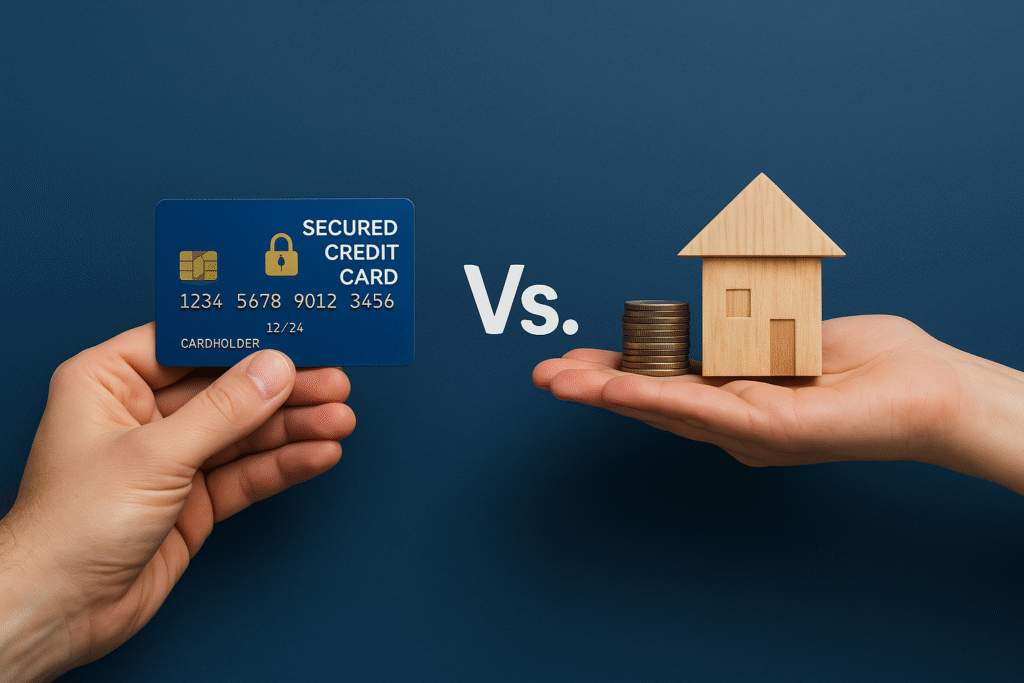
Starting your credit journey can feel like navigating a maze. You know you need to build a positive history, but the available tools can be confusing. Two of the most common starting points are secured credit cards and credit-builder loans. While both are designed to help you, they operate very differently. Many guides will pit them against each other, forcing a choice. But what if the best strategy wasn’t about choosing one over the other? Table of Contents 1 Understanding the Basics: Secured Credit Cards vs. Credit-Builder Loans 2 Head-to-Head Comparison: Key Differences and Similarities 3 The Ultimate Credit Building Blueprint: Combining Credit Building Tools 4 Accelerated Credit Building Strategies 5 Choosing the Right Tool for Your Situation 6 Conclusion: Your Path to a Better Credit Score Our winning approach is “The Ultimate Credit Building Blueprint,” a comprehensive guide that not only compares these two powerful tools but reveals the synergy of using them together. We’ll provide a strategic framework for combining a secured card and a credit-builder loan to maximize your credit score improvement. This article offers an unbiased, actionable blueprint tailored to different financial needs, positioning you to build credit faster and more effectively than you thought possible. Understanding the Basics: Secured Credit Cards vs. Credit-Builder Loans Before crafting a strategy, it’s essential to understand your tools. Both secured cards and credit-builder loans are designed to help you establish a positive payment history, but they function in fundamentally different ways. What is a Secured Credit Card? A secured credit card works almost exactly like a traditional credit card, with one key difference: you provide a refundable cash deposit to “secure” the credit line. This deposit, typically between $200 and $500, serves as collateral and usually equals your credit limit. You use the card for purchases, make monthly payments, and the lender reports your activity to the major credit bureaus. According to Karl, secured credit cards are easier to obtain for those with poor or no credit history due to the security deposit mitigating lender risk. Discover states that many secured cards offer graduation programs, allowing users to transition to an unsecured card and receive their deposit back after responsible use. What is a Credit-Builder Loan? A credit-builder loan is structured differently from a traditional loan. Instead of receiving a lump sum of cash upfront, the loan amount is held in a locked savings account by the lender. You then make fixed monthly payments over a set term (usually 6 to 24 months). The lender reports these payments to the credit bureaus. Once you’ve paid the loan in full, the funds are released to you, often plus any interest you’ve earned. It’s a forced savings program that simultaneously builds your credit. This unique structure makes it a strong alternative to a standard personal loan for those with low credit, and it functions very differently from a secured loan where you must provide your own collateral. Head-to-Head Comparison: Key Differences and Similarities | Feature | Secured Credit Card | Credit-Builder Loan | | :— | :— | :— | | How it Works | Revolving credit line secured by a cash deposit. | Installment loan where funds are held until paid off. | | Upfront Cost | Refundable security deposit ($200+). | Minimal, often just a small administrative fee. | | Primary Use | Daily purchases and managing credit utilization. | Building payment history and savings. | | Credit Impact | Affects payment history, credit utilization, and credit mix. | Affects payment history and credit mix. | | Accessibility | High approval odds, even for bad credit. | High approval odds; many offer credit builder loan no credit check options. | How They Impact Your Credit Score Both tools build your payment history, which is the single most important factor in your credit score. However, they contribute differently to your credit mix. myFICO indicates that credit mix accounts for 10% of a FICO® Score, demonstrating the importance of managing different types of credit. Lenders like to see that you can responsibly manage different types of credit. A secured card is a revolving account, while a credit-builder loan is an installment account. Having both demonstrates this versatility. A secured card also directly impacts your credit utilization ratio—the amount of credit you’re using compared to your limit. Keeping this ratio below 30% (and ideally below 10%) is crucial for credit score improvement. The Ultimate Credit Building Blueprint: Combining Credit Building Tools Why choose one when you can leverage both? For those serious about building credit, the most powerful approach is a dual credit building strategy. This is the core of our winning angle: creating synergy to accelerate your results. Synergy Strategies: Using a Secured Card and Credit Builder Loan Together By opening both a secured credit card and a credit-builder loan, you attack your credit-building goal from two angles. 1. Diversify Your Credit Mix: You immediately establish a history with both revolving and installment credit, satisfying the credit mix for building credit factor. 2. Double the Positive Payments: You now have two accounts reporting positive payment history to the credit bureaus each month, effectively doubling your credit-building activity. 3. Manage Utilization with Ease: You can use the secured card for a small, recurring purchase (like a streaming subscription), pay it off in full each month to keep utilization low, and let the credit-builder loan run automatically in the background. This combined approach sends a powerful signal to lenders that you are a responsible borrower capable of managing multiple credit types. [Editor’s Note: Integrating a customer testimonial here about the success of using both a secured card and a credit-builder loan would build trust.] Accelerated Credit Building Strategies Everyone wants to know how to build credit fast. While there are no magic wands, a strategic approach can yield impressive results in a relatively short time. How to Build Credit Fast for Beginners If you’re starting from scratch or rebuilding, the dual strategy is the fastest way to build credit. Here’s a simple

Secured Credit Card vs. Credit-Builder Loan: Which Is Right for You? Read More »

How Do Travel Rewards Cards Work?

How Do Travel Rewards Cards Work? A Beginner’s Guide

The promise of a travel rewards card is incredibly appealing: use a card for your daily expenses and unlock a world of free flights and luxurious hotel stays. But while this dream is achievable, it’s rarely as simple as it sounds. Many beginners are drawn in by flashy sign-up bonuses only to find themselves tangled in complex rules, confusing point valuations, and the potential for costly debt. The truth is, the greatest value from these cards isn’t just in earning points—it’s in understanding the system, recognizing the pitfalls, and using the card responsibly. This guide is designed to give you that transparent, complete picture. We’ll break down exactly how these cards work, from earning rewards to redeeming them wisely, and, most importantly, how to avoid the common mistakes that can make them more trouble than they’re worth. Table of Contents 1 The Core Mechanics: How You Earn and Redeem Travel Rewards 2 Understanding True Value & Maximization 3 Finding Your Fit: Which Type of Travel Card is Right for You? 4 The Beginner’s Minefield: Risks, Misconceptions, and Responsible Use The Core Mechanics: How You Earn and Redeem Travel Rewards At its heart, a travel rewards card is a tool that turns your everyday spending into points or miles, which can be redeemed for flights, hotel stays, and other travel-related expenses. But the process involves more than just swiping your card. Earning Points and Miles: More Than Just Spending The primary way you learn how to earn travel points is through spending, but savvy users know that the biggest gains come from strategic methods: * Sign-Up Bonuses: This is the single fastest way to accumulate a large number of points. Strong sign-up bonuses for general-purpose travel cards are often 75,000 points or miles for a spending requirement between $4,000 and $5,000 within the first few months, with premium cards offering over 100,000 points for higher spending thresholds. * Bonus Categories: Many cards offer accelerated rewards on specific spending categories. For example, a card might offer 3x points on dining and travel and 1x point on everything else. Aligning your card with your spending habits is crucial for maximization. * Shopping Portals: Banks often have online shopping portals that offer extra points for making purchases at specific retailers through their link. This is an easy way to multiply your earnings on purchases you were already planning to make. * Transfer Partners: Some of the most valuable programs, like Chase Ultimate Rewards or American Express Membership Rewards, allow you to move your points to various airline and hotel loyalty programs. Understanding your travel card transfer partners is key to unlocking outsized value. It’s also important to understand the terminology. While often used interchangeably, credit card miles vs points can have different implications. “Miles” are typically associated with a specific airline’s frequent flyer program, whereas “points” are often part of a more flexible bank-run program. Redeeming Your Rewards: Where the Real Value is Unlocked Earning points is only half the battle. Knowing how to redeem travel miles effectively is what separates a good strategy from a great one. You generally have two options: 1. Booking Through the Card’s Portal: Most banks (like the Bank of America travel rewards redeem portal) allow you to book travel directly through their website, where your points have a fixed cash value (e.g., 1 point = 1 cent). This is simple and straightforward but rarely provides the best value. 2. Transferring to Partners: This is where true maximization happens. By transferring your points to an airline or hotel partner, you can book “award travel.” Strategic redemption of points, such as transferring to airline partners, can yield significantly higher values, with 80,000 points potentially covering business class flights to destinations like Asia or Europe, exceeding standard portal redemption rates. Understanding True Value & Maximization Not all points are created equal. A common beginner mistake is assuming 50,000 points from one bank is the same as 50,000 from another. The secret to maximizing travel rewards lies in understanding the real-world value of your points. What Are Your Points Really Worth? A Lesson in Point Valuation The travel card point value isn’t a fixed number; it’s a range. While the bank portal might offer a floor value of 1 cent per point, the intrinsic value can be much higher when transferred to partners. This concept is central to the value theory of travel rewards. The utility maximization comes not from earning the most points, but from redeeming them for the highest possible value. This is why flexible points from a card like the Chase Sapphire Preferred are often considered among the best travel rewards credit card options—they offer multiple high-value redemption paths. The Cost-Benefit Analysis: Are Annual Fees Worth It? Many premium travel cards come with annual fees, sometimes running into hundreds of dollars. To determine if it’s worth it, you must weigh the fee against the card’s benefits. Perks like annual travel credits, airport lounge access, free checked bags, and Global Entry fee waivers (common Bank of America travel rewards card benefits) can easily offset the fee if you use them. If you’re a frequent traveler, the value you get from these perks and the higher earning rates can far exceed the annual cost. If not, a no-annual-fee card might be a better fit. Finding Your Fit: Which Type of Travel Card is Right for You? The travel card market is vast, with options tailored to every type of traveler. Choosing the right one depends on your spending habits, travel goals, and tolerance for complexity. The Main Flavors: Understanding the Types of Travel Credit Cards Card Type Key Features & Examples Best For General Travel Cards Earn flexible points transferable to various airlines/hotels. Issued by banks. (e.g., Chase Sapphire, Capital One Venture) Travelers seeking flexibility and high-value redemptions; often the best starting point for beginners. Airline Co-Branded Cards Offer airline-specific perks like free checked bags and priority boarding. (e.g., American Airlines, Delta cards) Frequent flyers who are loyal to a

How Do Travel Rewards Cards Work? A Beginner’s Guide Read More »