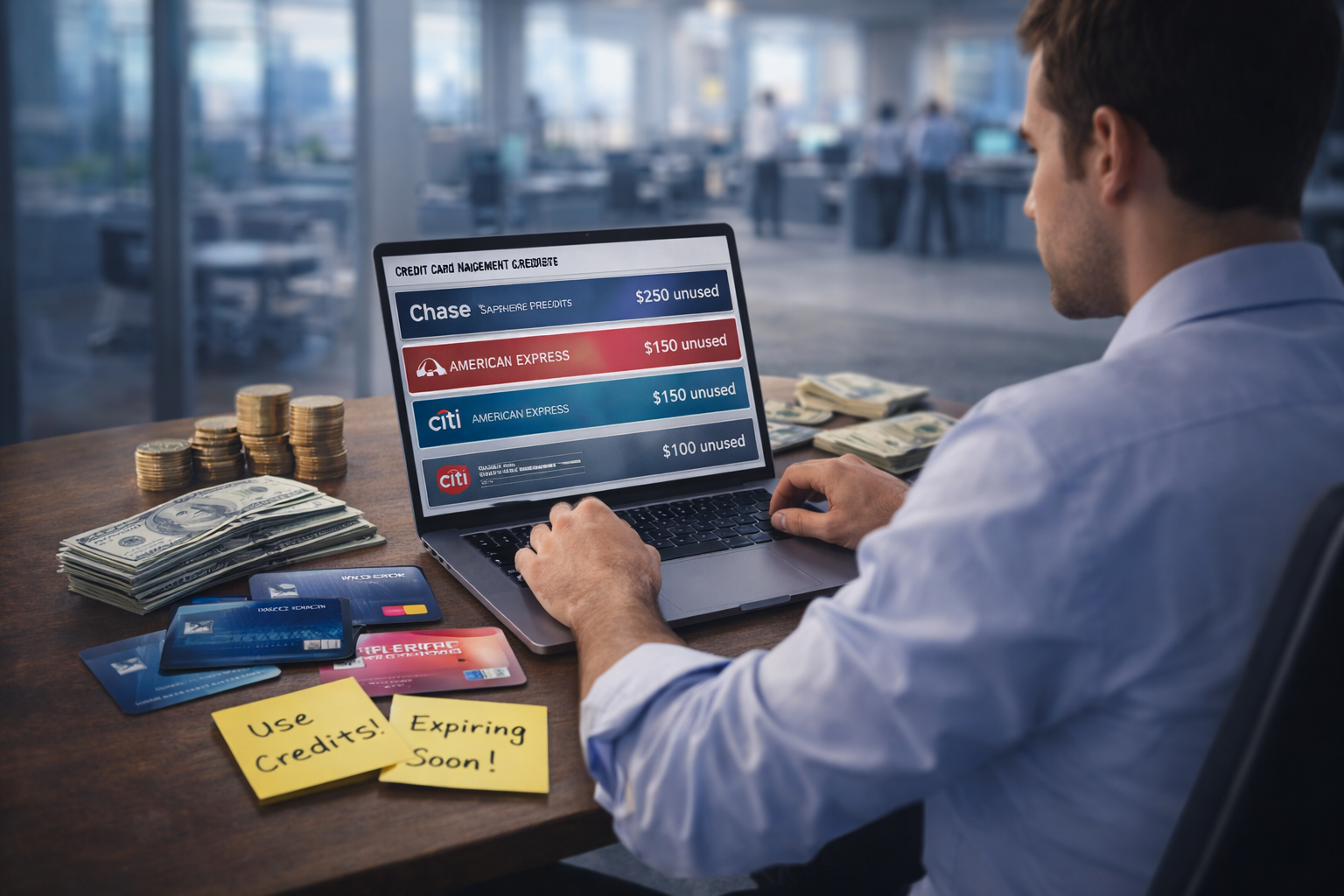

Juggling multiple credit card due dates can feel like a high-stakes game where one small slip-up turns into a late fee and a hit to your credit score. In a world of competing bills, it’s genuinely easy to miss a payment — and the consequences can linger far longer than the mistake. The advice you usually find is fragmented: a tip here, a half-solution there, nothing that actually holds up when life gets busy. So here is the system I actually use. It isn’t a list of tips — it’s four overlapping methods that back each other up: automated payments, strategic due-date management, multi-layered reminders, and proactive monitoring. Run all four and a missed payment stops being something you worry about.
Table of Contents
Method 1: Build Your Foundation with Automated Payment Setup
The single most effective way to guarantee on-time payments is to take yourself out of the equation. Autopay is the cornerstone of any fail-safe plan — it’s the layer that does the work even on the months you forget the card exists. This matters more than people realize, because according to myFICO, payment history makes up 35% of your FICO Score — the single biggest factor in the whole calculation. One automated on-time payment a month is the cheapest credit-score insurance you will ever buy.
How to set up autopay on your credit card
The exact steps vary a little between issuers, but the path is almost always the same:
- Log in to your account. Use your issuer’s website or mobile app.
- Find the payments area. Look for a section labeled “Bill Pay,” “Payments,” or “Autopay.”
- Choose your payment amount. This is the choice that actually matters — here’s how I think about the three options:
Autopay Option What it does & my recommendation Statement Balance Pays your full balance each month. This is the option I use — it avoids interest entirely and keeps your utilization clean. Minimum Payment Pays only the minimum due. It keeps your account in good standing, but you’ll accrue interest on whatever is left — treat this as a safety floor, not a strategy. Fixed Amount Pays a set dollar amount you choose. If you go this route, set it comfortably above your typical minimum so you’re actually chipping at the balance. - Link your bank account. Provide the routing and account number for the checking account you’ll pay from.
- Confirm and watch the first cycle. Activate it, then check the first month’s payment actually processed. I always verify month one — an autopay you never confirmed isn’t a fail-safe, it’s a guess.
Why autopay is worth it
- It protects the biggest piece of your score. Since payment history is the largest FICO factor, a perfect on-time record is the most valuable habit you can automate — it’s the backbone of building and maintaining good credit.
- It kills late fees. A missed due date is the most pointless expense in personal finance. Automating it away means it simply can’t happen.
- It lowers the mental load. Not having to remember every due date frees up attention for the financial decisions that actually need a human.
- It saves time. Set it once, skip the monthly login-and-pay chore forever.
Managing your autopay over time
Your situation will change, so know how to manage the setting. Switching the linked bank account or pausing autopay temporarily is almost always done from the same payment portal where you set it up. The one rule I never break: make sure the linked account has enough money a few days before the due date. A failed autopay can sting just as much as a missed one — same late fee, same headache.
Method 2: Strategic Due-Date & Reminder Systems
Automation is powerful, but a truly fail-safe setup adds human-visible reminders on top of it. This becomes essential the moment you’re juggling more than one card.
How to manage multiple due dates
Different due dates on different cards is one of the most common ways people slip. The fix I recommend is simple: sync them. Most issuers let you change your payment due date — call the number on the back of the card or look in your online account settings. Pick a date a day or two after you get paid, then move every card to it. One due date a month is dramatically easier to defend than five scattered across the calendar.
Build a multi-layered reminder net
Even with autopay on, alerts are a cheap safety net. I run three layers so that if one fails, another catches it:
| Reminder Type | How it works & best practice |
|---|---|
| Issuer alerts | Turn on email and text alerts directly from your card company. These are your first line of defense for due-date and payment-confirmation notices. |
| Calendar reminder | Add a recurring event in Google or Outlook for 3–5 days before the due date. Its job is to prompt you to confirm the linked account has the funds. |
| Bill-management app | If you carry several cards, a dedicated bill app can pull every due date into one dashboard so nothing hides. |
The proactive play that ends late fees for good
The real answer to avoiding late fees is integration. Combine autopay (set to the full balance) with synced due dates and a layered reminder net, and paying on time stops being a monthly task — it becomes the default state of your finances. That’s the whole point: you’re not trying harder, you’ve just made failure structurally hard.
Method 3: Proactive Account Monitoring & Budgeting
A good system is not entirely “set it and forget it.” The last layer is staying engaged — light, regular monitoring keeps you in control and reinforces smart financial habits.
The habits that keep the system honest
- Weekly 10-minute check-in. Skim your transactions once a week. It’s how you catch fraud early, notice creeping spending, and stay aware of where your statement balance is heading.
- Budget for the full balance, not the minimum. Treat the card like a debit card — only charge what you already know you can pay off. The minimum payment is a trap dressed up as a courtesy.
- Know your statement closing date. That’s the day the issuer calculates your balance and generates the bill; your due date usually lands roughly three weeks later. Knowing it tells you exactly when money needs to be in place.
Smarter payment timing
Beyond autopay, a couple of timing moves optimize your financial health. Paying in full every month is non-negotiable if you want to avoid interest. And if you can, consider paying twice a month: knocking down half the balance every two weeks keeps your reported utilization lower across the cycle, which can positively influence your credit score.
Method 4: How to Recover from a Missed Payment
Even the best system meets human error eventually. What you do in the first 24 hours after a missed payment decides how much it actually costs you.
What happens if you miss a payment by a day?
Usually the first thing is a late fee. The more important fact is the timeline: under longstanding consumer-credit practice, a card payment generally has to reach roughly the 30-days-past-due mark before issuers report it to the major credit bureaus — which gives you a short window to fix a one-day slip before it touches your credit report. The CFPB’s guidance on credit reports is the place to confirm how reporting works for your situation. One caution: some issuers can raise your APR to a penalty rate after a single missed payment, so don’t treat the grace window as a free pass.
How to fix it and protect your score
- Pay immediately. The second you realize, log in and pay at least the minimum.
- Call your issuer. If your history is otherwise clean, politely explain and ask for a one-time goodwill waiver of the late fee. I’ve done this; a good record is leverage.
- Ask about reporting. In the same call, ask whether they can hold off reporting the late payment. First-time slips are often forgiven if you ask while it’s still inside the window.
- Patch the leak. Figure out why it happened and add the missing layer — a synced due date, a louder alert, a funded buffer — so the same gap can’t open twice.
Handling a slip well is part of the larger discipline of avoiding bad credit and keeping your finances stable.
Frequently Asked Questions
What is the best way to automate credit card payments?
Set autopay to pay the full statement balance each month from your primary checking account. That pays on time and avoids interest at the same time. Then add calendar and text alerts as a backup so you confirm the funds are there before the payment date.
Can I change my credit card due date to sync my payments?
Yes — most issuers let you change your due date through your online account portal or by calling the number on your card. Syncing every card to the same day, ideally just after payday, is one of the most effective ways to manage multiple payments.
What happens if I miss a credit card payment by just one day?
You’ll likely get a late fee, but issuers generally don’t report a missed payment to the credit bureaus until it’s around 30 days past due. Pay at least the minimum right away and call your issuer to ask for a courtesy waiver of the late fee.
How much does payment history actually affect my credit score?
A lot. According to myFICO, payment history makes up 35% of your FICO Score — the largest single factor — which is exactly why automating on-time payments is the highest-value habit on this page.
Sources
- myFICO — payment history makes up 35% of a FICO Score and is the single largest scoring factor (verified June 9, 2026).
- CFPB — Credit Reports & Scores — general consumer guidance on how late payments and credit reporting work.