
BNPL and credit cards both let you spread out costs—but they work very differently for fees, protections, credit building, and risk. Here’s a clear, no-nonsense guide (with quick decision tools) so you can choose the right option for each purchase.
TL;DR
- Use BNPL for a single, small/medium purchase you can repay on a fixed schedule in 6–8 weeks—and you don’t need travel/return protections or rewards.
- Use a credit card for everyday spending, travel, electronics, returns, and to build credit—especially if you’ll pay in full each month or you have a 0% intro APR plan and a payoff date.
- Avoid both if you’re not sure you can repay on time. Late/missed payments on either can snowball into fees, interest, or credit damage.
BNPL vs. Credit Cards: The Core Differences
1) Cost & Fees
- BNPL (Pay-in-4): Usually $0 interest if you pay on time. Some providers charge late fees; longer “monthly” plans may include APR.
- Credit cards: $0 interest if you pay the full statement each month (grace period). Carrying a balance triggers interest at your card’s APR. Some cards charge annual/foreign transaction fees.
2) Protections & Perks
- BNPL: Limited purchase protections. Returns can be messy (you may keep paying until the merchant/provider reconciles the refund).
- Credit cards: Robust dispute rights, fraud zero-liability, extended warranties/return protection, travel insurance, and rewards.
3) Credit Impact
- BNPL: Often not reported (varies by provider/plan). Missed payments may still be reported or sent to collections. Typically doesn’t build credit.
- Credit cards: Reported monthly. On-time payments and low utilization build credit; missed payments and high balances hurt.
4) Flexibility & Acceptance
- BNPL: Offered at select merchants or via virtual cards. Terms are fixed (e.g., 4 bi-weekly payments).
- Credit cards: Universal acceptance (Visa/Mastercard/Amex/Discover). Flexible revolving line; pay in full or over time.
The 60-Second Decision Tool
Pick BNPL if:
- You’re buying one item (e.g., $150–$800),
- You can 100% make the fixed installments, and
- You don’t need returns/warranty/travel coverage or rewards.
Pick a credit card if:
- You want rewards/protections,
- You’re buying travel/electronics (coverage matters), or
- You’re building credit (and can pay in full), or
- You have a 0% intro APR and a firm payoff plan.
Real-World Examples (Easy Math)
Example A: $600 headphones
- BNPL pay-in-4: Four payments of $150 every two weeks. On-time = $0 interest. Late? Possible late fee and blocked future use.
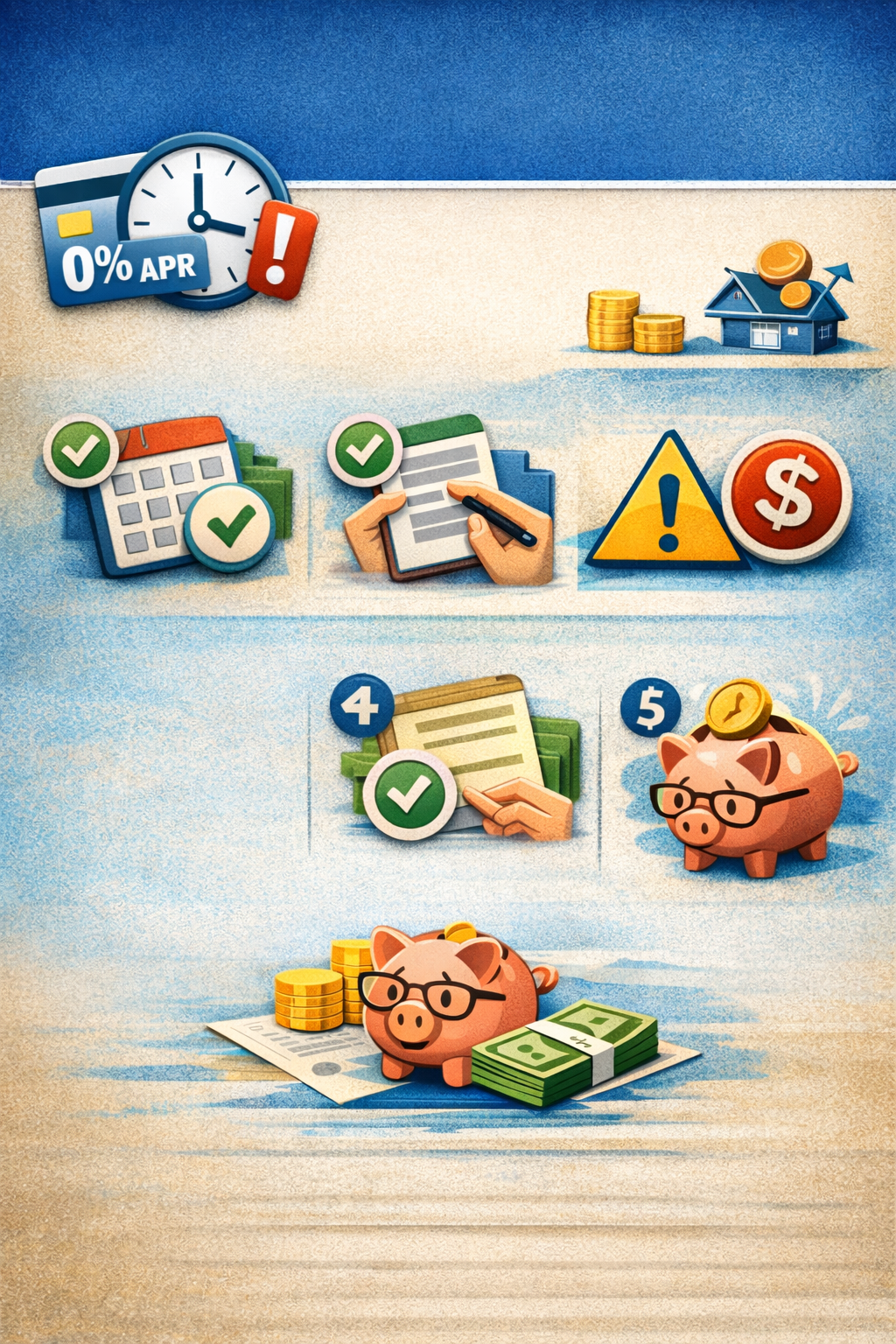
- 0% APR card (6 months): Six payments of $100/month, $0 interest—only if it’s fully paid before the promo ends. Any leftover after promo may accrue interest at your card’s APR.
Example B: $1,200 domestic flight + bags
- BNPL: Limited trip delay/lost-bag coverage. Refunds can be clunky.
- Travel credit card: Often includes trip delay, baggage, rental car CDW, lounge access, and rewards—valuable if a storm or delay hits.
Overspending Risk (and How to Avoid It)
BNPL danger: “Loan stacking”—several small pay-in-4 plans that overlap and drain cash flow.
Credit card danger: Revolving a growing balance at high APR.
Your guardrails:
- Track all upcoming payments (calendar/app alerts).
- Use a written payoff date for any 0% APR card plan.
- Cap BNPL to 1–2 active plans at a time.
- Aim for <30% utilization on credit cards (ideally <10%).
Returns & Disputes (Critical Differences)
- BNPL: You may have to keep paying installments during a return process; refunds are routed through the provider and can lag.
- Credit cards: Chargeback/dispute process and purchase protection can save you if an item is defective, not delivered, or a merchant won’t cooperate.
Hybrid Options: “Installments on Your Card”
Many issuers now let you convert a card purchase into a fixed-fee or fixed-APR plan after the fact. You keep rewards and protections, but get a predictable payoff schedule (and often lower cost than revolving at full APR).
Look for: Amex Pay It Plan It®, Chase My Chase Plan®, Citi Flex Pay, etc.
When Each Wins (Quick Use-Cases)
| Scenario | Best Tool | Why |
| Small fashion item, 6–8 weeks to repay | BNPL pay-in-4 | Simple, interest-free (on-time). |
| New laptop or appliance | Credit card | Warranties, returns, disputes, rewards. |
| Holiday airfare + luggage | Travel card | Insurance, lounge, points; easier disruptions. |
| Cash-flow timing issue (known paycheck dates) | BNPL or Card Installment Plan | Fixed schedule aligned to paydays. |
| Building credit history | Credit card | Reported each month (on-time payments help). |
Smart, Safe Usage Checklist
- Always read terms (fees, interest, late rules, due dates).
- Turn on alerts for due dates and suspicious activity.
- Don’t stack multiple BNPL plans; keep a single view of cash flow.
- With 0% APR cards: Set an auto-pay plan that zeroes the balance before the promo end date.
- Know your protections: Big-ticket or travel? Favor a card.
- Mind your data: BNPLs and issuers collect behavior data—review privacy settings.
The Cards Guy Recommends (by situation)
We don’t list specific limited-time offers here (they change a lot). Instead, use these card types as a checklist and pick a current product that fits.
- For travel protection & disruptions:
A premium travel card (trip delay, baggage, primary rental CDW, lounge access). Great for flights, hotels, car rentals. - For big purchases with time to repay:
A 0% intro APR on purchases card (ideally 12–18 months) plus a calendarized payoff plan. - For everyday cashback & strong protections:
A no-annual-fee 2% (or category) cashback card with purchase/return protection. - For “installments on card” flexibility:
A card that supports post-purchase installment plans (Amex/Chase/Citi features). - For rebuilding credit (not ready for prime-time cards yet):
A secured card that reports to all 3 bureaus; graduate to an unsecured card later. (BNPL usually won’t build credit.)
FAQs
1) Does BNPL help my credit?
Usually no (varies by provider/plan). Missed payments can still hurt.
2) Can I use BNPL for travel?
You can, but you’ll likely lose out on travel protections. Cards usually win here.
3) Are card installment plans better than BNPL?
Often, yes—you keep rewards and protections, and get a fixed payoff. Compare fees/APR.
4) Is a 0% APR credit card “free money”?
Only if you pay it off before the promo ends. Otherwise, standard APR applies to the remainder.
5) Which is safer for returns or “item not received”?
Credit cards—they include formal dispute/chargeback rights and purchase protection.
6) What’s the biggest mistake people make?
For BNPL: stacking too many plans. For cards: revolving balances without a payoff plan.
Bottom Line
- BNPL is best for one-off, short-term purchases you can repay predictably.
- Credit cards are the superior all-around tool—for protections, rewards, and credit building—if you use them responsibly.
- The sweet spot for many shoppers in 2025: a solid cash-back or travel card + a 0% intro APR plan (used sparingly) + strong repayment discipline.