
Personalized Card Recommendations

Blog

Freedom Gold Card Review Legit or a big Scam?

Is the Freedom Gold Card a Scam? 5 Legitimate Credit-Building Alternatives

If you’re asking, “Is the Freedom Gold Card a scam?” you’re already on the right track to protecting your financial future. In a world of complex financial products, it’s easy to be drawn in by promises of guaranteed approval and no credit checks. The hard truth is the Freedom Gold Card is not a real credit card and will not help you build credit. It’s a high-fee merchandise card that only works at a single online store. Table of Contents 1 The Truth About the Freedom Gold Card 2 5 Legitimate Alternatives for Building Credit (Even with No Credit Check) 3 Understanding Your Credit-Building Journey 4 Frequently Asked Questions (FAQ) The good news is that your search for a credit-building tool doesn’t have to end here. There are powerful, legitimate, and safe alternatives designed specifically for people with bad or no credit history. In this guide, we’ll expose why products like the Freedom Gold Card are a dead end and walk you through 5 legitimate alternatives that will actually help you build a strong credit foundation. For a complete breakdown of its fees and features, see our detailed Freedom Gold Card review. The Truth About the Freedom Gold Card If you’ve been searching for a way to build or rebuild your credit, you’ve likely come across offers that seem too good to be true. The Freedom Gold Card is often one of them, promising easy approval with no credit check. But before you apply, it’s crucial to understand what it is—and what it isn’t, as we explain in our detailed Freedom Gold Card review. Our Editorial Commitment To ensure accuracy and impartiality, our content is based on thorough research from reputable sources. We follow a strict editorial process to provide clear, unbiased information. However, this content is for informational purposes only and does not constitute financial advice. Is the Freedom Gold Card Legit? The Short Answer is No. To be blunt, the Freedom Gold Card is not a real credit card, and it will not help you build credit. The primary reason is that it is not a Visa, Mastercard, American Express, or Discover card. While the Freedom Gold Card may report payment activity to credit bureaus, its effectiveness for improving credit scores is not guaranteed, as noted by Credit.com. The Freedom Gold Card is a catalog credit card with a $750 unsecured credit limit that can only be used at TheHorizonOutlet.com, according to information from Credit.com. You pay a monthly fee for a line of “credit” that can’t be used for everyday purchases like gas or groceries. It’s a closed-loop system designed to sell you products, not to improve your financial standing. How to Spot Predatory and Fake Credit Products The Freedom Gold Card is a prime example of a predatory credit cards that target individuals with poor or no credit. These products often use misleading language to trap consumers in high-fee arrangements that offer little real value. Here’s how to protect yourself and identify fake credit cards or offers that don’t build credit: * Check for Major Network Logos: A legitimate credit card will almost always have a Visa, Mastercard, Amex, or Discover logo, allowing you to use it anywhere. * Confirm Credit Bureau Reporting: The entire point of a credit-building card is to report your responsible behavior to credit bureaus. If a card issuer doesn’t do this, it’s not a credit-building tool. Check their terms and conditions for this information. * Look for the Word “Unsecured”: If a card is advertised as an “unsecured credit card” with “guaranteed approval” and no credit check, be extremely cautious. Legitimate unsecured cards for bad credit are rare and often come with very high fees. * How to Check Legitimacy of a Website: Look for clear contact information, a physical address, and professional design. Search for third-party reviews outside of their own site. A lack of transparency is a major red flag. 5 Legitimate Alternatives for Building Credit (Even with No Credit Check) Now for the good news: there are excellent, legitimate tools available to help you build credit. Here are five powerful alternatives that actually work. Alternative How It Works Best For 1. Secured Credit Cards You provide a refundable security deposit (e.g., $200) which becomes your credit limit. Use the card and make payments, and the issuer reports your activity to credit bureaus. Beginners with bad or no credit history. It’s the most recommended and reliable starting point. 2. Credit Builder Loans A lender places a loan amount in a locked savings account. You make monthly payments, and once paid, the funds are released to you. Each payment is reported. Building a strong payment history without the temptation of a revolving credit line. 3. Graduating Secured Cards After 6-12 months of responsible use, the lender refunds your deposit and converts the card to a regular unsecured card, often with a higher limit. Those who want a clear and seamless path from a secured to an unsecured credit card. 4. Second-Chance Unsecured Cards These are unsecured cards for bad credit that don’t require a deposit but come with high annual fees and interest rates. They report to credit bureaus. A last resort for individuals who cannot provide a security deposit but need to build credit. 5. Reputable Personal Loans Small loans from credit unions or online lenders that verify your ability to repay. On-time payments on this installment loan are reported to credit bureaus. Diversifying your credit mix with an installment loan, but requires careful vetting of the lender. — Understanding Your Credit-Building Journey Building credit is a marathon, not a sprint. Consistency and patience are your most valuable assets. How Can I Build Credit with No Credit History? Starting from scratch can feel daunting, but the path is clear. 1. Open a Secured Credit Card or Credit Builder Loan: This is your first step to establishing a credit file. 2. Make On-Time Payments: Payment history is the single most important factor in your credit score. Never miss a

Is the Freedom Gold Card a Scam? 5 Legitimate Credit-Building Alternatives Read More »
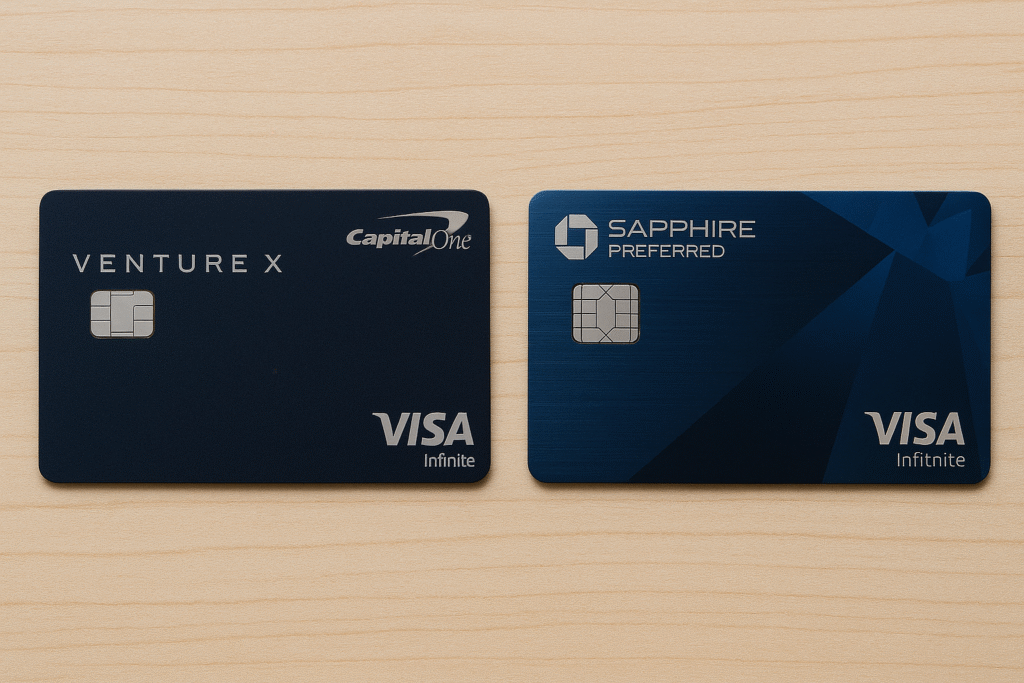
Capital One Venture X vs Chase Sapphire Preferred

Capital One Venture X vs. Chase Sapphire Preferred: A Persona-Based Guide

You’ve narrowed your search down to two of the best travel rewards cards available: the Capital One Venture X and the Chase Sapphire Preferred. Both offer compelling rewards and travel perks, but that’s where the decision gets tough. Reading endless feature lists can feel overwhelming, leaving you with the same question: which one is actually right for me? Forget the generic comparisons. This guide is different. We’re taking a persona-based approach to help you find the perfect fit. We’ll analyze every feature through the lens of specific traveler types—from the casual vacationer to the frequent flyer—to give you a clear, personalized recommendation. Table of Contents 1.Which Traveler Are You? The Persona-Based Verdict 2.The Financial Breakdown: Calculating the True Value 3.Head-to-Head Feature Showdown 4.Final Verdict: Which Card Should You Choose? Which Traveler Are You? The Persona-Based Verdict The best travel card isn’t just about points and perks; it’s about how those benefits align with your life. Let’s identify which traveler profile you fit into to find your perfect card. For Beginners and Casual Travelers If you’re new to travel rewards or take one or two big trips a year, your focus should be on simplicity, straightforward value, and a manageable annual fee. The question of venture x or sapphire preferred for beginners comes down to ease of use. For the casual traveler, the Chase Sapphire Preferred is often the superior choice. Its lower annual fee is less intimidating, and its rewards structure is easy to understand, with bonus points on broad categories like dining, online groceries, and streaming services. The card’s travel portal is user-friendly, and the points offer a simple 1.25 cents per point redemption value for travel, making it one of the easiest travel cards to get tangible value from without a steep learning curve. The Venture X, while powerful, requires you to use its travel credit and anniversary bonus to offset its higher fee, which can be more complex for a beginner. Verdict for Casual Travelers: The Chase Sapphire Preferred offers a lower barrier to entry and more straightforward value for those who travel less frequently. For Family Travel When considering the chase sapphire vs capital one venture x for families, the focus shifts to perks that can be shared and benefits that make family logistics easier. The Capital One Venture X shines here, primarily due to its generous authorized user policy. You can add up to four authorized users for free, and each one gets their own Priority Pass membership for airport lounge access. This is a game-changer for families, allowing everyone to relax in comfort before a flight. The Sapphire Preferred allows you to add authorized users for no additional fee, but they do not receive their own Priority Pass lounge access membership, and the card lacks comprehensive lounge access, making it less ideal for family airport perks. Verdict for Families: The Venture X’s authorized user perks for family lounge access make it the clear winner for family travel. For Everyday Spending & Earning Your travel card shouldn’t just reward you when you travel; it should be a workhorse for your daily expenses. When comparing venture x vs sapphire preferred for everyday spending, the best card depends on your budget’s focus. The Sapphire Preferred excels with 3x points on dining, online groceries, and select streaming services. The Venture X offers a simple, flat 2x miles on every single purchase, no matter the category. If your spending is heavily concentrated in the dining and grocery categories, the Sapphire Preferred might net you more rewards. However, for sheer simplicity and earning a high base rate on all other spending (like gas, retail, and bills), the Venture X’s 2x miles on everything is incredibly powerful. To maximize points on daily spend, you need to analyze your budget. If you’re looking to broaden your search for the best card for your wallet, our comprehensive guide on the top travel credit cards for everyday spending can help you compare even more options. Verdict for Everyday Spending: It’s a tie. Choose Sapphire Preferred if you’re a foodie who spends heavily on its bonus categories. Choose Venture X for a powerful, simple flat-rate earner on all purchases. The Financial Breakdown: Calculating the True Value Beyond the perks, the numbers have to make sense. Let’s break down the costs and rewards to see which card offers a better return on your investment. Financial Aspect Capital One Venture X Chase Sapphire Preferred Annual Fee & Net Value $395 fee, effectively reduced by a $300 annual travel credit and 10,000 anniversary miles (worth $100+). Can have a net positive value. $95 fee, partially offset by a $50 annual hotel credit. A straightforward, low-cost entry point. Points Valuation & Earning Earns a high, flat 2x miles on every purchase. Miles are valuable with an expanding list of transfer partners. Earns 3x points on dining, online groceries, and streaming. Points are highly valued due to key partners like Hyatt and United. Typical Sign-Up Bonus Often around 75,000 miles, worth at least $750 toward travel. Often around 60,000 points, worth $750 when redeemed for travel via the Chase portal. Head-to-Head Feature Showdown Let’s compare some of the most important travel-specific benefits side-by-side. Feature Capital One Venture X Chase Sapphire Preferred Winner Lounge Access Unlimited Priority Pass and Capital One Lounge access for you, your authorized users, and guests. No complimentary lounge access included. Venture X Travel Booking Portal Robust portal used to redeem the $300 annual credit. Offers price matching. Points are worth 25% more (1.25 cents each) when booking travel through the portal. Tie Travel Insurance Excellent protections including primary rental car insurance and trip cancellation coverage. Industry-leading protections, often cited as slightly more comprehensive and user-friendly. Sapphire Preferred (Slight Edge) Key Transfer Partners Strong list with many international carriers like British Airways, Air France/KLM, and Turkish Airlines. High-value, exclusive partners including World of Hyatt and United Airlines. Depends on preference Final Verdict: Which Card Should You Choose? Choosing between the Venture X and Sapphire Preferred isn’t

Capital One Venture X vs. Chase Sapphire Preferred: A Persona-Based Guide Read More »

Are Travel Credit Card Annual Fees *Really* Worth It? A Practical Guide

Are Travel Credit Card Annual Fees *Really* Worth It? A Practical Guide

That shiny new travel credit card promises a world of rewards, but then you see it: a $95, $250, or even a $695 annual fee. Is it a golden ticket or a costly trap? The sticker shock is real, and it leaves many people wondering if they’re leaving value on the table or simply paying for perks they’ll never use. This guide isn’t just another list of pros and cons. We’ll give you a practical framework to calculate the personal return on investment (ROI) for any travel card, so you can decide with confidence whether that fee is a smart investment in your travel goals. Table of Contents 1.The “Is It Worth It?” Calculation: Your Personal ROI Framework 2.Exploring No-Fee Alternatives: Get Rewards Without the Cost 3.Justifying the Cost: When Premium Cards Make Sense The “Is It Worth It?” Calculation: Your Personal ROI Framework Before you can decide if a fee is worth it, you need to stop thinking of it as a cost and start thinking of it as an investment. The key is to perform a simple cost-benefit analysis tailored to your own habits. The formula is straightforward: (Value of Rewards + Value of Benefits) – Annual Fee = Your Net Value. How to Use an `Annual Fee Calculator` for Your Credit Card You don’t need a fancy tool; a simple spreadsheet or notepad will do. Here’s a breakdown of the travel card cost-benefit analysis: 1. Estimate Your Rewards Value: Look at your spending over the last 6-12 months. How much did you spend on travel, dining, and groceries? Apply the card’s rewards multipliers (e.g., 3x points on dining) to your spending to estimate the points you’ll earn annually. Then, figure out how to calculate credit card points value. A common baseline is 1 cent per point, but this can vary. If 50,000 points are worth $500 in travel, your value is 1 cent per point. 2. Assign a Dollar Value to Benefits: This is the most crucial step in calculating credit card value. Go through the list of perks and assign a realistic dollar value based on whether you would have paid for that service anyway. * Free Checked Bags: For example, with most major airlines now charging around $35 for the first checked bag, checking one bag each way on two round trips would cost $140 per year. * Statement Credits: A $300 annual travel credit is worth exactly $300, provided you’ll use it. * airport lounge access: A standard Priority Pass membership, the most common lounge network offered by credit cards, costs $99 per year plus $35 per visit. If you visit a lounge four times a year, you’d pay $239. A card that includes this benefit could therefore offer up to that much in value if you would otherwise pay for it. 3. Subtract the Annual Fee: Once you have the total value of rewards and benefits, subtract the annual fee. If the result is positive, the card is likely a good deal for you. The Fundamental Question: `Are Travel Credit Card Annual Fees Worth It` for You? The answer depends entirely on your lifestyle. A card’s annual fee is worth it when the tangible value you get from its benefits and rewards is significantly higher than the fee itself. For a frequent business traveler, a $550 card with lounge access and travel credits might provide over $1,000 in annual value. For a family that takes one vacation a year, a $95 card with free checked bags might be the perfect fit. The reason why credit cards have annual fees is simple: these fees help fund the expensive rewards programs and premium benefits offered. The card issuer is betting that a portion of users won’t maximize the benefits, which helps offset the cost of high-value customers. Proven Strategies on `How to Avoid a Credit Card Annual Fee` If you’re facing an upcoming fee on a card you no longer find valuable, you have a few options: * Ask for a Waiver: Call the number on the back of your card and ask the retention department if they can offer a credit card annual fee waiver. If you’ve been a loyal customer, they may waive it or offer a statement credit to offset the cost. * Downgrade Your Card: Ask to downgrade your card to a no-fee version within the same card family. This allows you to keep your credit line and account history intact while eliminating the fee. * Use a Military Waiver: If you are an active-duty military member, you may be eligible for financial relief. The Servicemembers Civil Relief Act (SCRA) caps interest rates on pre-service loans and credit cards at 6%. While the law doesn’t require it, many card issuers voluntarily waive annual fees for active-duty personnel as a matter of policy. Exploring No-Fee Alternatives: Get Rewards Without the Cost For those who are new to travel rewards or have simpler spending habits, a card with no annual fee is an excellent, risk-free way to earn points and build credit history. The `Best Travel Cards with No Annual Fee` Zero annual fee credit cards have become incredibly competitive. Many now offer strong rewards rates on travel and dining, sign-up bonuses, and even perks like no foreign transaction fees. These free travel credit cards provide a fantastic entry point into the world of rewards without the pressure of having to justify a fee each year. Your First `Starter Travel Credit Card`: A Beginner’s Guide If you’re looking for your first travel credit card with no annual fee, prioritize simplicity and broad reward categories. The best beginner travel credit card is one that rewards you for your everyday spending on things like dining, groceries, or gas. Look for a card that is easy to get and helps you learn the rewards ecosystem without the complexity of transfer partners or premium perks. `No Annual Fee vs. Annual Fee Credit Card`: A Head-to-Head Comparison Here’s a simple breakdown of the trade-offs: Card Type Pros

Are Travel Credit Card Annual Fees *Really* Worth It? A Practical Guide Read More »

Travel Credit Cards for Work

How Travel Credit Cards Work: A Simple 3-Step Guide for Beginners

Diving into the world of travel credit cards can feel like learning a new language. With terms like ‘points,’ ‘miles,’ ‘annual fees,’ and ‘redemption portals,’ it’s easy to feel overwhelmed and suffer from ‘analysis paralysis.’ While many guides list features, they often fail to give you a clear starting point. We’re here to change that. This guide is your simple, step-by-step action plan. We will demystify the entire process by breaking it down into three clear stages: understanding the core concepts, creating your action plan, and mastering your first redemption. Forget the confusion; let’s get you ready to confidently choose and use your first travel card. Table of Contents 1.Step 1: Understanding the Core Concepts & Benefits 2.Step 2: Your Action Plan for Getting Started 3.Step 3: Mastering Your First Redemption Step 1: Understanding the Core Concepts & Benefits Before you can start earning rewards, you need to grasp the fundamentals. This first step is all about understanding the value proposition-what you get, what it costs, and how the points system actually works. Understanding the Core Benefits for Newcomers So, what are the benefits of a travel credit card? At their core, these cards are designed to reward you for your spending with points or miles that can be redeemed for travel. The travel card benefits for beginners can be grouped into a few key categories: Benefit Category How It Works Earning Rewards Earn points or miles on every purchase, with bonus rewards in specific categories like dining, groceries, or travel. Welcome Bonuses Receive a large sum of points (e.g., 60,000) for meeting a minimum spending requirement in the first few months. Travel Perks Enjoy benefits like free checked bags, airport lounge access, travel insurance, and credits for TSA PreCheck or Global Entry. Flexibility Transfer points to various airline and hotel partners, providing more options and potentially higher value when booking travel. Are Travel Cards Worth the Annual Fee? This is the most common question for newcomers. Many premium travel cards come with an annual fee, ranging from under $100 to over $500. The key is to evaluate if the benefits you’ll use outweigh the cost. Ask yourself: are travel cards worth the annual fee for my lifestyle? To figure this out, do a simple calculation. Add up the dollar value of the perks you will realistically use. For example: Perk / Bonus Example Value How It Adds Up Free Checked Bag ~$60 Value per round-trip flight, per person. Annual Hotel Credit $100 Direct statement credit for eligible hotel stays. Welcome Bonus ~$1,230 Based on a 60,000-point bonus from a card like the Chase Sapphire Preferred®, valued at ~2.05 cents per point by The Points Guy. If the value of these perks exceeds the annual fee, the card is likely worth it. For those completely new or hesitant to pay a fee, there are excellent best travel credit card no annual fee options that offer a great starting point into the world of rewards. How to Use Travel Points: The Basics Understanding how to use travel points is simpler than it seems. Think of them as a currency. You earn this currency by spending on your card, and then you spend it on travel. The value of travel rewards can vary, but a common baseline is 1 cent per point. So, 50,000 points are often worth at least $500 in travel. Here’s how travel points work in practice: Earn: You spend money on your card and accumulate points. Redeem: You log into your credit card’s online portal. Book: You can either book travel directly through the portal or transfer points to a partner airline or hotel to book with them. We’ll cover this in more detail in Step 3. Step 2: Your Action Plan for Getting Started Now that you understand the ‘what’ and ‘why,’ let’s focus on the ‘how.’ This section provides a clear roadmap for selecting and applying for your first card. Choosing Your First Travel Card With hundreds of cards on the market, choosing your first travel card can be the most intimidating step. The secret is to ignore the noise and focus on one thing: your own spending habits. Don’t pick a card because a blogger loves it; pick the one that best rewards your life. Look at your budget. Do you spend the most on dining out, groceries, or gas? Find a card that offers bonus points in those categories. Considering how a card aligns with your budget is a key part of the process. To simplify this process, start by exploring our detailed reviews of the top travel credit cards for everyday spending, which break down how different cards reward various lifestyles. For beginners, it’s also wise to look for cards known as easy approval travel credit cards to increase your chances of success. How to Apply for a Travel Credit Card Once you’ve picked a card, the application is next. The process of how to apply for a travel credit card is straightforward and usually takes less than 15 minutes online. You’ll need to provide personal information like your name, address, Social Security number, and annual income. The most important of the travel credit card requirements is your credit score. According to Experian, one of the three major credit bureaus, a FICO® Score of 670-739 is considered ‘Good,’ 740-799 is ‘Very Good,’ and 800-850 is ‘Exceptional.’ If you’re unsure of your score, you can check it for free through various services or even your current bank. Some issuers offer a credit card pre approval travel tool on their website, which can tell you if you’re likely to be approved without a hard inquiry on your credit report. A Step-by-Step Guide to Travel Rewards For those who love checklists, here is your step-by-step guide to travel rewards: Check Your Credit Score: Know where you stand before you apply. Analyze Your Spending: Identify your top 2-3 spending categories. Research Cards: Find 1-2 cards that offer bonus rewards in your top categories. Compare Welcome Bonuses

How Travel Credit Cards Work: A Simple 3-Step Guide for Beginners Read More »

How to Maximize Credit Card Travel Rewards

How to Maximize Credit Card Travel Rewards: A Foolproof Guide

The dream of using credit card points to book a ‘free’ flight or a luxury hotel stay is powerful. But for every success story, there’s a nagging fear: ‘Am I doing this wrong? Am I leaving value on the table or, worse, costing myself money?’ You’re not alone. While many guides focus on complex hacks, they often skip the fundamentals and the common pitfalls that trip up beginners. This guide is different. We’ve created a foolproof, 3-step strategy designed to help you maximize your rewards with confidence. We’ll show you the smartest ways to earn, the highest-value ways to redeem, and most importantly, the top 5 costly mistakes you must avoid. Table of Contents Step 1: Smartest Ways to Earn Rewards (Without Overspending) Step 2: Highest-Value Ways to Redeem Your Points Step 3: The 5 Most Costly Mistakes to Avoid Step 1: Smartest Ways to Earn Rewards (Without Overspending) Earning points is the first part of the equation, but it’s about being strategic, not just spending more. The goal is to optimize the spending you already do. Understand Your Card’s Bonus Categories Every travel card has bonus categories—areas of spending where you earn extra points, like 3x on dining or 2x on travel. The key is to align your card with your lifestyle. If you spend a lot on groceries, a card that rewards that spending is essential. Choosing the right card for your habits is the first and most crucial step. To solve this, our guide to the top travel credit cards for everyday spending analyzes which cards offer the best rewards for groceries, gas, and dining, helping you find the perfect match. Meet the Sign-Up Bonus Responsibly The sign-up bonus is often the single largest haul of points you’ll ever receive. However, it requires meeting a minimum spending threshold in a set time frame. Plan for it. Time your application with a large, planned purchase (like new tires or home repairs) rather than manufacturing spend. Never go into debt just to chase a bonus; the interest will wipe out any value you gain. Leverage Shopping Portals and Partner Offers Most card issuers have online shopping portals. By clicking through their portal before shopping at stores like Nike, Apple, or Home Depot, you can earn extra points on top of your regular rewards. It’s a simple step that can double or triple your earnings on purchases you were already going to make. Add Authorized Users (When It Makes Sense) Adding a trusted partner or family member as an authorized user can help you accumulate points faster, as their spending also earns rewards on your account. However, remember that you are ultimately responsible for the entire bill. Only do this if you have a clear agreement on spending and payments. Step 2: Highest-Value Ways to Redeem Your Points Earning points is only half the battle. How you redeem them determines their true value. A point can be worth less than a cent or more than five cents, depending on your strategy. The three primary methods offer different trade-offs between value and convenience. Redemption Methods Transfer Partners: Highest value (2.0 – 5.0+ cents). Best for premium cabin flights (business/first class) with airline and hotel loyalty programs. Requires flexibility and research. Issuer’s Travel Portal: Fixed value (1.0 – 1.5 cents). Convenient, straightforward booking for economy flights or hotels when award availability is limited. Good for beginners. Statement Credits: Lowest value (≤ 1.0 cent). For emergencies, covering annual fees, or when you have no upcoming travel plans. Generally offers the least value. Step 3: The 5 Most Costly Mistakes to Avoid Mistake #1: Hoarding Points and Fearing Devaluation Your points are not a savings account. Airlines and hotels can—and do—devalue their loyalty programs overnight, requiring more points for the same flight or hotel stay. The best strategy is to ‘earn and burn.’ Have a goal in mind, save up for it, and book it. Don’t let your hard-earned rewards lose value sitting in your account. Mistake #2: Ignoring Transfer Partners Relying solely on statement credits or the travel portal is a huge mistake. By not learning the basics of transfer partners, you could be cutting the value of your rewards in half. Take an hour to explore your card’s transfer partners and see the potential. Mistake #3: Mismanaging Annual Fees High annual fees can be intimidating, but they often come with benefits (like travel credits, lounge access, or free hotel nights) that can easily outweigh the cost. Before your annual fee is due, do a simple calculation: are the benefits you used this year worth more than the fee? If not, call your card issuer to see if there are any retention offers or consider downgrading to a no-fee card. Mistake #4: Letting Points Expire Points can expire due to account inactivity or if you close your card. Always read the fine print. For most programs, any small activity—like making a purchase or redeeming a small number of points—will reset the expiration clock. Mistake #5: Carrying a Balance Carrying a balance will cost you more in interest than you could ever hope to earn in rewards. Always pay your bill in full, every single month. No exceptions. Conclusion Maximizing credit card travel rewards isn’t about finding secret loopholes; it’s about building smart, sustainable habits. By following this 3-step strategy—earning strategically, redeeming for high value, and diligently avoiding common mistakes—you can turn your everyday spending into incredible travel experiences. You don’t need to be an expert, you just need to be mindful. Start by mastering one airline transfer partner for your favorite destination. This single skill can save you hundreds, if not thousands, of dollars and is the first step to becoming a savvy traveler. Frequently Asked Questions What’s the fastest way to earn enough points for a flight? The fastest way is by earning a sign-up bonus on a new credit card. These bonuses often provide enough points for a round-trip domestic flight or even a one-way international flight after meeting a

How to Maximize Credit Card Travel Rewards: A Foolproof Guide Read More »

Pre-Qualify Soft pull · No credit impact