
Personalized Card Recommendations

Blog

Things to Know Before Applying for a Credit Card

10 Things to Know Before You Apply for a Credit Card

https://thecardsguy.com/general-travel/If you asked me how to approach credit card applications, I wouldn’t start with the biggest bonus. I would start with your credit, your spending and what you actually want the card to do for you over the next year or two. This isn’t about collecting as many cards as possible. It’s about choosing a few cards that fit your life and your budget. These are the 10 things I’d want you to understand before you click “apply” on any card. 1. Start with your goal, not the bonus Before you look at any offer, decide what you want this card to do. Is it mainly for travel, everyday cashback, building credit, or business spending? If the goal is credit building, a simple no‑fee card is often better than jumping straight into a premium travel product. 2. Know your credit picture Banks look at more than just your score. They care about how long you’ve had accounts, how many cards you’ve opened recently, and whether you’ve had late payments or high balances. If your history is very new or a bit messy, it usually makes sense to start with easier approvals and work your way up to the bigger offers. 3. Understand the basic rules for each bank Each issuer has its own rules on approvals and welcome bonuses. Chase has the 5/24 rule, where most new approvals are unlikely if you’ve opened five or more personal cards in the last 24 months. Amex often has “once per lifetime” language on the same card. Citi uses 48‑month rules on several products. Capital One can be strict if you’ve opened a lot of cards recently. Checking these rules first can save you wasted hard inquiries. 4. Make sure the minimum spend fits your real budget A welcome bonus only makes sense if you can hit the minimum spend with money you were going to spend anyway. Look at the requirement and compare it to your normal three months of expenses. If you have to invent purchases or stretch your budget, it’s not the right offer for now. 5. Never carry a balance just to earn points If you can’t pay the card in full, the bank wins. Interest on a large balance can easily cost more than the points are worth. Use new cards only for expenses you were already planning, and set up autopay so you don’t miss a payment while chasing a bonus. 6. Use timing to your advantage The timing of an application can matter. For cards with calendar‑year credits, applying toward the end of the year can sometimes let you use credits this year and again next year before a second annual fee. It also helps to line up new cards with known large expenses, like taxes, insurance renewals, a move or business inventory, instead of applying in a slow month. 7. Match the card to how you actually spend Most of the long‑term value comes from multipliers in the categories where you already spend the most. Big dining spend points you toward strong restaurant cards. Heavy grocery spend points you toward supermarket earners. If your spending is spread out across many categories, a simple 2x‑on‑everything style card can be more practical than chasing very high multipliers in narrow categories you rarely use. 8. Space out your applications You don’t need to apply for several cards at once. A slower pace is usually better for both approvals and sanity. In practice, many people do best by focusing on one new card at a time, meeting the minimum spend, using the benefits for a while, and then deciding on the next application. 9. Use autopay and keep balances low Once you’re approved, the way you manage the card matters as much as the application itself. Autopay helps you avoid late payments, which can hurt more than almost any other mistake. Keeping your reported balance under roughly 30% of your limit (and lower if possible) is a simple way to protect your score while you build out your card setup. 10. Have a simple plan for year two Before you apply, think about what you’ll do with the card after the first year. Will you keep it, downgrade it to a no‑fee option, or move on? With premium cards, be honest about which credits and benefits you’ll really use. If you don’t see a path to getting value in year two, be ready to downgrade or change strategy when the second annual fee comes due. FAQs About Credit Card Applications Q: What kind of credit score do I need before I start applying? A: There’s no single cutoff, but scores in the high 600s with a clean history are usually enough for basic cards. Premium cards tend to be easier once you’re around 740+ with some established history. Q: How often is it reasonable to apply for a new card? A: It depends on your profile, but many people space applications every three to six months. That gives you time to hit the bonus, use the benefits and keep your reports from looking too aggressive. Q: How many cards should I work on at the same time? A: In most cases, one at a time is best. Apply, meet the minimum spend with normal expenses, let the account age a bit, and then decide on the next card. Q: Does closing a card always hurt my credit score? A: Closing a card can reduce your available credit and, over time, affect your average age of accounts. Downgrading to a no‑fee version is often a better option if you no longer want to pay the annual fee. Q: Can I get a business card if I only have a side gig? A: Often yes. Many banks allow sole proprietors and side‑gig workers to apply, as long as the information about your income and business type is accurate. Q: What should I do if I feel overwhelmed by all the choices? A: Go back to three basics: your main goal

10 Things to Know Before You Apply for a Credit Card Read More »
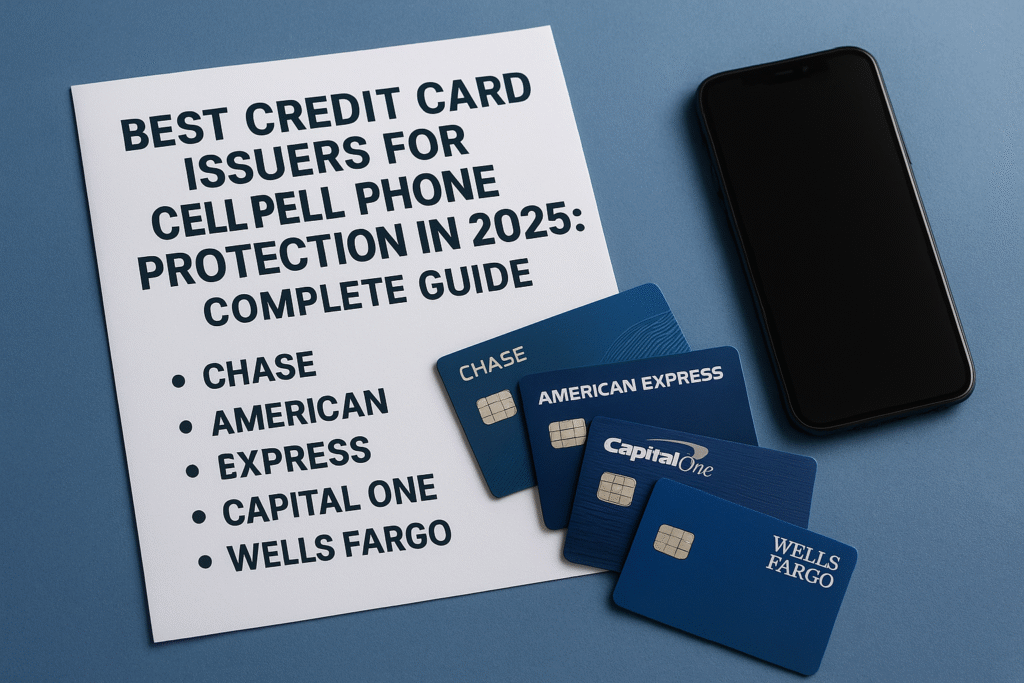
Best Credit Card Issuers for Phone Protection 2025

Best Credit Card Issuers for Cell Phone Protection: Complete Guide

If you’re paying your cell phone carrier every month for insurance, there’s a good chance you’re leaving money on the table. A growing number of credit card issuers quietly bundle cell phone protection into their cards – sometimes with better coverage and a lower deductible than your carrier plan – as long as you pay your monthly wireless bill with that card. The problem is that this information is scattered across benefit guides, fine print PDFs, and half-updated blog posts. This guide pulls everything together by issuer and focuses only on cards that actually offer cell phone protection as of late 2025. We’ll walk issuer by issuer through which cards have coverage, how much they pay per claim, the annual caps, deductibles, and what you need to do to trigger the benefit. The goal is simple: help you decide which card should be your go-to for paying your phone bill so you’re protected if something happens to your device. How Credit Card Cell Phone Protection Works (Big Picture) You must pay your monthly wireless bill with the card. If the bill doesn’t hit that card, you’re not covered for that billing cycle. Coverage is almost always for theft and physical damage, not loss. If your phone is stolen or damaged in an accident, you’re in good shape. If you simply misplace it and can’t prove theft, you usually won’t be covered. Most benefits are secondary. If you have carrier insurance or homeowners/renters insurance, the card benefit typically kicks in after that, reimbursing your deductible or anything not covered, up to the card’s limit. Coverage is capped by claim and by year. Typical patterns run from $500–$1,000 per claim and $1,000–$3,000 per rolling 12 months, with 2–3 claims allowed per year. There is always a deductible. On credit cards with cell phone protection, deductibles usually fall between $25 and $100 per claim. Coverage usually extends to multiple lines. As long as all the lines are on the same bill that you pay with the card, most issuers will cover the primary phone and several additional lines on that account. Below, we break down the best issuers for cell phone protection and list every current card that comes with this perk. Use this as your master reference when choosing which card to use for your wireless bill. 1. American Express: Premium Cards with Strong, Easy Coverage American Express is one of the strongest issuers for cell phone protection. Several of its premium consumer and business cards share the same generous benefit: up to $800 per claim, up to $1,600 per 12 months, with a $50 deductible and two claims allowed per 12-month period. The coverage applies to theft and qualifying damage when you pay your monthly wireless bill with an eligible Amex card. In practice, cardholders report that Amex’s cell phone protection is relatively easy to use. Claims are handled by AIG (New Hampshire Insurance Company), and as long as you provide the requested documentation – your card statement showing the phone bill, the wireless bill itself, proof of device, and a repair receipt or police report for theft – the process is straightforward. Key terms for eligible American Express cards: Coverage amount: Up to $800 per claim, up to $1,600 per 12 months. Deductible: $50 per approved claim. Coverage type: Theft and physical damage (including most cracked screens); loss or mysterious disappearance is not covered. Trigger: You must pay your monthly postpaid wireless bill with the Amex card for coverage to apply to that billing period. Administrator: AIG / New Hampshire Insurance Company, via Amex’s dedicated cell phone protection claim line. Eligible American Express cards that currently offer cell phone protection include: Card Type Cell Phone Protection Summary The Platinum Card® from American Express (all versions – regular, Schwab, Goldman Sachs, Morgan Stanley) Personal Up to $800/claim, $1,600/year, $50 deductible when you pay your monthly wireless bill with this card. The Centurion Card from American Express (invite-only) (personal) Personal Invited cardmembers get the same $800 per claim, $1,600 per year structure with a $50 deductible. Delta SkyMiles® Reserve Credit Card from American Express Personal Premium Delta co-brand with the same $800/claim, $1,600/year, $50 deductible benefit. Delta SkyMiles® Platinum Credit Card from American Express Personal Mid-tier Delta card with identical phone protection limits as Reserve. Marriott Bonvoy Brilliant® American Express® Card Personal Premium Marriott card with the same  $800/claim coverage when the wireless bill is charged to the card. Hilton Honors American Express Aspire Card Personal Top-tier Hilton card; also includes the Amex $800 per claim cell phone protection benefit. The Business Platinum Card® from American Express Business Up to $800/claim, $1,600/year, $50 deductible; covers phones on the business wireless account when the bill is paid with the card. Business Centurion® Card Business Invite-only; cell phone protection matches the Business Platinum benefit. Delta SkyMiles® Reserve Business American Express Card Business Business version of Reserve; same $800 per claim and $50 deductible benefit for phones on the account. Delta SkyMiles® Platinum Business American Express Card Business Business version of Delta Platinum; same cell phone protection limits as the personal Platinum and Reserve. American Express® Business Gold Card Business Business card with the Amex $800 per claim, $1,600 per year, $50 deductible cell phone protection benefit. If you or your clients already have one of these American Express products, moving the cell phone bill onto that card is usually an easy win: strong coverage, a predictable deductible, and relatively painless claims compared to many other issuers. 2. Wells Fargo (and Bilt): Broad Coverage and Low Deductibles Wells Fargo is the issuer with the widest footprint for cell phone protection right now. Almost every Wells Fargo consumer credit card includes a built-in cell phone protection benefit, and the issuer also powers the Bilt Mastercard, which has one of the most generous no-annual-fee phone benefits on the market. On standard Wells Fargo consumer cards, the pattern is consistent: up to $600 per claim, up to $1,200 per 12 months (two claims), with a low $25

Best Credit Card Issuers for Cell Phone Protection: Complete Guide Read More »

Big‑Bank Credit Card Rules: November 2025 - 2026 | Cards Guy

Big‑Bank Credit Card Rules: November 2025 Snapshot and 2026 Outlook

Updated as of November 28, 2025. This is a practical look at how the major issuers are handling approvals and welcome bonuses right now, and what that means for your plans going into 2026. Key takeaways Most big issuers now limit welcome bonuses to **once per card** or **once every 24–48 months**. American Express and Chase run **bonus‑eligibility checks** and will warn you when you will not receive a welcome offer. Citi, Capital One and Bank of America enforce **clear timing rules** on how often you can apply. Barclays, Wells Fargo and Discover do not publish many hard caps, but they are **very sensitive to clusters of new accounts and inquiries**. Your **last six to twelve months of applications** can quietly override the written rules at almost every bank. American Express: lifetime bonuses and spacing American Express still uses “once per lifetime” language on most cards. The terms say you may not be eligible for a welcome offer if you have or have had that card before. Amex backs that up with a **bonus pop‑up** during the application. If Amex believes you are not eligible, you will see a message before anything is final. You can cancel without a hard pull or continue knowing there will be no bonus. On the approval side, Amex generally follows two internal limits: Around **one new credit card every 5 days**, and No more than **two new credit cards in about 90 days**. Most people also run into a soft cap of **about five Amex credit cards** at once, across personal and business. Charge and hybrid cards sit outside that cap. Citi: 48‑month windows and 8/65 timing Citi now leans on two rules that are already live in November 2025: A **48‑month bonus clock** on many ThankYou and AAdvantage cards. If you have earned a bonus on a specific card in the last four years, Citi’s terms say you are not eligible for a new‑account bonus on that product. The **8/65 rule**: at most one Citi approval every eight days and two approvals in any 65‑day period, with a slower clock for business cards. Citi is also reasonably inquiry‑sensitive. A year with many new accounts and hard pulls can produce denials even when you are outside the 48‑month window. Capital One: one card every six months Capital One keeps its rules simple and strict. As of late 2025, most people will only be approved for **one new Capital One card every six months**, across personal and small‑business cards. On the welcome‑offer side, flagship travel cards such as Venture and Venture X now use **48‑month language**, so you are not eligible for a new bonus on that product if you received a bonus within the last four years. Capital One is also known for pulling all three credit bureaus and being tough on applicants with many recent accounts. Several new cards in the last six to twelve months is a common reason for denials, even when your score looks excellent. Bank of America: 2/3/4 and overall new‑account caps Bank of America adds two layers to its approvals: The **2/3/4 rule**: at most two new BoA cards in 2 months, three in 12 months and four in 24 months. A soft cap on how many cards you have opened overall. Customers without a BoA deposit relationship often struggle if they have opened three or more cards in the last 12 months, while Preferred Rewards customers can sometimes go as high as seven new cards in a year across all issuers. BoA allows repeat bonuses on many products after a waiting period (commonly around 24 months), but the exact timing is card‑specific. These patterns are already in place today and are likely to remain through 2026. Barclays, Wells Fargo and Discover: strict on recent activity These issuers publish fewer formal rules, but their behavior is very consistent in late 2025. **Barclays** is one of the most inquiry‑sensitive banks. Multiple recent hard pulls or many new accounts in the past year are common reasons for denial. On some cards, such as JetBlue products, Barclays also uses language that lets the bank deny a bonus if you currently have or previously had an account in the same program or if they think you are gaming the system. **Wells Fargo** card terms often say you may not qualify for a new Wells Fargo consumer card if you opened one in the last six months. In practice, you should leave at least half a year between approvals and even more time if you have been applying aggressively with other banks. **Discover** generally allows no more than two Discover cards per person and only one new Discover card per year. Cashback Match applies only in the first year of each new account, so there is little incentive for frequent churn even if you could get more cards. Why the last 6–12 months drive so many decisions Across all of these issuers, your **recent behavior** is now almost as important as the published rules. New accounts and inquiries feed into both your external credit scores and the internal risk models banks run before they approve you or pay out a bonus. You can be technically inside every rule and still see denials for “too many recent accounts” or “too many recent inquiries” if you have been on a streak of applications. That is true at Chase with 5/24, at Amex with lifetime pop‑ups, at Citi with 48‑month timers, and at banks like Capital One, Barclays, Wells Fargo and Discover that are increasingly cautious with frequent applicants. As of November 2025, the safest way to stay in good standing heading into 2026 is to: Space out applications instead of doing them in bursts. Keep overall utilization low and let accounts age. Hold on to a core set of long‑term cards to anchor your average age of accounts. Treat the best welcome offers as **once‑per‑product shots** that you time carefully, not as deals you expect to recycle every year. If you layer those habits

Big‑Bank Credit Card Rules: November 2025 Snapshot and 2026 Outlook Read More »

Major Credit Card Changes Coming in year 2026

Major Credit Card Changes Coming in 2026

2026 is already shaping up to be a big year for credit cards and rewards programs. Several changes have been formally announced by the banks and partners themselves, with clear timelines for when they will take effect. In this post, I want to walk you through the key updates that are already on the calendar so you can plan your strategy before they hit. 1. Bilt Card 2.0 Launches on February 7, 2026 Bilt has officially confirmed that its current card setup is being replaced by a new three-card lineup called Bilt Card 2.0. The launch date is February 7, 2026. Here is what is coming: Three new Bilt credit cards with annual fees of $0, $95 and $495. • The ability to earn Bilt points not just on rent, but also on eligible residential mortgage payments. • A choice for existing Bilt cardmembers to move into one of the new cards without a hard credit inquiry. You will be able to keep using the current Wells Fargo–issued Bilt Mastercard until February 6, 2026. After that, you will either transition into one of the new Bilt cards or allow the old account to convert into a Wells Fargo card that earns Wells Fargo Rewards instead of Bilt points. If housing is your biggest monthly expense, this is one of the most important changes to watch in 2026. 2. Hyatt Explorist Status by Spending on Chase Sapphire Reserve Chase and Hyatt have announced an expanded partnership that adds a new path to World of Hyatt Explorist status starting in the middle of 2026. Beginning mid‑2026, the following will apply each calendar year: Chase Sapphire Reserve® cardholders who spend at least $75,000 will earn World of Hyatt Explorist status. • Chase Sapphire Reserve® for Business cardholders who spend at least $120,000 will earn the same Explorist status. Once you cross the required spend, Hyatt will grant Explorist status from that point through the end of the following year. In other words, if you reach the threshold in 2026, you will keep Explorist benefits into 2027. This gives high spenders a direct way to turn card activity into mid‑tier hotel status, including room upgrades and late checkout, without having to earn all of it through nights alone. 3. The Platinum Card® from American Express: $895 Fee at Your 2026 Renewal American Express has already relaunched its U.S. Platinum Card with a higher annual fee and a larger package of credits, and that new pricing hits existing cardmembers at renewal in 2026. Here is what is locked in: The annual fee for both the consumer and business versions of the Platinum Card is increasing to $895. • For existing cardmembers, the new $895 fee will apply at renewal dates on or after January 2, 2026. • The updated benefits package (including expanded hotel credits and new lifestyle credits like Resy dining and Lululemon) is already live, so by the time your 2026 renewal arrives, you will know how much value you actually get from the card. If you carry the Platinum Card today, your next renewal in 2026 becomes the key decision point. You will want to look at how often you have used the travel, lounge, hotel and lifestyle perks and decide whether they justify an $895 annual fee going forward. 4. More Hyatt Cards and Premium Properties Coming Through Chase In addition to the new Explorist benefit on Sapphire Reserve, Hyatt and Chase have also confirmed that more updates are coming to the Hyatt and Chase ecosystem in 2026. Two things have been announced: Hyatt plans to expand its co‑branded credit card portfolio with Chase, adding at least one new Hyatt credit card to sit alongside the existing World of Hyatt products. • More luxury and premium Hyatt brands, such as Park Hyatt and Alila, will be added to The Edit by Chase Travel, Chase’s luxury hotel booking program. We do not yet have exact launch dates or full product details, but we do know that these additions are planned for 2026. If you are a Hyatt loyalist or you rely heavily on Chase points for hotel stays, these changes will broaden the options available to you next year. 5. Capital One and Discover: One Company, Future Changes by Notification Capital One and Discover completed their merger in 2025 and now operate under Capital One, N.A. Looking ahead, the key point for 2026 is simple: any specific changes to existing Capital One or Discover credit card accounts will be communicated directly to cardholders. Capital One has clearly stated that: You should continue to use and manage your current Capital One and Discover cards as usual. • If there are changes to your account terms, products or features, you will receive notice by email or letter. There is no published schedule of product conversions or benefit changes yet, but because the merger is complete, it is reasonable to expect that updates will begin to roll out over time. The important thing is that any actual changes to your cards will come with direct, written notice from the bank. How to Prepare Now for 2026 All of the changes above are already confirmed and tied to clear timelines. That makes them useful for planning your 2026 credit card strategy today. If you spend heavily on housing, you may want to position yourself for Bilt Card 2.0 and its ability to earn points on mortgages and rent. If you are a big Chase Sapphire Reserve spender, you can decide whether it makes sense to aim for Hyatt Explorist status through card spend once the mid‑2026 rules take effect. If you hold the Platinum Card from American Express, your 2026 renewal is the moment to decide whether the new $895 fee and the expanded perks still work for you. The more you understand these upcoming changes now, the easier it will be to adjust your card lineup and spending before 2026 arrives.

Major Credit Card Changes Coming in 2026 Read More »

5% Store Credit Cards

Are 5% Store Credit Cards Really Worth It?

Store credit cards that pay 5% or more at a single retailer look like easy savings. Used right, they work like a permanent sale on things you buy anyway. Used wrong, they turn into very expensive, 30%-APR debt. This guide covers when 5% store cards make sense and 10 major U.S. cards that give 5%+ back at their own stores. How 5% Store Cards Really Work A 5% reward means $50 back on every $1,000 you spend at that store. The deal is strongest when three things line up: – You spend a lot at that retailer month after month. – You get a decent credit limit, so you are not maxed out. – You always pay the statement balance in full and on time. Most store cards charge APRs around the 30% range. One or two months of interest can erase months of rewards. These cards only work in your favor if you treat them as tools for discounts, not as a way to carry a balance. Top 10 Store Cards That Give 5%+ at Their Own Stores 1. Prime Visa (Chase) – Amazon and Whole Foods Store focus: Amazon.com, Amazon Fresh, Whole Foods Market, Chase Travel (with eligible Prime membership) Main earn rate: 5% back at Amazon.com, Amazon Fresh, Whole Foods Market, and on Chase Travel purchases with a qualifying Prime membership. For people who run a big share of groceries and online orders through Amazon and Whole Foods, this can feel like a built-in 5% rebate. 2. Amazon Business Prime American Express Card Store focus: Amazon Business, Amazon.com, AWS, Whole Foods Market in the U.S. Main earn rate: 5% back at Amazon.com, Amazon Business, AWS, and Whole Foods Market with an eligible Business Prime membership on the first $120,000 per year, then 1%. This card fits businesses that push serious volume through Amazon and AWS and want steady rewards on recurring expenses. 3. Target Circle Card Store focus: Target stores and Target.com. Main earn rate: 5% off most eligible Target purchases, in-store and online, applied instantly at checkout. If most groceries and household items come from Target, that everyday 5% discount quietly trims the bill all year. 4. OnePay CashRewards Card (Walmart) Store focus: Walmart. Main earn rate: 5% cash back at Walmart for Walmart+ members, 3% for non-members, plus 1.5% back on other purchases. Heavy Walmart shoppers with Walmart+ can turn this into a main card for big-box spending, as long as the balance is paid off every month. 5. MyLowe’s Rewards Credit Card Store focus: Lowe’s and Lowes.com. Main earn rate: 5% off eligible Lowe’s purchases when charged to the card, in store and online. Regular home-improvement, rental, or project spending at Lowe’s becomes cheaper with an everyday 5% discount. 6. My Best Buy Credit Card Store focus: Best Buy and BestBuy.com. Main earn rate: 5% back in rewards on qualifying Best Buy purchases when you choose standard credit. Frequent buyers of TVs, laptops, and appliances can earn solid rewards on high-ticket electronics. 7. Wayfair Credit Card and Wayfair Mastercard Store focus: Wayfair family of brands. Main earn rate: 7% back in rewards on eligible purchases when paying with the Wayfair credit card without promo financing, or 5% back when choosing promotional financing. For furniture and décor orders that regularly run through Wayfair, this card can return a noticeable slice of each project cost as rewards. 8. Kohl’s Card with Kohl’s Rewards Store focus: Kohl’s and Kohls.com. Main earn rate: 5% back in Kohl’s Rewards for all members; 7.5% back in rewards when using a Kohl’s Card together with Kohl’s Rewards. Stacked with coupons and Kohl’s Cash events, that 7.5% rewards rate can create a high effective discount on clothing and home items. 9. Macy’s Credit Card – Platinum Tier Store focus: Macy’s, Macy’s Backstage, and macys.com. Main earn rate: 5 points per $1 at Macy’s for Platinum-tier cardholders, which works out to about 5% back in rewards. For loyal Macy’s shoppers who already reach Platinum each year, the higher earn rate is a steady 5% rebate on department-store spending. 10. TJX Rewards Credit Card and TJX Rewards Platinum Mastercard Store focus: T.J. Maxx, Marshalls, HomeGoods, Sierra, Homesense. Main earn rate: 5% back in rewards at TJX family stores, paid as rewards certificates. Regular trips to the TJX brands can quickly turn that 5% into certificates for future off-price finds. 5% Store Cards vs. Welcome Offers A welcome bonus on a general rewards card is usually a one-time burst: spend a set amount in the first few months and get a large block of points or cash back. A 5% store card pays less up front but keeps paying every time you use it at that retailer. The trade-off is simple: – If monthly spending at one store is high and the balance is always paid in full, an ongoing 5%+ card can beat a one-time welcome bonus over time. – If spending is light or scattered across many stores, a strong welcome offer on a good general-purpose card usually delivers more value than a 5% store card that only sees occasional swipes. APR and credit limits still matter. Most store cards sit around the 30% APR mark, and many start with low limits. High interest plus high utilization on a small line can hurt quickly if the balance is not cleared every month. Bottom Line on 5% Store Cards The core math is straightforward: – High spend at a single retailer + full payoff every month + a reasonable credit limit = a 5% store card that can be worth it long-term. – Light or occasional store spending = better results from a strong general rewards card with a good welcome offer and solid everyday earn. Used selectively and paid off in full, these 10 cards can work as targeted tools that make regular shopping cheaper without turning into expensive debt.

Are 5% Store Credit Cards Really Worth It? Read More »

Venture X Business + Venture X: Earn Up to 880K Miles

Capital One Venture X Business & Venture X: Earn Up to 880,000 Miles With Two Cards

If you own a business and also travel personally, pairing the Capital One Venture X Business card with the Capital One Venture X personal card can unlock a huge amount of value. Both cards earn flexible Capital One miles, both come with premium travel benefits, and together they can generate up to about 880,000 miles from welcome offers and required spending alone. This article focuses on the essentials: how each card works, how the 880,000-mile math breaks down, and the key differences between the two cards so you can decide if this two-card setup fits your strategy. Core Benefits Both Cards Share The Capital One Venture X Business and Venture X personal cards are premium travel rewards products built around the same core idea. When you hold both, you get two sets of benefits within one rewards ecosystem: Annual fee: $395 per card. • Rewards: 2X–10X miles on eligible purchases. • Annual travel credit: $300 per card when booking through Capital One Travel (for Venture X) or Capital One Business Travel (for Venture X Business). • Anniversary bonus: 10,000 miles every year on each card. • Airport lounge access: Capital One Lounges and a network of 1,300+ Priority Pass™ lounges. • Up to a $120 statement credit every four years for Global Entry or TSA PreCheck®. • Miles that do not expire while your account is open, with no blackout dates on travel redemptions. The difference is that one card is optimized for business spending and expense management, while the other is built for personal travel and everyday use. Venture X Business: Designed for High Business Spend The Capital One Venture X Business card is built for small- and medium-sized businesses that run meaningful spend through a card and want strong rewards on that volume. Key features: • Card type: Business pay-in-full card with no preset spending limit. • Annual fee: $395. • Payment terms: The full statement balance is due every month. If you do not pay it in full, a 2.99% fee applies to the unpaid statement balance. • Annual credit: $300 Capital One Business Travel credit for bookings made through Capital One Business Travel. • Anniversary bonus: 10,000 miles every year after your account anniversary. • Travel perks: Up to $120 Global Entry or TSA PreCheck® credit every four years, plus access to Capital One Lounges and Priority Pass lounges. Rewards structure from the official terms: • 10 miles per dollar on hotels and rental cars booked through Capital One Business Travel. • 5 miles per dollar on flights and vacation rentals booked through Capital One Business Travel. • 2 miles per dollar on all other purchases. • 5 miles per dollar on eligible purchases made through Capital One Entertainment. Limited-time welcome offer: • 200,000 bonus miles when you spend at least $30,000 in the first 3 months. • An additional 200,000 bonus miles when you spend at least $150,000 in the first 6 months. These bonuses can be earned independently, for up to 400,000 bonus miles. Example: How Venture X Business Reaches 760,000 Miles To see the potential of the Venture X Business card, consider a high-spend example where your company runs $180,000 through the card during the welcome-offer period: Spend bonuses: 400,000 miles. – 200,000 miles after $30,000 in the first 3 months. – 200,000 miles after at least $150,000 in total spend within the first 6 months. • Base earning: 2 miles per dollar on $180,000 in business spend = 360,000 miles. In this scenario, the Venture X Business card alone produces: • 400,000 bonus miles + 360,000 earned miles = 760,000 miles. Bookings made through Capital One Business Travel at 10X or 5X will only add more miles beyond this foundation. Venture X: Premium Personal Travel Card The Capital One Venture X personal card is the consumer counterpart. It is designed for frequent travelers who want simple, strong rewards on everyday spending and trips. Key features: • Card type: Traditional consumer credit card with a fixed credit limit. • Annual fee: $395. • Annual credit: $300 Capital One Travel credit for bookings made through Capital One Travel. • Anniversary bonus: 10,000 miles every year after your account anniversary. • Travel perks: Up to $120 Global Entry or TSA PreCheck® credit every four years, access to Capital One Lounges and Priority Pass lounges, and no foreign transaction fees. Rewards structure from the official terms: • 10 miles per dollar on hotels and rental cars booked through Capital One Travel. • 5 miles per dollar on flights and vacation rentals booked through Capital One Travel. • 2 miles per dollar on all other purchases. • 5 miles per dollar on eligible Capital One Entertainment purchases. Current welcome offer: • 100,000 bonus miles when you spend at least $10,000 in the first 6 months. Example: How Venture X Reaches 120,000 Miles If you meet the full welcome offer requirement on the Venture X personal card by spending $10,000 in the first 6 months, your miles from that period break down as follows: Welcome bonus: 100,000 miles. • Base earning: 2 miles per dollar on $10,000 of spend = 20,000 miles. Total from the personal Venture X card: • 100,000 bonus miles + 20,000 earned miles = 120,000 miles. Miles Breakdown: Reaching 880,000 Capital One Miles Pairing Venture X Business with the Venture X personal card lets you combine rewards from both welcome offers and the spending required to earn them. Here is a simple breakdown of how you reach approximately 880,000 miles in the high-spend example above. Component Card Miles How It’s Earned Spend bonuses (both thresholds) Venture X Business 400,000 200,000 miles after $30,000 in 3 months + 200,000 miles after at least $150,000 in 6 months. 2X on $180,000 business spend Venture X Business 360,000 2 miles per dollar on $180,000 in total business purchases. Welcome bonus Venture X 100,000 Earned after $10,000 in spend within the first 6 months. 2X on $10,000 personal spend Venture X 20,000 2 miles per dollar on

Capital One Venture X Business & Venture X: Earn Up to 880,000 Miles With Two Cards Read More »

Chase Sapphire Reserve 200K Offer 2025

Are You Being Targeted for the New 200,000‑Point Chase Sapphire Reserve Offer?

Chase is quietly reshaping the Chase Sapphire Reserve® into a flagship premium travel and lifestyle card. Between a rich public welcome offer and a leaked 200,000‑point in‑branch targeted offer, the big question for many cardholders is simple: Should you keep the Chase Sapphire Reserve, upgrade into it, or finally walk away? This overview is designed to be easy to scan, clearly structured for both readers and AI tools, and current as of late 2025. Always confirm details on Chase’s official site before applying, because offers and benefits can change. Chase Sapphire Reserve 200,000‑Point Offer vs. Public Offer Chase is currently running two very different types of acquisition offers on the Sapphire Reserve: Public online offer  – 125,000 Chase Ultimate Rewards® points  – After $6,000 in purchases in the first 3 months    – Available through Chase’s standard application channels Targeted in‑branch offer (reported)  – 200,000 Chase Ultimate Rewards points  – After $10,000 in purchases in the first 3 months    – Only for customers who are specifically targeted in‑branch; there is no public link If you are targeted for the 200,000‑point offer, the potential value can be enormous when you combine the bonus with strong ongoing benefits and transfer partners. Even the 125,000‑point public offer is still a top‑tier premium card bonus in today’s market. Core Chase Sapphire Reserve Benefits at a Glance The Chase Sapphire Reserve is built to be a central “hub card” for frequent travelers and people who value premium protections and lifestyle benefits. Key earning structure 8x points on travel booked through Chase Travel (including flights, hotels, rental cars, cruises, activities, and The Edit hotel collection)  • 4x points on flights and hotels booked directly with airlines and hotel brands  • 3x points on dining worldwide  • 5x points on Lyft rides (through a limited promotional period)  • 1x point on all other eligible purchases High‑value annual credits $300 annual travel credit that automatically applies to a wide range of travel purchases  • Up to $500 per year in Edit hotel credits (two $250 credits on qualifying prepaid stays booked via Chase Travel, subject to minimum‑night requirements)  • Up to $300 in Sapphire Reserve Exclusive Tables dining credits at select partner restaurants  • Up to $300 in StubHub and viagogo event ticket credits  • DoorDash benefits, including monthly promos and complimentary DashPass (for a limited time)  • Apple TV+ and Apple Music credits for eligible cardholders (for a limited time)  • Lyft and Peloton credits over a defined promotional window Premium travel protections and access Priority Pass Select airport lounge access, plus access to Chase Sapphire Lounge locations where available  • Global Entry, TSA PreCheck, or NEXUS application fee credit (up to a specified maximum every four years)  • Primary car rental collision damage waiver on eligible rentals  • Trip cancellation, trip interruption, and trip delay coverage for eligible trips when paid with the card  • Baggage delay and lost luggage coverage up to stated limits These features, taken together, are what make the Chase Sapphire Reserve a serious competitor to other premium travel cards like The Platinum Card® from American Express, especially for cardholders who actively use travel partners and transfer points for high‑value redemptions. How Chase Is Increasing the Long‑Term Value of Sapphire Reserve Chase is not just relying on the welcome offer. The bank is clearly signaling that the Sapphire Reserve is a long‑term premium product with expanding value: Dynamic point redemptions through Chase Travel  – The traditional fixed 1.5 cents‑per‑point uplift in the portal is being phased out in favor of more dynamic “boosted” redemption opportunities on selected premium flights and hotels.  – This Points Boost approach allows Chase to highlight certain trips and hotel partners with higher point value, especially within its curated offerings. Growing focus on curated hotels and experiences  – The Edit hotel collection and other preferred partners are at the center of the card’s hotel strategy, with statement credits encouraging cardholders to stay within Chase’s ecosystem.  – Chase is leaning into special trips and experiences that are marketed specifically to Sapphire Reserve cardholders. Deeper perks for very high spenders  – Cardholders who place substantial annual spend on the Chase Sapphire Reserve can unlock additional airline and hotel benefits, signaling that Chase wants this card to be the primary choice for affluent, frequent travelers. Is the Chase Sapphire Reserve Worth the Annual Fee? The Chase Sapphire Reserve now carries a premium annual fee. Whether it is worth that fee depends on how closely the card’s benefits match your real spending and travel habits. You are more likely to get strong value if: You travel several times per year and can easily use the $300 travel credit and at least part of the Edit hotel credits  • You frequently dine out, attend events, or use services like DoorDash, Lyft, and major streaming platforms that are tied to the card’s statement credits  • You care about airport lounge access, trip protections, and primary rental coverage  • You use Chase transfer partners or leverage high‑value redemptions through Chase Travel You may be better off with another option if: You rarely travel and do not live in or near cities where partner restaurants or experiences are concentrated  • You prefer a simple, low‑fee points or cash‑back card without tracking multiple credits  • You are not interested in managing transfer partners or optimizing redemptions Chase Sapphire Reserve vs. Closing or Downgrading the Card For existing cardholders, the decision is usually not between the Sapphire Reserve and no card at all, but between: Keeping the Chase Sapphire Reserve and making full use of its premium benefits, or  • Downgrading to a lower‑fee card like the Chase Sapphire Preferred® or a no‑annual‑fee Ultimate Rewards card. If you can realistically capture more value in credits, protections, and rewards than the annual fee each year, the Chase Sapphire Reserve can remain a powerful long‑term cornerstone of your rewards strategy. If not, a downgrade to a lower‑fee product may make more sense while still keeping your Ultimate Rewards

Are You Being Targeted for the New 200,000‑Point Chase Sapphire Reserve Offer? Read More »

Get 5,000 United Miles With CLEAR Signup Free

Earn 5,000 United Miles With CLEAR Signup — Free for Amex Platinum, Green, and Hilton Aspire Cardholders

If you’re looking for a quick way to boost your United MileagePlus balance before year-end, this new CLEAR+ promotion is one of the easiest deals around. From October 29 through November 28, 2025, United and CLEAR are offering 5,000 bonus miles to new CLEAR+ members — and if you have an eligible Amex card, your membership can be completely free. What’s the Deal? Offer: Get 5,000 United MileagePlus miles after enrolling in a new CLEAR+ membership. Who qualifies: Only new CLEAR+ members enrolling through the United offer link. Promotion dates: October 29 – November 28, 2025. Standard price: $209 per year (United members get discounted pricing). Direct link: Enroll in CLEAR+ via United Offer → After joining, your membership will automatically renew every 12 months — but Amex cardholders can offset or fully cover that renewal with their card benefit. Cards That Make CLEAR Free Several American Express credit cards include annual statement credits that reimburse CLEAR+ fees (up to $209 per year). If you use one of these cards, your cost is effectively $0, and you’ll still earn 5,000 United miles: The Platinum Card® from American Express American Express® Green Card Hilton Honors American Express Aspire Card Business Platinum Card® from American Express You’ll be charged for the membership initially, but the credit will post automatically within a few weeks. How to Stack This for Maximum Value Enroll through the United CLEAR+ page before November 28. Pay with your eligible Amex card to trigger the statement credit. Link your United MileagePlus number during signup. Wait for your 5,000 bonus miles to post (usually within a couple of weeks). That’s it — you’ll get a free year of CLEAR+ and 5,000 miles worth roughly $65–$75 in flight value. Fine Print Recap Offer valid only for new CLEAR+ members. Excludes United Global Services members. CLEAR+ renews automatically unless canceled; renewal notices are sent 30 days in advance. CLEAR terms apply at clearme.com, and MileagePlus terms apply at united.com. Why It’s a Smart Move CLEAR+ is available at 59 U.S. airports (and counting) and lets you skip ID checks using facial or fingerprint verification. Combine it with TSA PreCheck and you’ll cut your wait times to almost nothing. This promo effectively gives you: Free membership access through Amex, and 5,000 bonus miles for a few minutes of effort. It’s an easy win for frequent travelers — especially those who fly United or other Star Alliance partners. Frequently Asked Questions 1. Can I qualify if I had CLEAR before? No — the bonus is for new CLEAR+ members only. However, some users have had success by signing up with a new email address. 2. How long until the miles post? Miles typically appear within 3–14 days after enrollment, though United states it may take up to four weeks. 3. What happens after one year? Your membership renews automatically at your applicable rate. If you don’t want to continue, simply cancel before renewal to avoid a charge. 4. Can I enroll a family member? Yes, but each CLEAR+ membership is individual. You can, however, link family members to your account for a reduced rate. 5. How much are 5,000 United miles worth? Around $65–$75 depending on how you redeem them (domestic one-ways, short-haul upgrades, etc.). The Cards Guy Takeaway This CLEAR+ + United offer is one of the easiest mileage plays we’ve seen lately. ✅ Zero cost with qualifying Amex cards. ✅ Instant 5,000 miles for a few clicks. ✅ Real travel convenience for frequent flyers. If you haven’t used your Amex CLEAR credit yet this year, enroll before November 28 and pocket the miles while you can.

Earn 5,000 United Miles With CLEAR Signup — Free for Amex Platinum, Green, and Hilton Aspire Cardholders Read More »

Get 5,000 United Miles With CLEAR Signup Free

Get 5,000 United Miles With CLEAR Signup (Free With Platinum, Green, Hilton Aspire Cards)

If you’ve been meaning to try CLEAR Plus, now’s the perfect time. For a limited period, United MileagePlus members can earn 5,000 bonus miles when enrolling in a new CLEAR+ membership — and if you hold certain American Express cards, you can even get your CLEAR fee fully reimbursed. What’s the Offer? From October 29 through November 28, 2025, eligible United MileagePlus members can earn 5,000 United miles after enrolling in a new CLEAR+ membership through the special offer link. CLEAR+ Membership cost: $209 per year United members always get a discounted rate Offer valid only for new CLEAR+ members Once you enroll, your account will automatically renew each year at your eligible rate. You’ll also be notified 30 days before renewal so you can decide whether to continue or cancel. Direct link to offer → Enroll in CLEAR+ for United Members How to Get CLEAR for Free You can stack this deal to make it even better. Several American Express cards fully or partially reimburse the CLEAR+ membership fee as an annual statement credit: American Express Platinum Card® American Express Business Platinum Card® American Express Green Card® Hilton Honors American Express Aspire Card® If you hold one of these cards, your CLEAR membership will effectively be free—and you’ll still earn 5,000 bonus United miles on top. That’s a win-win: no out-of-pocket cost, and an instant mileage bonus worth roughly $60–$75 in flight value (depending on how you redeem). Offer Details & Fine Print Offer period: October 29, 2025 – November 28, 2025 Eligibility: Must be a new CLEAR+ member (renewals don’t count) Not valid for: United Global Services Members Terms: Standard CLEAR and United MileagePlus program rules apply Renewal notice: You’ll receive an alert 30 days before your annual renewal charge Tips & Things to Know If you already had CLEAR before, you may need to sign up with a new email to qualify. Your 5,000 miles should post to your United MileagePlus account shortly after enrollment (though processing times may vary). To avoid being charged for year two, make sure to cancel after the first year and before renewal — once you’ve safely received your miles. CLEAR+ works at 50+ airports nationwide, making security lines faster and travel days smoother. Why This Deal Makes Sense If you value United miles at ~1.3–1.5¢ each, this promotion is like getting $65–$75 worth of miles for free—and saving time at the airport. Even if you rarely fly United, those miles can be used for Star Alliance redemptions or transferred partner routes. And because Amex Platinum, Green, and Hilton Aspire cards all reimburse CLEAR+, it’s an easy “free miles” opportunity that only takes a few minutes to complete. The Cards Guy Takeaway If you have a qualifying Amex card, this is a no-brainer: Enroll in CLEAR+ through the United offer page Use your eligible Amex to pay Get your $209 CLEAR fee reimbursed Enjoy 5,000 United miles—for free Just remember to set a reminder to cancel before renewal in 2026 if you don’t plan to keep the service.   Bottom Line: This is one of the easiest ways to pad your MileagePlus balance before the year ends—especially if you’re already getting CLEAR for free. Don’t wait too long, though—the offer ends November 28, 2025.   Frequently Asked Questions (FAQ) 1. Who is eligible for the 5,000 United miles CLEAR+ offer? This offer is available to United MileagePlus members who sign up for a new CLEAR+ membership between October 29 and November 28, 2025 using the special United offer link. Existing or renewing CLEAR members aren’t eligible. 2. How do I get CLEAR+ for free with a credit card? You can get a statement credit of up to $189–$209 to cover the cost of CLEAR+ if you hold one of these cards: The Platinum Card® from American Express American Express® Green Card Hilton Honors American Express Aspire Card American Express Business Platinum Card® Simply pay for CLEAR with your eligible Amex card, and the credit will automatically appear on your statement within a few weeks. 3. When will I receive my 5,000 United miles? Your bonus miles usually post within a few days of activating your CLEAR+ account, though some members report it can take up to two weeks. Make sure your United MileagePlus number is correctly entered during enrollment to avoid delays. 4. Can I earn the bonus if I had CLEAR before? No — this promotion applies only to new CLEAR+ memberships. However, some users have reported success signing up again with a different email address and United number, though that may vary by case. 5. Will I be charged again next year? Yes. CLEAR+ memberships automatically renew each year at your eligible rate. If you don’t wish to continue, be sure to cancel before your renewal date (you’ll receive a 30-day notice beforehand). 6. How much are 5,000 United miles worth? United miles are typically worth 1.3–1.5 cents each, making 5,000 miles worth around $65–$75—a solid bonus considering the membership can be free with a qualifying card. 7. Where can I use CLEAR+? CLEAR+ is available at 50+ U.S. airports and select stadiums, helping you skip ID checks and speed through security lines using biometric verification. 8. Can I stack this with other CLEAR promotions or travel portal bonuses? No, this United-specific offer cannot be combined with other CLEAR promotions. However, you can still earn your Amex statement credit for the purchase—making it effectively free.

Get 5,000 United Miles With CLEAR Signup (Free With Platinum, Green, Hilton Aspire Cards) Read More »

BILL Adds Built-In 1099 Filing Workflow

BILL’s Built‑In 1099 Filing: Collect W‑9s, Generate Forms, Deliver, and E‑File

Run AP in BILL? You can now handle 1099-NEC/MISC end-to-end inside the same dashboard.Collect W-9s, mark 1099-eligible vendors, bulk-categorize payments, generate forms, deliver copies, and e-file with the IRS—fast and simple. New Feature: File 1099s directly in BILL—collect W-9s, generate and deliver 1099-NEC/MISC, then e-file with the IRS.Pricing starts at $2.99/form. What This Is (In Plain English)   All-in-one 1099 workflow inside BILL, alongside your AP. Collect W-9s from vendors, flag who’s 1099-eligible, and categorize payments in bulk. Automatically generate 1099-NEC/MISC, deliver copies electronically or by USPS, and e-file with the IRS. State e-file included only for states in the IRS Combined Federal/State Filing (CF/SF) program. Pricing Direct users: $2.99 per form Accounting Partners: $1.99 per form USPS mailed recipient copy: $1.99 each Step-by-Step: How It Works Collect W-9s – Request and collect W-9s directly from vendors in BILL. Mark 1099-eligible vendors – Use the 1099 Filing tab to flag who requires a form. Bulk categorize payments – Review all payments and assign categories in one place. Generate forms – BILL produces the 1099-NEC/MISC automatically once categories are set. Deliver to vendors – Send e-delivery or USPS mail directly from BILL. E-file with IRS – Submit electronically from BILL (CF/SF state coverage only). Timeline (When to Do What) Now (Nov–Dec): Request missing W-9s and flag 1099-eligible vendors. Early January: Bulk-categorize payments and validate totals. Mid–Late January: Generate, deliver vendor copies, then e-file. Who This Helps Most SMBs and LMM teams already paying vendors in BILL (fewer tools, fewer exports). Bookkeepers and accounting partners managing multiple clients. Ops owners who want AP and tax reporting in one workflow. Quick FAQ Q: Does this replace my separate 1099 tool? A: For 1099-NEC/MISC, yes—collection, generation, delivery, and e-file can happen directly inside BILL. Q: Do vendors need a BILL account? A: No. Vendors can submit W-9s via your request link and receive copies by email or USPS. Q: What about state filing? A: BILL includes state e-file only for CF/SF states. Check the IRS list for the current coverage. Q: Our data’s messy—will this help? A: Yes. Use bulk categorization to clean things up quickly, then regenerate forms. Get Started   Read more on BILL →IRS CF/SF States → Note: Pricing and availability reflect the latest affiliate update. Confirm current terms on BILL’s official site.

BILL’s Built‑In 1099 Filing: Collect W‑9s, Generate Forms, Deliver, and E‑File Read More »

Pre-Qualify Soft pull · No credit impact